


x
 Oil On CanvasWallArtFuturism and Expression
 1917Modern
 47.0 x 68.0 cm
Purchase a high-resolution, enhanced digital image, far superior to the online preview.
Each file is meticulously prepared by our in-house specialists using advanced tools and expert manual retouching. We ensure every image has exceptional clarity, precise color accuracy, and fine detail.
The final file is delivered via email within 72 hours, optimized for immediate use in professional, editorial, and print environments. This is the same quality trusted by top-tier design studios, publishers, and galleries.
Download a high-resolution file for personal display, printing, and creative projects. ( Buy Print Buy Hand Made Painting)
When you choose Most-Famous-Paintings.com, you're not just getting an image - you're receiving a professionally enhanced digital artwork, crafted with precision and backed by a satisfaction guarantee. Here's everything that comes with your order, automatically:

Your high-resolution digital image file will be emailed to you within 72 hours of ordering - ready for immediate use.

Your artwork is professionally optimized using advanced AI tools and manual editing, ensuring maximum detail, clarity, and color accuracy.

Accidentally deleted or lost your file? No worries - we'll resend it to you anytime, free of charge.

Enjoy your artwork instantly with zero customs, duties, or delivery fees - digital downloads are always tax-free.

We ensure your digital image reflects the original colors as closely as possible using professional tools and color management.

If you're not satisfied with your digital image, we'll revise it or refund 100% within 60 days - no questions asked.

Not satisfied? Get a full refund within 60 days of receiving your digital file - no questions asked.

Buy 3 images, save 10% - Buy 5, save 15% - Buy 10+, save 20%. Great for creative projects, galleries, and agencies.
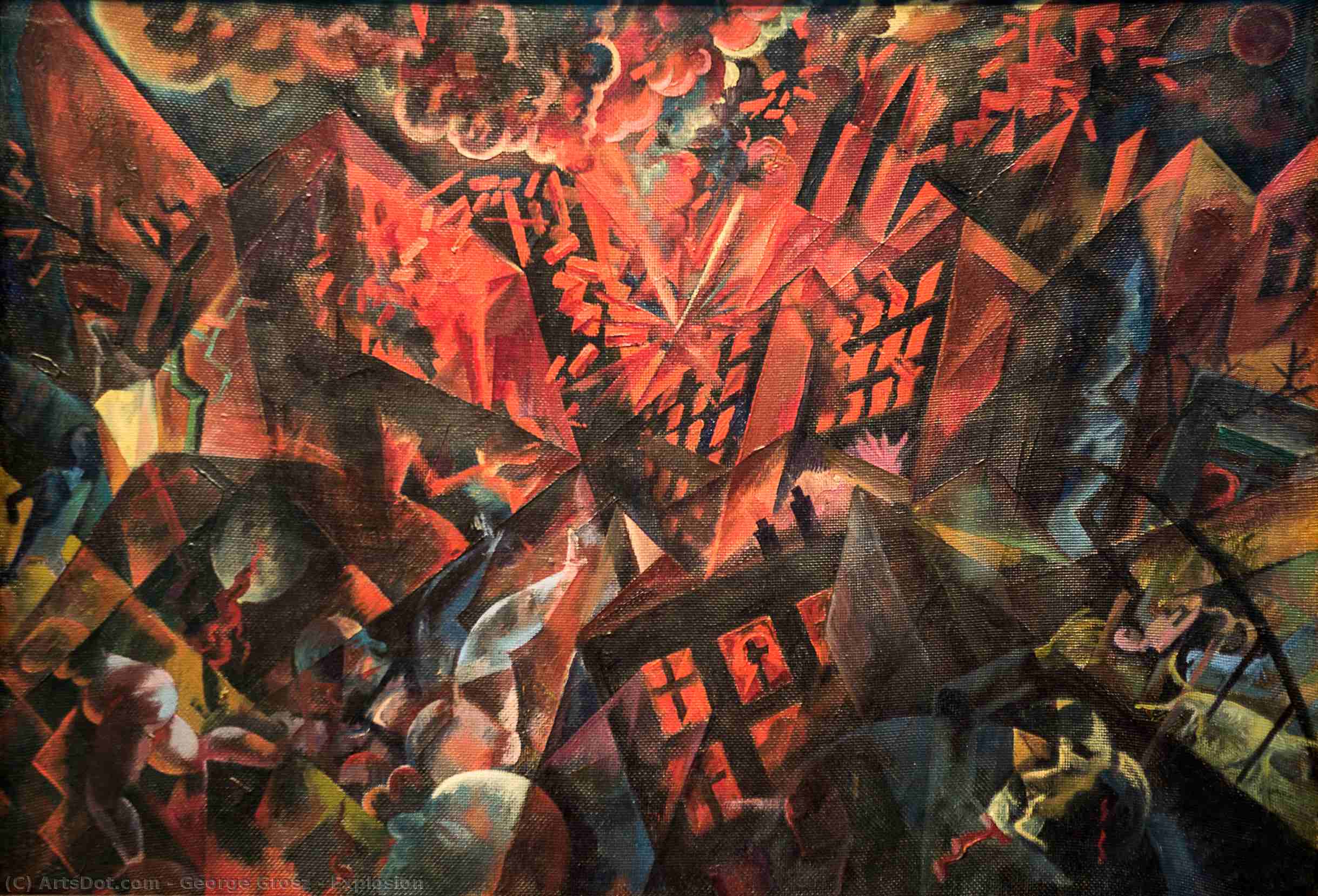
George Grosz’s “Explosion,” painted in 1917, isn’t merely a depiction of war; it’s a visceral scream against the very foundations of society. Born from the artist’s disillusionment following his discharge from the German army due to mental health struggles – a direct consequence of witnessing the horrors of World War I – this work embodies the chaotic disintegration of both physical landscapes and moral values. Grosz, a key figure in the Dada movement and a master of Expressionism, utilizes the burgeoning principles of Futurism to create an image that remains profoundly unsettling and remarkably relevant today. The painting’s immediate impact is one of overwhelming devastation: collapsing high-rise buildings, rendered in furious reds and oranges, seem to pinwheel around a central vortex of black, sucking in shattered windows and billowing smoke – a tangible representation of the war's indiscriminate destruction. It’s a scene that demands attention, forcing the viewer to confront the brutal reality of conflict.
To fully appreciate "Explosion," one must understand its historical context. Painted in 1917, a pivotal year marked by the height of World War I, the artwork reflects the widespread disillusionment and anti-war sentiment that fueled the rise of Dadaism. Grosz’s work aligns with this movement's rejection of traditional artistic values and embrace of irrationality and absurdity as responses to the perceived madness of the era. His earlier training in meticulous Dutch master copies – particularly those of Eduard von Grützner – provided him with a strong technical foundation, which he then deliberately subverted, using his skill to amplify the emotional impact of his subject matter. The painting’s genesis is inextricably linked to Grosz's personal trauma and his profound critique of the militaristic society that produced such devastation.
The fiery background, a dominant feature of “Explosion,” isn’t simply an aesthetic choice; it’s a deliberate symbol of intense heat and destruction. The swirling clouds and streaks of light suggest not just explosions but also the psychological turmoil experienced by those caught in the war's grip. The angular forms of the collapsing buildings – reminiscent of Cubist influences – further contribute to the painting’s sense of fragmentation and disorientation. Grosz masterfully employs contrast, juxtaposing the fiery foreground with cooler blues and greens in the background, intensifying the overall feeling of chaos and amplifying the emotional impact.
"Explosion" remains a powerful testament to George Grosz’s artistic vision and his unwavering commitment to social commentary. Its influence can be seen in contemporary artists who continue to grapple with themes of war, destruction, and societal decay. The Museum of Modern Art (MoMA) recognizes this significance, holding “Explosion” within its collection as a cornerstone of modern art history. This reproduction offers an exceptional opportunity to own a piece of this pivotal artwork, allowing you to experience the raw emotion and intellectual depth that define Grosz’s legacy.


1893 - 1959 , Germany


Stay updated with the latest art news, exclusive offers, and decoration ideas.
Tell us about your project and our art experts will provide you with 3 personalized art suggestions.
Let Us Curate 3 Options Just for You - Free!


 Preview
 Send
Send Share
Share
 Details

 Download
 Similars
 X-Ray
X-Ray Diaporama
 Read More


