


x

Museum-quality giclée or canvas print with fast production and flexible finish options. ( Buy Hand Made Painting Buy Image)





























Pick from our preset sizes that match the artwork's original proportions.

You may enter your own dimensions to fit a specific frame or space. If your selected size does not match the original image's proportions, we will either crop the artwork or extend the image with a mirrored or solid-fill edge. A digital mockup will be sent for your approval before production begins.
Please note that the on-screen preview does not reflect the actual cropping or extension. Only the mockup will accurately show the final composition.
While custom sizes are available, we recommend selecting a dimension from the predefined list to preserve the original proportions.
Worldwide Delivery () in 2 weeks instead of standard 4/5 weeks. (23 August)


Abstraction
Reproduction Size
Georgia O’Keeffe’s “Abstraction,” created in 1945, isn’t merely a painting; it’s an intimate glimpse into the artist’s profoundly personal vision. Executed in charcoal on paper, this work represents a pivotal moment in O’Keeffe's career – a deliberate shift away from representational art and toward a more emotionally driven style that would define her later decades. It stands as a testament to her ability to distill complex feelings into strikingly simple forms, inviting viewers to contemplate the essence of experience rather than its literal depiction.
The composition itself is deceptively straightforward: a dominant oval shape, reminiscent of a shell or perhaps a simplified human form, dominates the center of the image. Two distinct points of attachment are visible in the upper right corner, subtly suggesting connection and interaction. The lines are fluid and dynamic, not sharply defined but rather possessing a palpable sense of movement and energy. O’Keeffe masterfully employs layering – multiple washes of charcoal create a rich texture that seems to vibrate with internal life. The stark contrast between light and shadow further enhances the painting's dramatic effect, drawing the eye inward and encouraging close observation.
Following her groundbreaking work in New Mexico during the 1930s and 40s, O’Keeffe experienced a period of critical rejection for her abstract paintings. Critics, including influential figures like Clement Greenberg, often interpreted these works through a lens of sexuality, reducing them to mere symbolic representations of female anatomy – an interpretation vehemently denied by O'Keeffe herself. This misunderstanding, coupled with the prevailing market trends favoring more conventional styles, led her to largely abandon abstraction for several years. However, in 1942, spurred by a desire to reclaim her artistic voice and respond to critical dismissal, she returned to this expressive mode of painting.
The inspiration for “Abstraction” likely stemmed from O’Keeffe's deep connection with the natural world – specifically, the landscapes and geological formations of New Mexico. She sought to capture not just the appearance of these elements but their underlying essence, their emotional resonance. The simplified forms and dynamic lines mirror the patterns found in rock strata, wind-sculpted mesas, and the vast expanse of the desert sky. It’s a translation of external reality into an internal landscape, filtered through her unique perceptual experience.
While O'Keeffe resisted assigning specific symbolic meanings to her abstractions, it is undeniable that they are laden with emotional weight. The dominant oval shape can be interpreted as a symbol of containment, protection, or perhaps even the womb – evoking primal instincts and fundamental life forces. The two points of attachment suggest connection, interaction, and the delicate balance between opposing elements. The overall effect is one of quiet intensity, inviting contemplation and introspection.
Furthermore, the monochromatic palette—a deliberate choice by O’Keeffe—amplifies the painting's emotional impact. The absence of color forces the viewer to focus on form, texture, and line, intensifying their sensory experience. It creates a sense of timelessness and universality, transcending specific subject matter and tapping into something deeper within the human psyche.
“Abstraction” is more than just a beautiful artwork; it’s a crucial document in the evolution of American modernism. It represents a bold assertion of artistic autonomy – O'Keeffe refusing to be constrained by external expectations and pursuing her own unique vision. This work foreshadowed many developments in abstract expressionism, demonstrating the power of non-representational art to convey profound emotional truths. Today, “Abstraction” continues to resonate with viewers, offering a timeless meditation on form, feeling, and the enduring mystery of the human experience.


1887 - 1986 , United States of America
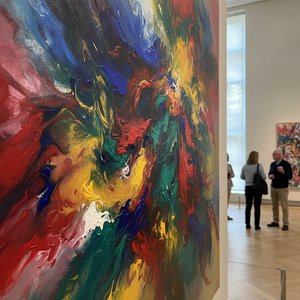
Explore the profound emotional depth of Lyrical Abstraction. Discover how masters like Raymond Parker used color and form to bridge Impressionism and Abstract Expressionism. Learn about this pivotal movement through our expert-led art history guide.

Explore the profound emotional depth of Color Field painting. Discover the history of mid-century abstraction, from Rothko to Newman, and learn how pure color transforms the viewer's experience through our expert art history guide.

Discover the profound emotional depth and investment potential of contemporary abstraction. Our expert guide explores how texture, movement, and form create timeless value for discerning art collectors and sophisticated interiors.


Stay updated with the latest art news, exclusive offers, and decoration ideas.
Tell us about your project and our art experts will provide you with 3 personalized art suggestions.
Let Us Curate 3 Options Just for You - Free!


 Preview
 Send
Send Share
Share
 Details

 Download
 Similars
 X-Ray
X-Ray Diaporama


 Read More







 Glass option is only available in size under 110 CM


