x

 Oil On CanvasWallArtContemporary Realism
 1973Contemporary
 90.0 x 65.0 cm
Museum-quality giclée or canvas print with fast production and flexible finish options. ( Buy Hand Made Painting Buy Image)





























Pick from our preset sizes that match the artwork's original proportions.

You may enter your own dimensions to fit a specific frame or space. If your selected size does not match the original image's proportions, we will either crop the artwork or extend the image with a mirrored or solid-fill edge. A digital mockup will be sent for your approval before production begins.
Please note that the on-screen preview does not reflect the actual cropping or extension. Only the mockup will accurately show the final composition.
While custom sizes are available, we recommend selecting a dimension from the predefined list to preserve the original proportions.
Worldwide Delivery () in 2 weeks instead of standard 4/5 weeks. (19 August)


Grey (Bark)
Reproduction Size
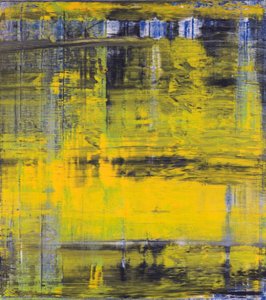
In the vast landscape of contemporary art, few works possess the quiet, arresting power of Gerhard Richter’s Grey (Bark). Created in 1973, this masterpiece invites the viewer into a profound dialogue with the surface itself. At first glance, the painting presents an expanse of monochromatic gray, yet a closer inspection reveals a world of subtle irregularities and meticulously crafted textures. These rhythmic bumps and undulations are not mere accidents of the brush; they are intentional evocations of natural bark, suggesting a weathered resilience that speaks to the endurance of the natural world. The work exists in that ethereal space between what is seen and what is felt, offering an experience that is as much about tactile sensation as it is about visual perception.
Richter’s signature brilliance lies in his ability to blur the boundaries between photorealism and abstraction. While the surface may initially resemble a monochromatic photograph, the painting deliberately avoids capturing a definitive, literal image. Instead, it prioritizes suggestion over representation, a technique that mirrors the artist's deeper philosophical inquiries into the reliability of human memory and sight. By blending these two seemingly opposing styles, Richter creates a sense of "uncertainty" that becomes the very soul of the piece. For the collector or interior designer, this ambiguity provides a sophisticated focal point—a work that changes character depending on the light, the angle of view, and the contemplative state of the observer.
The technical execution of Grey (Bark) is a testament to Richter’s mastery over oil paint. To achieve such a complex surface, the artist employed a sophisticated layering process, alternating between thin, translucent washes and thicker, more sculptural impasto. This meticulous buildup of pigment allows light to interact with the canvas in a way that creates depth within a seemingly flat color field. The result is a surface that feels alive, possessing a materiality that anchors the abstract concept in physical reality. It is this very tension—between the ethereal gray hue and the rugged, tactile texture—that gives the painting its enduring emotional weight.
To understand the gravity of this work, one must consider the historical moment of its creation. Emerging from the post-World War II era, Richter’s 1973 production was part of a broader movement toward conceptual art and abstraction that sought to navigate the anxieties of a fractured Germany. The neutral gray palette can be seen as a symbol of contemplation and a refusal to offer easy, propagandistic answers, reflecting a period of profound social and political questioning. In Grey (Bark), we find a beautiful synthesis of history and emotion: a piece that uses the motif of bark to symbolize transformation and connection, offering a sense of stability and organic strength amidst the complexities of the modern human experience.


1932 - , Germany

Explore the profound emotional depth of Color Field painting. Discover the history of mid-century abstraction, from Rothko to Newman, and learn how pure color transforms the viewer's experience through our expert art history guide.
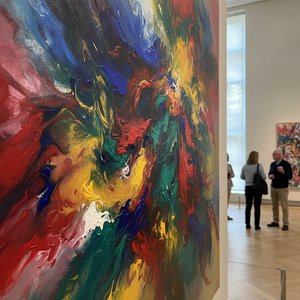
Explore the profound emotional depth of Lyrical Abstraction. Discover how masters like Raymond Parker used color and form to bridge Impressionism and Abstract Expressionism. Learn about this pivotal movement through our expert-led art history guide.

Explore the profound beauty of oil on canvas. Discover how impasto textures, masterful brushwork, and light create unparalleled depth in fine art reproductions and custom commissions for discerning collectors.


Stay updated with the latest art news, exclusive offers, and decoration ideas.
Tell us about your project and our art experts will provide you with 3 personalized art suggestions.
Let Us Curate 3 Options Just for You - Free!


 Preview
 Send
Send Share
Share
 Details

 Download
 Similars
 X-Ray
X-Ray Diaporama
 Read More







 Glass option is only available in size under 110 CM