x

 Acrylic On PaperOtherOp Art
 2013Contemporary
 200.0 x 1000.0 cm
Hand-painted oil on canvas in your size and frame, made to order by our artists.
Pick from our preset sizes that match the artwork's original proportions.

You may enter your own dimensions to fit a specific frame or space. If your selected size does not match the original image's proportions, we will either crop the artwork or extend the painting with additional hand-painted elements. A digital mockup will be sent for your approval before production begins.
Please note that the on-screen preview does not reflect the actual cropping or extension. Only the mockup will accurately show the final composition.
While custom sizes are available, we recommend selecting a dimension from the predefined list to preserve the original proportions.
Worldwide Delivery () in 3/4 weeks instead of standard 5 weeks. (18 July). No compromise on quality.


Strip
Reproduction Size
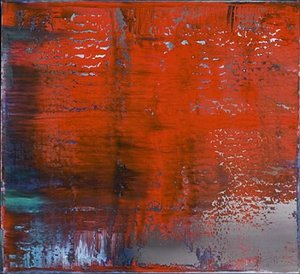
Gerhard Richter's "Strip," a monumental work from 2013, isn’t merely a painting; it’s an invitation to contemplate the very nature of perception and representation. Measuring a substantial 200 x 1000 cm, this acrylic on paper piece immediately commands attention with its bold, almost aggressively simple composition – a series of horizontal bands in varying shades of brown and orange. Yet, beneath this apparent austerity lies a complex interplay of color, texture, and the subtle suggestion of depth that speaks volumes about Richter’s signature style and his ongoing exploration of photographic source material.
The painting firmly places itself within the realm of Op Art, though Richter's approach transcends mere visual stimulation. The stripes aren’t static; they subtly shift and morph depending on the viewer’s perspective, creating a dynamic illusion that plays with our sense of space and form. This effect is achieved through careful manipulation of color intensity and value – a technique rooted in Richter’s decades-long fascination with photography and his method of layering multiple photographic sources to create abstract compositions.
Understanding "Strip" requires acknowledging the profound context of Gerhard Richter's life and career. Born in Dresden, Germany, in 1932, Richter’s early years were profoundly shaped by the political upheavals of post-war Europe. His childhood was marked by displacement and uncertainty, experiences that undoubtedly informed his artistic sensibility – a willingness to question, to deconstruct, and to embrace ambiguity. This formative period instilled within him a deep sense of questioning and a constant negotiation with the fragmented realities of his time.
Richter’s work is inextricably linked to this history of division. His exploration of memory, representation, and the photographic image can be seen as an attempt to grapple with the complexities of German identity in the aftermath of World War II and the subsequent decades of political and social transformation. The painting's restrained palette and deliberate abstraction mirror a certain emotional distance, reflecting Richter’s characteristic refusal to offer easy answers or definitive interpretations.
The seemingly effortless execution of "Strip" belies a meticulous process. Richter typically works with multiple photographic sources, creating composite images that are then translated into abstract paintings. In this instance, he likely employed a technique of layering and blending acrylics to achieve the subtle shifts in color and value that define the work’s visual dynamism. The textured surface – a result of these layered applications – adds another layer of complexity, inviting close inspection and encouraging viewers to lose themselves within its intricate details.
The choice of brown and orange is particularly significant. These earthy tones evoke a sense of warmth and grounding, yet their juxtaposition creates an underlying tension—a subtle discordance that mirrors the complexities of the historical context in which Richter operates. The stripes themselves act as visual anchors, guiding the eye across the canvas and creating a rhythmic pattern that simultaneously draws us in and keeps us at arm’s length.
Ultimately, "Strip" is more than just a visually striking composition; it's an invitation to contemplate the nature of perception and memory. Richter’s work consistently challenges our assumptions about representation, forcing us to question how we see and interpret the world around us. The painting’s ambiguous forms and shifting colors create a sense of unease—a feeling that something is just beyond our grasp. It's a testament to Richter's skill as an artist: he doesn’t offer solutions but rather presents us with questions, inviting us to engage in a dialogue with his work and with ourselves.

1932 - , Germany
Explore 10 defining masterpieces of Geometric Abstraction! Discover Kandinsky, Mondrian & Malevich’s iconic works. Find museum-quality art reproductions and curated decor ideas to elevate your home at Most-Famous-Paintings.com.

Explore the revolutionary world of Victor Vasarely, father of Op Art. Discover his geometric masterpieces, artistic system, & lasting impact on modern design. A guide for discerning art collectors.

Explore the profound world of Gerhard Richter's abstract paintings. Discover his techniques, influences, and lasting impact on contemporary art – a guide for discerning collectors.

Explore 10 legendary 'Acrylic On Canvas' masterpieces by artists like Rothko, Warhol & Frankenthaler. Discover the stories behind these iconic paintings and their impact on modern art. Find museum-quality reproductions at – elevate your home with timeless beauty.

Explore the enduring legacy of geometric abstraction! Discover key artists, historical movements & investment insights for discerning art collectors. Expert guidance from Most-Famous-Paintings.


Stay updated with the latest art news, exclusive offers, and decoration ideas.
Tell us about your project and our art experts will provide you with 3 personalized art suggestions.
Let Us Curate 3 Options Just for You - Free!


 Buy print
 Send
Send Share
Share
 Details

 Download
 Similars
 X-Ray
X-Ray Diaporama
 Read More




































 Glass option is only available in size under 110 CM