
Sell Your Art
Wishlist Shopping Cart Cart
PreviewPreview AR previewAR preview Buy Print Buy PrintBuy Hand Made Painting Buy Hand Made Painting SendSend
DetailsDetails Add to favorites Add to favorites DownloadDownload SimilarsSimilars X-RayX-Ray DiaporamaDiaporama

Metaphysical Triangle

Experience Giorgio de Chirico’s iconic Metaphysical Triangle, a haunting dreamscape featuring a solitary hand and chess piece against a surreal cityscape, embodying the artist's exploration of alienation and reality. Discover this captivating masterpiece and bring its enigmatic beauty into your space.

Explore the surreal world of Giorgio de Chirico (1888-1978), founder of Metaphysical art. Discover dreamlike cityscapes, philosophical themes & iconic mannequins. Influential to Surrealism.

Purchase a high-resolution, enhanced digital image, far superior to the online preview.

Each file is meticulously prepared by our in-house specialists using advanced tools and expert manual retouching. We ensure every image has exceptional clarity, precise color accuracy, and fine detail.

The final file is delivered via email within 72 hours, optimized for immediate use in professional, editorial, and print environments. This is the same quality trusted by top-tier design studios, publishers, and galleries.

Digital Image

Download a high-resolution file for personal display, printing, and creative projects. (Buy Print Buy PrintBuy Hand Made Painting Buy Hand Made Painting)

Total Price

$ 24.90

Included in Every Digital Image Order

Expert Digital Delivery, Guaranteed

When you choose Most-Famous-Paintings.com, you're not just getting an image - you're receiving a professionally enhanced digital artwork, crafted with precision and backed by a satisfaction guarantee. Here's everything that comes with your order, automatically:

shipping_icon
Fast Email Delivery

Your high-resolution digital image file will be emailed to you within 72 hours of ordering - ready for immediate use.

canvas_icon
AI-Enhanced Digital File

Your artwork is professionally optimized using advanced AI tools and manual editing, ensuring maximum detail, clarity, and color accuracy.

insurance_icon
Free Lifetime Re-Delivery

Accidentally deleted or lost your file? No worries - we'll resend it to you anytime, free of charge.

tax_icon
No Import Fees - Ever

Enjoy your artwork instantly with zero customs, duties, or delivery fees - digital downloads are always tax-free.

color_icon
Color Accuracy Guarantee

We ensure your digital image reflects the original colors as closely as possible using professional tools and color management.

return_icon
60-Day Satisfaction Guarantee

If you're not satisfied with your digital image, we'll revise it or refund 100% within 60 days - no questions asked.

guarantee_icon
100% Money-Back Guarantee

Not satisfied? Get a full refund within 60 days of receiving your digital file - no questions asked.

discount_icon
Bulk Order Discounts

Buy 3 images, save 10% - Buy 5, save 15% - Buy 10+, save 20%. Great for creative projects, galleries, and agencies.

Quick Facts

  • Influences:
    • Böcklin
    • Klinger
    • Nietzsche
  • Medium: Painting
  • Notable elements: Chess piece, clocks
  • Title: Metaphysical Triangle
  • Movement: Meta-Realism
  • Subject or theme: Existentialism, Alienation

Collectible Description

A Frozen Moment of Existential Dread: De Chirico’s *Metaphysical Triangle*

Giorgio de Chirico's 1958 painting, *Metaphysical Triangle*, is not merely a depiction of a hand and a chess piece; it’s a meticulously crafted distillation of the anxieties and philosophical inquiries that defined the artist’s entire oeuvre. Executed during a period when de Chirico was increasingly reflecting on his earlier, more intensely surreal works, this piece embodies the core tenets of his “metaphysical painting” – a style characterized by unsettling juxtapositions, dreamlike atmospheres, and a profound exploration of the human condition.

  • The Composition: The scene unfolds with an almost unnerving stillness. A man’s hand, rendered with painstaking detail, reaches towards a solitary chess piece resting on a checkered board. This simple arrangement immediately evokes themes of strategy, control, and ultimately, the futility of human endeavor.
  • Architectural Echoes: The background is dominated by a classical building, reminiscent of Roman ruins – a frequent motif in de Chirico’s work, symbolizing decay, memory, and the weight of history. This architectural backdrop contributes to the painting's sense of alienation and detachment.
  • Temporal Disjunction: Two clocks punctuate the scene, one on the left and another towards the top right corner. These are not simply decorative elements; they represent the relentless march of time, a recurring obsession for de Chirico, highlighting the ephemeral nature of existence and the impossibility of truly grasping the present moment.

Deconstructing Reality: The Style and Technique of Metaphysical Painting

De Chirico’s technique is remarkably precise, almost photographic in its rendering of detail – a stark contrast to the hazy, dreamlike quality often associated with his earlier work. He employs a meticulous use of oil paint, layering thin glazes to achieve a luminous effect and creating sharp contrasts between light and shadow. This technical mastery allows him to amplify the unsettling nature of the scene, drawing the viewer into its disorienting space. The deliberate flatness of the picture plane, characteristic of early Cubism, further contributes to the painting’s sense of detachment from reality.

  • Color Palette: The muted color palette – dominated by browns, blues, and grays – reinforces the melancholic mood and adds to the overall feeling of isolation.
  • Linear Perspective: De Chirico masterfully manipulates linear perspective, creating a sense of spatial ambiguity that further destabilizes the viewer’s perception.

Symbolism and Philosophical Undercurrents

*Metaphysical Triangle* is saturated with symbolism rooted in de Chirico's philosophical influences. The chess piece itself can be interpreted as representing human ambition, strategic thinking, or even the illusion of control. The hand reaching out suggests a yearning for connection, understanding, or perhaps simply an attempt to impose order on a chaotic world. De Chirico was deeply influenced by thinkers like Nietzsche and Schopenhauer, who explored themes of nihilism, the will, and the subjective nature of reality. This painting reflects these ideas – it’s a visual representation of the anxieties inherent in confronting the absurdity of existence.

Emotional Resonance and Lasting Impact

More than just a visually striking image, *Metaphysical Triangle* possesses a profound emotional resonance. It evokes feelings of unease, disorientation, and perhaps even melancholy. De Chirico’s ability to capture these complex emotions through seemingly simple imagery is what makes this painting so enduringly powerful. A hand-painted reproduction offers the opportunity to bring this iconic work into your space, inviting contemplation and sparking dialogue about the fundamental questions of human existence – a testament to de Chirico's genius and his lasting impact on 20th-century art.

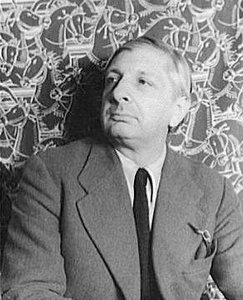
Artist Biography

A Dreamscape of the Mind: The Life and Art of Giorgio de Chirico

Born in 1888 in Volos, Greece, to Italian parents—a Genoese mother and a Sicilian father—Giorgio de Chirico’s artistic journey was one steeped in both classical heritage and a burgeoning sense of modern alienation. His early education at the Athens Polytechnic laid a foundation in traditional techniques, but it was his subsequent studies in Munich that truly ignited his creative spirit. There, amidst the intellectual ferment of pre-war Europe, he encountered the works of Arnold Böcklin and Max Klinger, artists whose symbolic landscapes and haunting imagery would deeply resonate with his own developing aesthetic. Equally influential were the philosophical currents of the time—the writings of Friedrich Nietzsche, Arthur Schopenhauer, and Otto Weininger—which explored themes of existentialism, the irrationality of human desire, and the subjective nature of reality. These ideas would become central to de Chirico’s groundbreaking artistic vision.

The Birth of Metaphysical Painting

Around 1909, a unique style began to emerge from de Chirico's explorations—a style that he himself termed “Metaphysical” art. This wasn’t merely a stylistic innovation; it was a profound attempt to capture the hidden realities beneath the surface of everyday life, to reveal the unsettling poetry lurking within familiar spaces. A pivotal moment occurred during a visit to Florence and an experience in Piazza Santa Croce, which sparked his iconic ‘Metaphysical Town Square’ series. These paintings are characterized by their eerie stillness, long dramatic shadows, illogical perspectives, and the presence of classical architecture juxtaposed with unsettling elements like faceless mannequins and looming statues. The effect is deeply disquieting, evoking a sense of nostalgia, isolation, and an almost unbearable longing for something lost or unattainable. De Chirico founded the Scuola Metafisica, profoundly impacting Surrealism, though he would later distance himself from its interpretations of his work. His paintings weren’t intended as illustrations of dreams, but rather as attempts to depict a reality beyond the visible world—a realm where time and space are fluid, and the boundaries between consciousness and unconsciousness blur. Notable works like *The Vexations of the Thinker*, *The Enigma of an Autumn Afternoon*, and *The Song of Love* exemplify this haunting aesthetic, inviting viewers to contemplate the mysteries of existence and the fragility of human perception.

A Shift in Style and a Lasting Legacy

Following World War I, around 1919, de Chirico’s artistic path took an unexpected turn. He rejected his earlier metaphysical approach, embracing instead a more traditional neoclassical or neo-baroque style. This shift was met with considerable controversy; many critics lamented the perceived decline in quality and accused him of abandoning the innovative spirit that had defined his early work. However, de Chirico remained steadfast in his artistic choices, revisiting themes from his past but rendering them with a different aesthetic sensibility. He continued to paint and exhibit prolifically throughout his life, exploring various styles and subjects while maintaining a consistent commitment to craftsmanship and technical skill. Despite the criticism, his influence on subsequent generations of artists cannot be overstated. His innovative use of space, perspective, and symbolism challenged conventional artistic norms and paved the way for new forms of expression.

Influences and Enduring Impact

De Chirico’s work stands as a crucial bridge between the late 19th-century Symbolist movement and the rise of Surrealism in the early 20th century. He was directly influenced by artists like Arnold Böcklin and Max Klinger, whose evocative imagery resonated with his own fascination with mythology and the subconscious mind. Philosophers such as Nietzsche and Schopenhauer provided him with a framework for exploring themes of existential angst, alienation, and the search for meaning in a seemingly meaningless world. However, de Chirico’s influence extended far beyond Surrealism. Artists like René Magritte and Salvador Dalí were deeply inspired by his metaphysical paintings, adopting his techniques of juxtaposition, illogical perspective, and symbolic imagery to create their own dreamlike worlds. His work also impacted later movements such as Magic Realism, which sought to depict everyday reality with a heightened sense of mystery and psychological depth. Today, de Chirico’s paintings are exhibited in major museums worldwide, including the Museum dedicated to his work near the Spanish Steps in Rome, ensuring that his legacy as one of the most important figures in 20th-century art remains secure. He left behind not just a body of artwork but a new way of seeing—a way of perceiving the world as a place of hidden meanings, unsettling beauty, and enduring mystery.

Key Influences & Artistic Lineage

  • Influenced By: Arnold Böcklin, Max Klinger, Friedrich Nietzsche, Arthur Schopenhauer.
  • Influenced: Surrealism, particularly artists like René Magritte and Salvador Dalí. His work also impacted later movements such as Magic Realism.
Giorgio de Chirico

Giorgio de Chirico

1888 - 1978 , Greece

Quick Facts

  • Artistic Movement Or Style: Metaphysical art
  • Artists Or Movements Influenced By This Artist:
    • Surrealism
    • René Magritte
    • Salvador Dalí
  • Artists Who Influenced This Artist:
    • Arnold Böcklin
    • Max Klinger
    • Friedrich Nietzsche
  • Date Of Birth: July 10, 1888
  • Date Of Death: 1978
  • Full Name: Giorgio de Chirico
  • Nationality: Italian
  • Notable Artworks:
    • The Vexations of the Thinker
    • The Enigma of an Autumn Afternoon
    • The Song of Love
  • Place Of Birth: Volos, Greece

