x

 Oil On CanvasWallArtMannerism
 1566
1566 67.0 x 51.0 cm
 Kunsthistorisches Museum
Purchase a high-resolution, enhanced digital image, far superior to the online preview.
Each file is meticulously prepared by our in-house specialists using advanced tools and expert manual retouching. We ensure every image has exceptional clarity, precise color accuracy, and fine detail.
The final file is delivered via email within 72 hours, optimized for immediate use in professional, editorial, and print environments. This is the same quality trusted by top-tier design studios, publishers, and galleries.
Download a high-resolution file for personal display, printing, and creative projects. ( Buy Print Buy Hand Made Painting)
When you choose Most-Famous-Paintings.com, you're not just getting an image - you're receiving a professionally enhanced digital artwork, crafted with precision and backed by a satisfaction guarantee. Here's everything that comes with your order, automatically:

Your high-resolution digital image file will be emailed to you within 72 hours of ordering - ready for immediate use.

Your artwork is professionally optimized using advanced AI tools and manual editing, ensuring maximum detail, clarity, and color accuracy.

Accidentally deleted or lost your file? No worries - we'll resend it to you anytime, free of charge.

Enjoy your artwork instantly with zero customs, duties, or delivery fees - digital downloads are always tax-free.

We ensure your digital image reflects the original colors as closely as possible using professional tools and color management.

If you're not satisfied with your digital image, we'll revise it or refund 100% within 60 days - no questions asked.

Not satisfied? Get a full refund within 60 days of receiving your digital file - no questions asked.

Buy 3 images, save 10% - Buy 5, save 15% - Buy 10+, save 20%. Great for creative projects, galleries, and agencies.
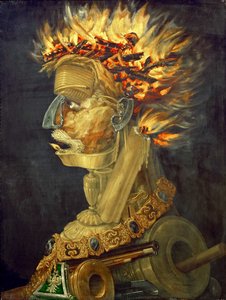
Giuseppe Arcimboldo’s “Fire,” painted in 1566, stands as a singular achievement within the Renaissance artistic landscape—a testament to inventive visual storytelling and masterful execution. More than just a portrait, it's an elaborate allegory embodying the element of fire itself, reflecting Arcimboldo’s fascination with humanist ideals and his desire to communicate complex ideas through unconventional means.
The artwork depicts the head of a noble figure rendered entirely from meticulously arranged fruits, vegetables, flowers, and stylized avian elements. This audacious technique—characteristic of Arcimboldo's celebrated “Four Elements” series—immediately distinguishes it from traditional portraiture. Rather than striving for realistic representation, Arcimboldo prioritized conveying an overarching concept: the transformative power of fire, its destructive beauty, and its association with divine illumination.
Created during the height of the Renaissance in Milan—a city renowned for its artistic patronage—Arcimboldo's work reflects the humanist spirit of the era, which championed observation of nature and explored philosophical concepts rooted in classical antiquity. The element of fire itself held profound symbolic meaning: representing divine illumination, purification, and transformation – mirroring Arcimboldo’s belief that art could elevate the human intellect.
The carefully chosen fruits—apples, pears, peaches—suggest ripeness and abundance, symbolizing vitality and earthly pleasures. Flowers contribute to the overall aesthetic beauty while subtly hinting at spiritual contemplation. The stylized bird represents aspiration and transcendence, elevating the figure’s gaze beyond the mundane realm. Arcimboldo's masterful manipulation of texture and color reinforces these symbolic associations, creating a visual experience that transcends mere representation.
"Fire" captivates viewers with its arresting juxtaposition of organic forms and geometric precision—a stylistic hallmark of Arcimboldo’s oeuvre. The melancholic expression on the figure's face underscores the painting’s contemplative mood, inviting reflection on themes of mortality and spiritual enlightenment. More than just a decorative masterpiece, “Fire” remains an enduring symbol of artistic innovation and intellectual curiosity—a testament to Arcimboldo’s ability to transform visual conventions into vehicles for profound philosophical inquiry.


1527 - 1593 , Italy


Stay updated with the latest art news, exclusive offers, and decoration ideas.
Tell us about your project and our art experts will provide you with 3 personalized art suggestions.
Let Us Curate 3 Options Just for You - Free!


 Preview
 Send
Send Share
Share
 Details

 Download
 Similars
 X-Ray
X-Ray Diaporama
 Read More