x

Hand-painted oil on canvas in your size and frame, made to order by our artists.





























Pick from our preset sizes that match the artwork's original proportions.

You may enter your own dimensions to fit a specific frame or space. If your selected size does not match the original image's proportions, we will either crop the artwork or extend the painting with additional hand-painted elements. A digital mockup will be sent for your approval before production begins.
Please note that the on-screen preview does not reflect the actual cropping or extension. Only the mockup will accurately show the final composition.
While custom sizes are available, we recommend selecting a dimension from the predefined list to preserve the original proportions.
Worldwide Delivery () in 3/4 weeks instead of standard 5 weeks. (18 July). No compromise on quality.


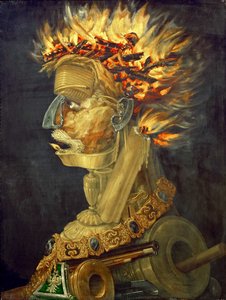
L'HIVER
Reproduction Size
Giuseppe Arcimboldo (1527 – 1593), a Milanese artist who defied convention and cemented his place in art history, stands apart from his contemporaries. While many painters of the Renaissance focused on idealized depictions of human form—a pursuit driven by humanist ideals—Arcimboldo embarked on an audacious experiment: transforming portraits into elaborate still lifes composed entirely of fruits, vegetables, flowers, and other natural elements. His masterpiece, “L’Hiver” (Winter), housed in the Louvre Museum, exemplifies this singular approach and continues to captivate viewers with its ingenious illusionistic technique and profound symbolic resonance.
Historical Context: Arcimboldo’s work emerged during a time of intellectual ferment in Europe, fueled by rediscovery of classical texts and burgeoning scientific inquiry. The Renaissance fascination with the natural world—expressed vividly in botanical illustrations and anatomical studies—provided fertile ground for Arcimboldo's conceptual breakthrough. He wasn’t merely creating an aesthetically pleasing image; he was engaging in a dialogue with humanist thought, suggesting that human form could be mirrored in the patterns and textures of nature.
Symbolism & Emotional Impact: The choice of fruits and vegetables as portrait subjects carries significant symbolic weight. Winter itself represents dormancy, death, and rebirth—themes central to Renaissance cosmology. Arcimboldo’s depiction underscores the cyclical nature of existence and subtly conveys a message about resilience and transformation. More than just visually arresting, “L’Hiver” prompts contemplation on humanity's relationship with the environment and its ability to adapt to challenging circumstances. The artwork evokes a feeling of wonder—a delight in the unexpected juxtaposition of artifice and nature—leaving viewers pondering Arcimboldo’s genius.
Materials & Craftsmanship: Arcimboldo employed oil paint on panel, applying his technique with meticulous care. He began by gluing meticulously arranged fruits and vegetables onto a surface before transferring the image to canvas or panel using a process akin to mezzotint engraving—a method that ensured exceptional detail and tonal accuracy. This painstaking craftsmanship speaks volumes about Arcimboldo’s dedication to artistic excellence.

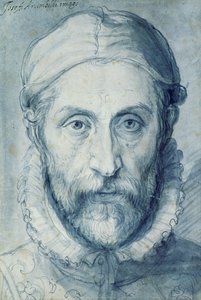
1527 - 1593 , Italy

Explore the rich history of still life painting & the symbolism of fruit across art movements. Discover masterpieces from Caravaggio to Cézanne with Most-Famous-Paintings – expert guidance & museum-quality reproductions.

Explore the rich history & symbolism of still life painting with Most-Famous-Paintings. Discover masterpieces from the Dutch Golden Age, learn about vanitas art, and find expert guidance for collecting timeless artworks.

Explore the captivating world of Severin Roesen, a major American still life painter influenced by Dutch masters. Discover his lush compositions and the symbolism within his art – a window into 19th-century America.

Explore the history of still life painting & discover how artful reproductions elevate villa entertaining spaces. Expert guidance, museum-quality prints & custom artwork at Most-Famous-Paintings.com.

Explore the evolution of contemplation in Western art from Renaissance masters to Modernism. Discover iconic artworks & find museum-quality reproductions at Most-Famous-Paintings.


Stay updated with the latest art news, exclusive offers, and decoration ideas.
Tell us about your project and our art experts will provide you with 3 personalized art suggestions.
Let Us Curate 3 Options Just for You - Free!


 Buy print
 Send
Send Share
Share
 Details

 Download
 Similars
 X-Ray
X-Ray Diaporama

 Read More







 Glass option is only available in size under 110 CM