


x

 Oil On CanvasWallArtImpressionist Painting
 187619th Century
 60.0 x 81.0 cm
Museum-quality giclée or canvas print with fast production and flexible finish options. ( Buy Hand Made Painting Buy Image)





























Pick from our preset sizes that match the artwork's original proportions.

You may enter your own dimensions to fit a specific frame or space. If your selected size does not match the original image's proportions, we will either crop the artwork or extend the image with a mirrored or solid-fill edge. A digital mockup will be sent for your approval before production begins.
Please note that the on-screen preview does not reflect the actual cropping or extension. Only the mockup will accurately show the final composition.
While custom sizes are available, we recommend selecting a dimension from the predefined list to preserve the original proportions.
Worldwide Delivery () in 2 weeks instead of standard 4/5 weeks. (23 August)


Billiards
Reproduction Size
Gustave Caillebotte's "Billiards," painted in 1876, is more than just a depiction of a game; it’s a meticulously observed snapshot of Parisian life at the cusp of modernity. Measuring a modest 60 x 81 cm, this oil on canvas offers an intimate glimpse into a billiard hall, a space that was rapidly becoming a social hub for the burgeoning middle class in late 19th-century Paris. The painting’s quiet drama resides not in grand gestures but in the subtle tension of the scene – a man poised with his hands upon the table, seemingly lost in concentration, while the room around him hints at conversation and leisure.
Caillebotte’s style, heavily influenced by his early fascination with photography, is immediately recognizable. He employs a precise, almost photographic eye for detail, rendering the textures of the table, the worn leather chairs, and the muted colors with remarkable accuracy. However, unlike a purely documentary photograph, Caillebotte imbues the scene with an Impressionist sensibility – a focus on capturing fleeting light and atmosphere. Note the dappled reflections on the billiard table’s surface, created by the soft glow of the room's illumination, and the subtle shifts in tone that convey depth and volume. This technique was revolutionary for its time, moving away from traditional academic painting towards a more subjective representation of reality.
"Billiards" provides a valuable window into the social landscape of Paris during the Second Empire. Billiard halls were not merely places to play; they were spaces for socializing, conducting business, and observing the latest fashions. Caillebotte’s choice of subject – a solitary man absorbed in his game – suggests a certain detachment from the bustling city outside, yet also hints at the growing individualism that was beginning to characterize Parisian society. The inclusion of the couch and other figures in the background subtly underscores the social dynamics at play within this particular space.
The painting’s quiet stillness evokes a sense of contemplation and perhaps even melancholy. The man's posture, absorbed in his game, suggests a moment of intense focus, inviting the viewer to consider themes of competition, skill, and the pursuit of mastery. Caillebotte masterfully uses light and shadow to create a mood that is both intimate and evocative. The composition draws us into this private world, prompting reflection on the nature of leisure, concentration, and the human condition. This piece exemplifies Caillebotte's ability to transform everyday scenes into works of art with profound emotional resonance.


1848 - 1894 , France
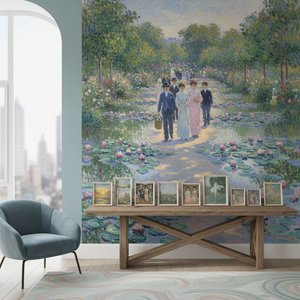
Journey through Impressionism's radiant world! Explore 10 masterpieces by Monet, Renoir & Degas that revolutionized art. Discover the stories behind these iconic paintings and find museum-quality reproductions for your home at .

Journey through 10 iconic Impressionist landscapes by Monet, Renoir & Degas. Explore the history, techniques & emotions behind these masterpieces. Find museum-quality reproductions for your home at Most-Famous-Paintings.com – where art comes to life! Discover all masterpieces on Most-Famous-Paintings.com

Explore the world of giclée prints with Most-Famous-Paintings. Learn about archival quality, aesthetic nuances & investment potential. Expert guidance for discerning art collectors seeking museum-quality reproductions and lasting value.

Journey through Impressionism's heart with 10 iconic paintings by Monet, Renoir & Degas. Explore light, color & the stories behind these masterpieces. Find museum-quality art reproductions and elevate your home decor on Most-Famous-Paintings.com.

Journey through Impressionism's finest! Explore 10 masterpieces by Monet, Degas & Renoir – discover their stories, techniques & lasting impact. Find museum-quality art reproductions for your home at Most-Famous-Paintings.com. Explore the full collection online.


Stay updated with the latest art news, exclusive offers, and decoration ideas.
Tell us about your project and our art experts will provide you with 3 personalized art suggestions.
Let Us Curate 3 Options Just for You - Free!


 Preview
 Send
Send Share
Share
 Details

 Download
 Similars
 X-Ray
X-Ray Diaporama
 Read More







 Glass option is only available in size under 110 CM


