x


 Oil On CanvasWallArtContemporary Realism
 186219th Century
 120.0 x 74.0 cm
 Metropolitan Museum of Art
Hand-painted oil on canvas in your size and frame, made to order by our artists.





























Pick from our preset sizes that match the artwork's original proportions.

You may enter your own dimensions to fit a specific frame or space. If your selected size does not match the original image's proportions, we will either crop the artwork or extend the painting with additional hand-painted elements. A digital mockup will be sent for your approval before production begins.
Please note that the on-screen preview does not reflect the actual cropping or extension. Only the mockup will accurately show the final composition.
While custom sizes are available, we recommend selecting a dimension from the predefined list to preserve the original proportions.
Worldwide Delivery () in 3/4 weeks instead of standard 5 weeks. (18 July). No compromise on quality.


The Source
Reproduction Size
Gustave Courbet’s “The Source,” completed in 1862, stands as an undeniable cornerstone of Realism—a movement that vehemently rejected the idealized conventions of Romantic art and championed a brutally honest depiction of everyday life. More than just a painting; it's a manifesto declaring defiance against artistic dogma and asserting the primacy of observation.
The painting portrays a nude woman positioned before a waterfall or fountain, her back turned towards the viewer—a deliberate choice that underscores Courbet’s rejection of traditional female figures modeled after classical ideals. Instead, he presents us with an unvarnished portrayal of femininity, stripped bare of embellishment and imbued with palpable vulnerability.
Composition & Elements: The scene unfolds against a backdrop of rugged rocks and verdant trees—a carefully constructed landscape designed to heighten the emotional impact of the central figure. A potted plant adds depth and textural complexity, subtly reinforcing the painting’s connection to the natural world. Courbet's meticulous brushstrokes capture the shimmering surface of the water, conveying its coolness and dynamism.
Historical Context & Influence: Courbet’s work emerged in response to the prevailing artistic landscape of France during his time—a period dominated by academic art that prioritized idealized beauty and mythological narratives. He actively opposed these conventions, aligning himself with artists like Jean-Auguste-Dominique Ingres who had previously championed a more restrained aesthetic. Ingres's painting “The Source,” exhibited in Paris the preceding year, served as an indirect stimulus for Courbet’s own artistic exploration—a shared preoccupation with capturing the essence of natural beauty and rejecting artificial ornamentation.
Artistic Movement: “The Source” epitomizes Realism—a movement characterized by its unflinching commitment to portraying subjects in a truthful and accurate manner. Unlike Romantic art's penchant for emotional excess and imaginative embellishment, Realism sought to represent the world as it appeared to ordinary people—without sentimentality or moral judgment. Courbet’s stylistic innovations—particularly his use of bold color palettes and loose brushwork—were instrumental in shaping the trajectory of subsequent artistic movements, including Impressionism and Cubism.
Symbolism & Emotional Impact: Beyond its formal qualities, “The Source” resonates with profound symbolic significance. The woman’s posture—facing away from the viewer—suggests introspection and contemplation—a deliberate gesture that invites viewers to engage in a dialogue about beauty, vulnerability, and the relationship between humanity and nature. Courbet's masterful depiction of light and shadow contributes to the painting’s evocative atmosphere—creating an image that transcends mere representation and speaks directly to the human spirit.
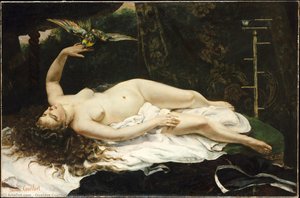
Related Works: Courbet’s artistic legacy extends beyond “The Source,” encompassing masterpieces such as “Woman with a Parrot” (1866) and “Nude with Flowering Branch” (1862)—all housed at The Metropolitan Museum of Art. These paintings demonstrate Courbet's unparalleled ability to capture the sublime beauty of everyday life—challenging artistic conventions and establishing him as one of the most influential artists of his era.


1819 - 1877 , France

Journey through 25 iconic Claude Monet masterpieces! Explore Impressionism’s beauty, from Water Lilies to Rouen Cathedral. Discover stunning art reproductions & curated decor ideas – explore the full collection online at Most-Famous-Paintings.com.
Journey through 25 iconic artworks by Paul Cézanne – a master of Impressionism and Post-Impressionism. Explore his landscapes, still lifes, and the stories behind these timeless masterpieces. Discover museum-quality reproductions & curated decor at Most-Famous-Paintings.com.
Journey through 10 breathtaking landscape paintings by Monet, Van Gogh & more! Explore iconic artworks, artistic techniques & find inspiration for your home decor. Museum-quality reproductions at Most-Famous-Paintings.com. Discover all masterpieces on Most-Famous-Paintings.com

Journey through 10 Romantic landscape masterpieces by Friedrich, Turner & Cole. Explore emotional art, sublime nature scenes & iconic 19th-century paintings. Find museum-quality reproductions for your home at Most-Famous-Paintings.com – discover the full collection online!
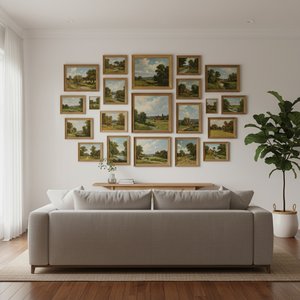
Journey through John Constable's 25 most celebrated landscapes. Explore Romanticism, Dedham Vale & his masterful use of light in iconic paintings like 'Hay Wain'. Find museum-quality art reproductions and elevate your home decor on Most-Famous-Paintings.com.


Stay updated with the latest art news, exclusive offers, and decoration ideas.
Tell us about your project and our art experts will provide you with 3 personalized art suggestions.
Let Us Curate 3 Options Just for You - Free!


 Buy print
 Send
Send Share
Share
 Details

 Download
 Similars
 X-Ray
X-Ray Diaporama
 Read More







 Glass option is only available in size under 110 CM