x
Museum-quality giclée or canvas print with fast production and flexible finish options. ( Buy Hand Made Painting Buy Image)
Pick from our preset sizes that match the artwork's original proportions.

You may enter your own dimensions to fit a specific frame or space. If your selected size does not match the original image's proportions, we will either crop the artwork or extend the image with a mirrored or solid-fill edge. A digital mockup will be sent for your approval before production begins.
Please note that the on-screen preview does not reflect the actual cropping or extension. Only the mockup will accurately show the final composition.
While custom sizes are available, we recommend selecting a dimension from the predefined list to preserve the original proportions.
Worldwide Delivery () in 2 weeks instead of standard 4/5 weeks. (18 August)


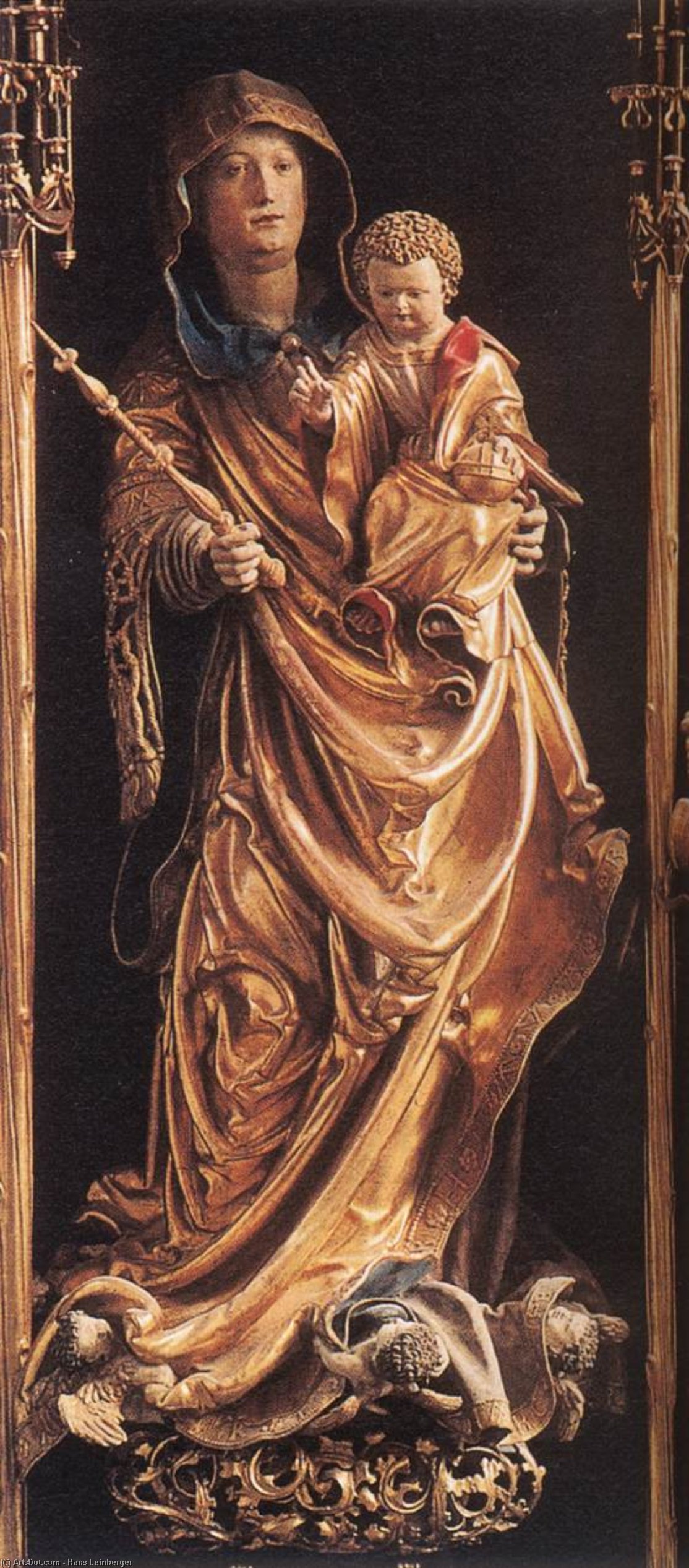
Virgin and Child
Reproduction Size

Hans Leinberger (c.1475/1480 – after 1531) remains a figure shrouded in some mystery, yet his legacy endures as one of Altbayern’s most prominent sculptors of the Early Renaissance. While biographical details are scarce—his birthplace and precise artistic education remain elusive—scholarly research has illuminated his remarkable career and contribution to German art history.
Leinberger emerged onto the artistic scene around 1510 in Landshut, Bavaria, where he established a workshop that would become synonymous with innovation and stylistic refinement. His patron, Louis X, Duke of Bavaria, recognized Leinberger’s talent and commissioned significant projects, notably the monumental statue of Albert IV for Innsbruck’s Hofkirche—a testament to Dürer's influence and Leinberger’s ability to capture regal dignity.
Leinberger's artistic style is characterized by its sensitivity to detail and its ability to convey psychological depth—qualities that distinguish him from earlier Gothic sculptors. His work embodies the humanist impulse to represent human form accurately, while simultaneously honoring religious dogma. Leinberger’s enduring influence can be seen in subsequent generations of Bavarian sculptors who adopted his techniques and aesthetic sensibilities.
Despite the paucity of surviving sculptures—only two Madonna figures remain—Leinberger's contribution to German Renaissance art is undeniable. He stands as a symbol of Altbayern’s artistic flourishing during Louis X’s reign, securing his place among the masters of his time and cementing his legacy as a sculptor who seamlessly blended Gothic tradition with humanist innovation.

1478 - 1531 , Germany


Stay updated with the latest art news, exclusive offers, and decoration ideas.
Tell us about your project and our art experts will provide you with 3 personalized art suggestions.
Let Us Curate 3 Options Just for You - Free!


 Preview
 Send
Send Share
Share
 Details

 Download
 Similars
 X-Ray
X-Ray Diaporama

 Read More




































 Glass option is only available in size under 110 CM