


x

Museum-quality giclée or canvas print with fast production and flexible finish options. ( Buy Hand Made Painting Buy Image)
Pick from our preset sizes that match the artwork's original proportions.

You may enter your own dimensions to fit a specific frame or space. If your selected size does not match the original image's proportions, we will either crop the artwork or extend the image with a mirrored or solid-fill edge. A digital mockup will be sent for your approval before production begins.
Please note that the on-screen preview does not reflect the actual cropping or extension. Only the mockup will accurately show the final composition.
While custom sizes are available, we recommend selecting a dimension from the predefined list to preserve the original proportions.
Worldwide Delivery () in 2 weeks instead of standard 4/5 weeks. (23 August)


Blue Pitcher
Reproduction Size
Henri Matisse's “Blue Pitcher,” painted in 1901, stands as a cornerstone of Fauvist art—a movement that irrevocably altered the course of twentieth-century painting. More than just a depiction of domestic objects, it embodies Matisse’s revolutionary approach to color and composition, reflecting his profound belief that art should express emotion rather than merely imitate reality.
The canvas presents a deceptively simple arrangement: a blue vase dominates the center stage, perched atop a pitcher. Surrounding it are two bottles positioned on either side, creating an equilibrium that’s subtly reinforced by the inclusion of a spoon resting upon the tabletop. Matisse eschewed traditional perspective and shading techniques, prioritizing instead the vibrancy of color to convey feeling. This deliberate rejection of academic conventions was precisely what defined Fauvism—a bold assertion that color could be its own reward.
Matisse’s masterful brushwork is instantly recognizable. Thick, impasto strokes – meaning paint applied thickly – imbue the canvas with palpable energy and texture. Each stroke isn't merely a mark; it’s an instrument of expression, channeling Matisse’s inner vision onto the surface. The artist meticulously layered hues of blue—ranging from cerulean to indigo—creating depth and luminosity that transcends mere visual representation.
"Blue Pitcher" emerged during a period of artistic ferment, challenging the prevailing aesthetic sensibilities of Impressionism. While Impressionists sought to capture fleeting moments of light and atmosphere, Matisse deliberately prioritized color as its primary vehicle for conveying emotion. This decision aligns with broader intellectual currents of the time—a burgeoning interest in psychology and symbolism—reflecting Matisse’s conviction that art should resonate beyond superficial appearances.
The choice of blue itself is significant. Often associated with tranquility, spirituality, and introspection, it serves as a counterpoint to the darker tones surrounding it. The vase and pitcher—familiar objects imbued with everyday life—become symbols of domestic harmony and contemplation. Ultimately, “Blue Pitcher” invites viewers into Matisse’s emotional landscape, prompting reflection on beauty, color, and the expressive power of art. It remains an enduring testament to Matisse's genius and a pivotal work in the history of Fauvist painting.


1869 - 1954 , France
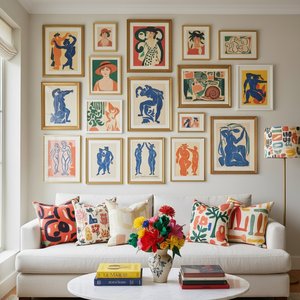
Journey through Henri Matisse's 25 most iconic paintings! Explore Fauvism, vibrant colors & the stories behind masterpieces like 'The Dance'. Find museum-quality art reproductions and curated decor ideas to elevate your space. Discover all masterpieces on Most-Famous-Paintings.com.

Explore 10 Fauvist masterpieces by Matisse, Derain & Vlaminck that ignited Modern Art! Discover bold colors, expressionist landscapes & the history of this revolutionary movement. Find museum-quality prints at Most-Famous-Paintings.com.
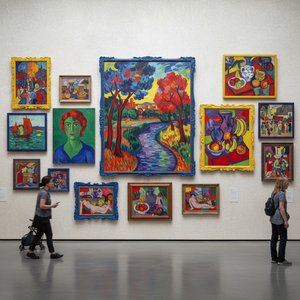
Explore the revolutionary world of Fauvism! Discover 10 masterpieces by Matisse, Derain & Vlaminck that defined this bold art movement. Find museum-quality reproductions and vibrant canvas prints to elevate your home decor at .

Immerse yourself in the captivating world of slate blue! Explore 10 iconic paintings by Monet, Van Gogh & Renoir. Discover their stories, techniques & find museum-quality art reproductions for your home at .

Experience art's raw power! Explore 10 iconic paintings – Van Gogh, Kahlo & more – that define 'bold'. Discover the stories behind these expressive masterpieces and find museum-quality reproductions for your home at Most-Famous-Paintings.com.


Stay updated with the latest art news, exclusive offers, and decoration ideas.
Tell us about your project and our art experts will provide you with 3 personalized art suggestions.
Let Us Curate 3 Options Just for You - Free!


 Preview
 Send
Send Share
Share
 Details

 Download
 Similars
 X-Ray
X-Ray Diaporama

 Read More




































 Glass option is only available in size under 110 CM


