x


Hand-painted oil on canvas in your size and frame, made to order by our artists.





























Pick from our preset sizes that match the artwork's original proportions.

You may enter your own dimensions to fit a specific frame or space. If your selected size does not match the original image's proportions, we will either crop the artwork or extend the painting with additional hand-painted elements. A digital mockup will be sent for your approval before production begins.
Please note that the on-screen preview does not reflect the actual cropping or extension. Only the mockup will accurately show the final composition.
While custom sizes are available, we recommend selecting a dimension from the predefined list to preserve the original proportions.
Worldwide Delivery () in 3/4 weeks instead of standard 5 weeks. (18 July). No compromise on quality.


The inattentive reader
Reproduction Size
Henri Matisse’s “The Inattentive Reader,” painted in 1919 during his sojourn in Nice, is more than just a depiction of a woman absorbed in a book; it's a masterful distillation of the artist’s evolving style and a poignant exploration of interiority. Emerging from the Fauvist period, Matisse here moves towards a more controlled and sophisticated approach, utilizing flattened forms, bold color relationships, and a subtle yet powerful sense of mood. The painting immediately draws the viewer in with its muted palette – primarily shades of grey, pink, and delicate touches of red – creating an atmosphere of quiet intimacy and understated melancholy. It’s a scene both familiar and profoundly evocative, inviting us to contemplate the unspoken thoughts swirling within the subject's mind.
The composition itself is deceptively simple. A woman, seated on a cushioned stool in what appears to be a modestly furnished room, rests her head upon her hand – a pose that has become almost archetypal for conveying introspection and perhaps even a touch of sadness. The background is deliberately sparse, consisting primarily of a pink patterned floor and a mirror reflecting the room’s interior and a few flowers, elements that serve not as distractions but rather as subtle reminders of the transient beauty of life. Matisse skillfully employs geometric shapes and simplified forms, characteristic of his mature style, to create a sense of stability and order within the scene. The use of color is particularly noteworthy; it's not about vibrant hues or dramatic contrasts, but rather about carefully orchestrated relationships between shades that generate depth and visual interest.
Matisse’s journey to “The Inattentive Reader” was deeply rooted in the Fauvist movement, a revolutionary artistic current of the early 20th century. The Fauves, meaning "wild beasts," rejected traditional academic painting conventions and embraced color as their primary means of expression. Matisse initially experimented with intensely saturated colors, but by the time he created this work, he had refined his approach, favoring more restrained palettes while retaining the core principle of using color to convey emotion and atmosphere. The muted tones here aren’t a retreat from boldness; rather, they amplify the painting's contemplative mood, allowing the subtle shifts in hue to subtly communicate the woman’s inner state.
Consider the interplay between the pink floor and the grey of the stool – it suggests both comfort and isolation. The red accents, perhaps hinting at a forgotten romance or a lingering sadness, add a layer of complexity to the scene. Matisse's technique is characterized by loose, expressive brushstrokes that create a palpable sense of texture and movement. He avoids meticulous detail, prioritizing instead the overall impression and emotional impact of the work. This deliberate lack of precision contributes to the painting’s immediacy and its ability to resonate with viewers on a deeply personal level.
While seemingly straightforward, “The Inattentive Reader” is rich in symbolic potential. The woman's pose – head resting on hand – has long been associated with contemplation, melancholy, or even a sense of surrender. The book itself becomes a symbol of escape, offering a temporary refuge from the complexities and pressures of life. However, the fact that she’s *not* actively reading suggests a deeper level of introspection—a state where thoughts are swirling beneath the surface, unarticulated and unresolved.
The mirror reflecting the room and flowers adds another layer of interpretation. It could represent self-reflection, reminding us of our own mortality and the fleeting nature of beauty. The flowers, drooping slightly, might symbolize lost love or fading memories. Ultimately, Matisse leaves much open to interpretation, inviting viewers to project their own experiences and emotions onto the scene. “The Inattentive Reader” is not simply a portrait; it’s an invitation to engage in a silent dialogue with the subject's inner world.
Reproductions of "The Inattentive Reader" capture much of the original painting’s evocative power, offering a beautiful addition to any interior space. When selecting a reproduction, consider the quality of the print – a high-resolution digital print on archival paper will best preserve the subtle nuances of color and texture. This artwork's enduring appeal lies in its ability to evoke a sense of quiet contemplation and emotional resonance—qualities that are increasingly valued in today’s fast-paced world.


1869 - 1954 , France
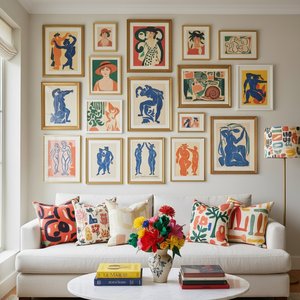
Journey through Henri Matisse's 25 most iconic paintings! Explore Fauvism, vibrant colors & the stories behind masterpieces like 'The Dance'. Find museum-quality art reproductions and curated decor ideas to elevate your space. Discover all masterpieces on Most-Famous-Paintings.com.

Explore the revolutionary Fauvist movement of 1905! Discover Matisse, Derain & Vlaminck’s bold use of color and expressive brushwork. Learn about this pivotal moment in art history with Most-Famous-Paintings.

Explore the revolutionary art of André Derain, co-founder of Fauvism. Discover his bold use of color, evolution from radical expressionism to classicism, and lasting influence on modern art history. Learn more at Most-Famous-Paintings.

Explore 10 Fauvist masterpieces by Matisse, Derain & Vlaminck that ignited Modern Art! Discover bold colors, expressionist landscapes & the history of this revolutionary movement. Find museum-quality prints at Most-Famous-Paintings.com.

Explore the captivating world of muted colors in art & design! Discover historical context, psychological effects, techniques, and inspiration for creating serene spaces. Elevate your aesthetic with Most-Famous-Paintings.


Stay updated with the latest art news, exclusive offers, and decoration ideas.
Tell us about your project and our art experts will provide you with 3 personalized art suggestions.
Let Us Curate 3 Options Just for You - Free!


 Buy print
 Send
Send Share
Share
 Details

 Download
 Similars
 X-Ray
X-Ray Diaporama

 Read More







 Glass option is only available in size under 110 CM