


x

Hand-painted oil on canvas in your size and frame, made to order by our artists. ( Buy Print Buy Image)
Pick from our preset sizes that match the artwork's original proportions.

You may enter your own dimensions to fit a specific frame or space. If your selected size does not match the original image's proportions, we will either crop the artwork or extend the painting with additional hand-painted elements. A digital mockup will be sent for your approval before production begins.
Please note that the on-screen preview does not reflect the actual cropping or extension. Only the mockup will accurately show the final composition.
While custom sizes are available, we recommend selecting a dimension from the predefined list to preserve the original proportions.
Worldwide Delivery () in 3/4 weeks instead of standard 5 weeks. (21 August). No compromise on quality.


Augustus frederick
Reproduction Size

Born in Burford, Oxfordshire, on August 11th, 1753, Thomas Bewick’s life was a testament to the power of observation and dedication. His early years were marked by personal tragedy – the loss of both his parents before he reached adolescence – shaping a childhood spent largely under the guidance of his uncle, a solicitor who instilled in him a love for learning and a methodical approach to work. Initially destined for a legal career, Bewick’s artistic inclinations led him down an entirely different path, ultimately establishing him as one of England's most celebrated wood engravers and natural history illustrators.
Bewick’s formal training began at the Royal Academy Schools in London, where he honed his skills under the tutelage of Johan Zoffany, a renowned painter known for his intricate compositions. However, Bewick quickly developed his own distinctive style, characterized by an extraordinary attention to detail and a remarkable ability to capture the essence of his subjects – primarily animals and plants – with astonishing accuracy. He initially took on various commercial commissions, including engraving cutlery and creating wood blocks for advertisements, gaining valuable experience in the craft before dedicating himself fully to illustration.
Bewick’s artistic philosophy was deeply rooted in observation and meticulous study. He spent countless hours sketching animals in their natural habitats, meticulously documenting their behavior and appearance. This dedication to realism is evident in his illustrations, which are remarkably lifelike and imbued with a sense of immediacy. Unlike the prevailing trends of the time, Bewick rejected the idealized representations favored by many artists, instead choosing to depict nature as he saw it – with all its imperfections and nuances. His work was not merely decorative; it was a profound exploration of the natural world.
Bewick’s contribution to printmaking extends far beyond his individual illustrations. He pioneered the use of wood engraving for high-quality illustration, developing techniques that allowed for greater detail and durability than traditional woodcuts. His method involved cutting hard boxwood across the grain using metal-engraving tools, creating printing blocks that could be seamlessly integrated with metal type – a revolutionary approach at the time. This technique enabled him to produce stunningly detailed illustrations at a relatively low cost, making them accessible to a wider audience.
Furthermore, Bewick’s work profoundly influenced subsequent generations of engravers and illustrators. His meticulous attention to detail, his commitment to realism, and his innovative techniques set a new standard for the craft. He is often considered the “father of wood engraving,” having single-handedly transformed it from a simple decorative technique into a powerful medium for artistic expression and scientific documentation. His legacy continues to inspire artists today, reminding us of the beauty and wonder that can be found in the details of the natural world.
Thomas Bewick's impact resonated far beyond his own lifetime. His meticulous approach to illustration, particularly his use of wood engraving, fundamentally altered how images were produced and disseminated. Prior to Bewick, illustrations were often printed separately from the text, a cumbersome process that limited their quality and accessibility. Bewick’s method of integrating engravings with type revolutionized book production, allowing for more detailed and visually engaging publications.
Beyond his technical innovations, Bewick's legacy is also tied to his deep appreciation for nature. His illustrations are not merely representations of animals and plants; they are imbued with a sense of wonder and respect for the natural world. He championed a more observational approach to art, encouraging viewers to engage with their surroundings and appreciate the beauty that exists all around them. Thomas Bewick died on November 8th, 1828, leaving behind a remarkable body of work that continues to captivate and inspire audiences today.

1753 - 1809 , France
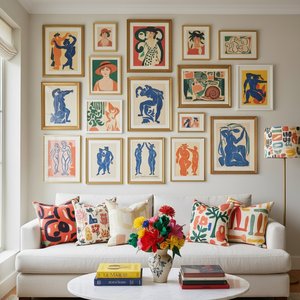
Journey through Henri Matisse's 25 most iconic paintings! Explore Fauvism, vibrant colors & the stories behind masterpieces like 'The Dance'. Find museum-quality art reproductions and curated decor ideas to elevate your space. Discover all masterpieces on Most-Famous-Paintings.com.

Explore 25 iconic Pierre-Auguste Renoir paintings! Discover the stories behind Impressionist masterpieces like 'Dance at Le Moulin de la Galette' & 'Luncheon of the Boating Party'. Find museum-quality art reproductions and elevate your home decor with Most-Famous-Paintings.com.
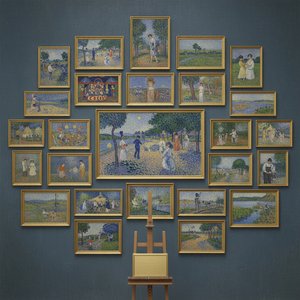
Explore 25 iconic Georges Seurat paintings & discover the brilliance of Pointillism. From 'La Grande Jatte' to his harbor scenes, delve into art history with Most-Famous-Paintings.com. Find museum-quality reproductions for your home decor. Explore the full collection online!

Journey through 18th century art! Explore 10 iconic paintings – from Rococo elegance to Neoclassical grandeur. Discover Fragonard, David & more. Find museum-quality reproductions and elevate your home decor on Most-Famous-Paintings.com.

Explore 10 Fauvist masterpieces by Matisse, Derain & Vlaminck that ignited Modern Art! Discover bold colors, expressionist landscapes & the history of this revolutionary movement. Find museum-quality prints at Most-Famous-Paintings.com.


Stay updated with the latest art news, exclusive offers, and decoration ideas.
Tell us about your project and our art experts will provide you with 3 personalized art suggestions.
Let Us Curate 3 Options Just for You - Free!


 Preview
 Send
Send Share
Share
 Details

 Download
 Similars
 X-Ray
X-Ray Diaporama
 Read More




































 Glass option is only available in size under 110 CM


