x


Hand-painted oil on canvas in your size and frame, made to order by our artists.





























Pick from our preset sizes that match the artwork's original proportions.

You may enter your own dimensions to fit a specific frame or space. If your selected size does not match the original image's proportions, we will either crop the artwork or extend the painting with additional hand-painted elements. A digital mockup will be sent for your approval before production begins.
Please note that the on-screen preview does not reflect the actual cropping or extension. Only the mockup will accurately show the final composition.
While custom sizes are available, we recommend selecting a dimension from the predefined list to preserve the original proportions.
Worldwide Delivery () in 3/4 weeks instead of standard 5 weeks. (18 July). No compromise on quality.


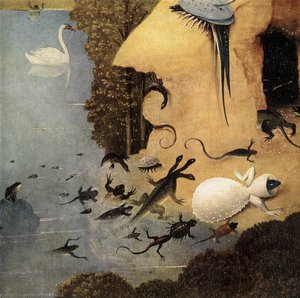
Triptych of Garden of Earthly Delights (detail) (13)
Reproduction Size
Hieronymus Bosch's Triptych of the Garden of Earthly Delights is not merely a painting; it’s an immersive, unsettling dreamscape rendered in vibrant color and bewildering detail. Completed around 1500, this masterpiece transcends simple categorization, existing as a unique confluence of late medieval and early Renaissance artistic sensibilities. The work unfolds as a triptych – three hinged panels meant to be read sequentially – offering a narrative that moves from the innocence of Eden on the left wing, through a central panel teeming with earthly pleasures (and their inherent dangers), to the harrowing vision of Hell on the right. Even focusing on a single detail, such as the one presented here, reveals Bosch’s extraordinary ability to populate his world with fantastical creatures and symbolic imagery that continues to fascinate and provoke debate centuries later.
Bosch's garden is far from idyllic. It isn’t a celebration of nature, but rather a cautionary tale about humanity’s susceptibility to temptation. The scene before us, a fragment of the central panel, showcases this perfectly. Birds – symbols often associated with the soul or spiritual aspiration – mingle with more earthly creatures like cats, turtles, and snakes. These aren't simply depictions of wildlife; each animal carries symbolic weight. The cat, for instance, could represent lust or deceit, while the snake, a classic symbol of temptation since the story of Adam and Eve, coils ominously amongst the lush foliage. The abundance of fruit, often interpreted as representing sensual pleasure, is presented not as bounty but as an invitation to indulgence. Even the seemingly innocent presence of fish and frogs hints at hidden dangers lurking beneath the surface. Bosch’s meticulous attention to detail isn't about realism; it’s about constructing a complex visual allegory where every element contributes to a larger moral message.
Bosch was a true innovator in his use of oil paint, demonstrating a mastery of the medium that allowed him to achieve an unparalleled level of detail and luminosity. He built up layers of translucent glazes, creating depth and richness in color that were revolutionary for his time. The smoothness of the surfaces, combined with the intricate rendering of textures – from feathers to scales to fur – is breathtaking. He wasn’t concerned with traditional perspective or anatomical accuracy; instead, he prioritized expressive form and symbolic representation. This deliberate distortion contributes to the painting's dreamlike quality, pulling the viewer into a world that feels both familiar and utterly alien. The vibrant hues, particularly in this detail, are remarkably well-preserved, testament to Bosch’s skill and the enduring quality of his materials.
The Garden of Earthly Delights has captivated artists and viewers for generations. Its influence can be seen in the works of surrealists like Salvador Dalí, who admired Bosch’s ability to tap into the subconscious mind. Beyond its artistic impact, the triptych continues to resonate because it speaks to universal themes: temptation, sin, pleasure, and damnation. It is a work that demands contemplation, inviting us to confront our own desires and vulnerabilities. A reproduction of this detail – or indeed, any portion of the larger masterpiece – offers not just a beautiful addition to an interior space, but also a powerful reminder of the complexities of the human condition and the enduring power of art to provoke thought and emotion.


1450 - 1516 , Netherlands
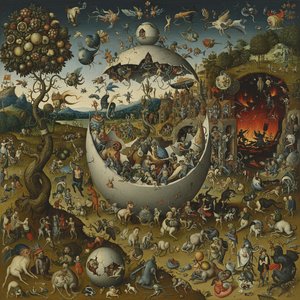
Delve into the enigmatic world of Hieronymus Bosch! Explore 25 iconic paintings – from 'The Garden of Earthly Delusions' to his haunting triptychs. Discover the symbolism, history & artistry behind these Renaissance masterpieces. Find museum-quality art reproductions at Most-Famous-Paintings.com.

Explore the captivating world of Hieronymus Bosch! Delve into the symbolism, religious context, and artistic innovation of this Netherlandish master with Most-Famous-Paintings's expert analysis. Discover his iconic paintings & lasting influence.
Journey through 25 Prado Museum masterpieces! Explore Velázquez, Goya & El Greco's iconic Spanish art. Discover the stories behind these timeless paintings and find museum-quality reproductions for your home at Most-Famous-Paintings.com.
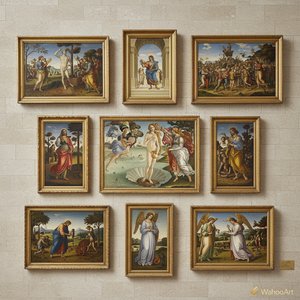
Journey through the Early Renaissance! Explore 10 iconic paintings by Botticelli, Leonardo da Vinci & Michelangelo. Discover their stories, techniques & lasting impact. Find museum-quality art reproductions and elevate your home decor with .
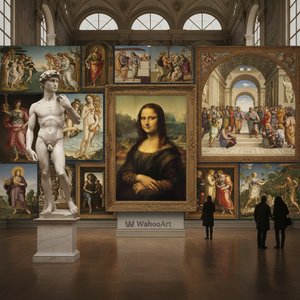
Journey through the Italian Renaissance with 10 iconic masterpieces by Leonardo da Vinci, Michelangelo & Raphael. Explore art history, techniques & timeless beauty. Find museum-quality reproductions and elevate your home decor on .


Stay updated with the latest art news, exclusive offers, and decoration ideas.
Tell us about your project and our art experts will provide you with 3 personalized art suggestions.
Let Us Curate 3 Options Just for You - Free!


 Buy print
 Send
Send Share
Share
 Details

 Download
 Similars
 X-Ray
X-Ray Diaporama


 Read More







 Glass option is only available in size under 110 CM