x


Hand-painted oil on canvas in your size and frame, made to order by our artists.





























Pick from our preset sizes that match the artwork's original proportions.

You may enter your own dimensions to fit a specific frame or space. If your selected size does not match the original image's proportions, we will either crop the artwork or extend the painting with additional hand-painted elements. A digital mockup will be sent for your approval before production begins.
Please note that the on-screen preview does not reflect the actual cropping or extension. Only the mockup will accurately show the final composition.
While custom sizes are available, we recommend selecting a dimension from the predefined list to preserve the original proportions.
Worldwide Delivery () in 3/4 weeks instead of standard 5 weeks. (18 July). No compromise on quality.


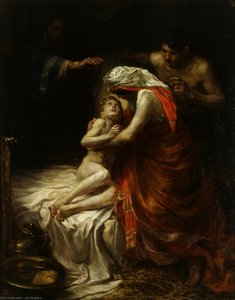
Elisha and the Son of the Shunammite Woman
Reproduction Size
In the profound depths of Jan Sluyters’ 1904 oil painting, Elisha and the Son of the Shunammite Woman, viewers are transported into a moment of intense biblical gravity. This work, rooted in the sacred narratives of 2 Kings, captures the harrowing intersection of human grief and divine intervention. The scene depicts the miraculous yet tragic arc of the Shunammite woman, whose hospitality to the prophet Elisha led to the unexpected gift of a son, only to face the sudden, devastating loss of that very child. Sluypons’ composition is masterfully structured in a triangular form, drawing the eye inevitably toward the apex: the woman cradling her lifeless child. This arrangement creates a sense of stability amidst chaos, anchoring the viewer's gaze to the raw, visceral center of familial heartbreak.
The technical execution of this piece reveals Sluyters’ command over the late Academic style, infused with the dramatic shadows of the Baroque tradition. Utilizing a technique known as chiaroscuro, the artist employs stark contrasts between light and shadow to sculpt the figures from the darkness. The background is shrouded in deep, somber tones that evoke a sense of claustrophobia and impending doom, making the illuminated faces of the protagonists appear even more luminous and vulnerable. Every brushstroke serves the narrative; the heavy, textured folds of the drapery and the ruggedness of the skin suggest a reality that is both physically present and emotionally weighted. The palette, dominated by melancholic browns, deep reds, and stark whites, reinforces the atmosphere of mourning and solemnity.
Beyond its surface-level tragedy, the painting serves as a profound meditation on faith, hope, and the resilience of the human spirit. The interplay of light does more than just define form; it acts as a symbol of the divine presence amidst earthly suffering. While the shadows represent the encroaching darkness of death and loss, the highlights on the figures suggest the flickering embers of hope and the possibility of resurrection. For collectors and interior designers alike, this artwork offers a sophisticated focal point that commands attention through its narrative complexity. It is not merely a depiction of a historical event but an exploration of the universal themes of sacrifice and the unbreakable bonds of family.
As a pivotal work from the early 20th century, this painting stands as a testament to Jan Sluyters’ ability to bridge the gap between traditional academic precision and the burgeoning emotional intensity of modernism. For those seeking to adorn a space with art that provokes thought and stirs the soul, a high-quality reproduction of this masterpiece brings a sense of historical weight and dramatic elegance to any collection. It invites the observer to linger within its shadows, finding beauty in the struggle and strength in the light.

Johannes Carolus Bernardus (Jan) Sluijters, born in ‘s-Hertogenbosch, Netherlands, in 1881, and passing away in Amsterdam in 1957, remains a captivating figure within the landscape of Dutch art. Often overlooked outside his native country, Sluijters was a pivotal pioneer of Post-Impressionism and Surrealism, renowned for his evocative landscapes, poignant portraits, and a distinctive approach to color that imbued his work with an almost palpable emotional intensity. His journey as an artist was one marked by experimentation, rejection, and ultimately, recognition for his unique vision – a vision deeply rooted in the beauty of the Brabant countryside and informed by the vibrant currents of European artistic innovation.
Sluijters’ early life provided fertile ground for his artistic development. His father, an engraver and illustrator, instilled in him a love for visual representation from a young age. This foundation led to his enrollment at the Royal School for Applied and Fine Arts in Amsterdam, where he honed his skills and began to explore his own distinctive style. Initially influenced by Impressionism and Symbolism, Sluijters quickly moved beyond these established movements, seeking new ways to express himself through color and form. His early work showcased a burgeoning talent for capturing light and atmosphere, but it was his embrace of the avant-garde that truly defined his artistic trajectory.
A pivotal moment in Sluijters’ career arrived in 1904 when he secured a prestigious Prix de Rome scholarship – an honor typically reserved for established artists. This award afforded him the opportunity to spend four years studying in Paris, the epicenter of European artistic innovation at the time. It was during this period that Sluijters encountered the burgeoning Fauvist movement, captivated by its bold use of color and expressive brushstrokes. He experimented with various styles – including Cubism and Luminism – absorbing influences from artists such as Matisse, Seurat, and Van Gogh. However, his Parisian adventure proved to be a double-edged sword. While he gained invaluable experience and broadened his artistic horizons, his increasingly unconventional style drew criticism from the Prix de Rome jury.
Upon his return to Amsterdam in 1906, Sluijters faced a stark reality: his avant-garde work was largely rejected by the conservative art establishment. Disheartened by this lack of acceptance, he made a bold decision – to retreat to his native Brabant. This move marked a significant shift in his artistic direction, as he sought inspiration in the familiar landscapes and rural life of his homeland.
Sluijters’ return to Brabant proved transformative. He began to paint with renewed vigor, capturing the essence of the region's rolling hills, shimmering meadows, and dramatic skies. His landscapes were characterized by a distinctive style known as Luminism – an approach that emphasized the interplay of light and color to evoke specific emotions and moods. Unlike traditional landscape painters who sought to depict scenes with photographic accuracy, Sluijters used loose brushstrokes and vibrant hues to create a sense of atmosphere and feeling. He often employed a technique of layering colors, allowing them to blend and bleed into one another, resulting in luminous, almost ethereal effects.
His Brabant period produced some of his most celebrated works, including “Study of the Bal Tarbarin,” a dynamic depiction of a lively festival scene brimming with energy and movement. The painting’s thick impasto and visible brushstrokes convey a sense of immediacy and excitement, while its vibrant colors capture the joyous atmosphere of the event. Other notable landscapes from this time include depictions of moonlit nights, sunrises, and autumnal scenes – each imbued with Sluijters' unique emotional sensibility.
While renowned for his landscapes, Sluijters was also a prolific portrait painter. He produced a diverse collection of portraits, ranging from formal studio studies to informal snapshots of everyday life. His portraits were characterized by their honesty and emotional depth – he rarely shied away from depicting the imperfections and vulnerabilities of his subjects. He often employed bold color palettes and expressive brushstrokes to capture the essence of each individual, creating portraits that are both captivating and deeply revealing.
Beyond landscapes and portraits, Sluijters experimented with various other genres, including still lifes and genre scenes. His work reflected a restless spirit and a constant desire to explore new artistic possibilities. Throughout his career, he remained committed to pushing the boundaries of Dutch painting, forging his own unique path amidst the shifting currents of modern art.
Jan Sluijters’ contribution to the history of Dutch art is often underestimated, yet it is undeniably significant. As a pioneer of Post-Impressionism and Surrealism, he played a crucial role in shaping the artistic landscape of the Netherlands. His innovative use of color, his expressive brushwork, and his willingness to challenge conventional norms paved the way for future generations of artists. His work continues to resonate with viewers today, offering a glimpse into a world of light, emotion, and visual poetry.
Sluijters’ legacy extends beyond his individual paintings; he was also a founding member of the Modern Art Circle, a group that championed avant-garde tendencies and helped to introduce new artistic ideas to the Dutch public. His influence can be seen in the work of many subsequent artists, solidifying his place as a key figure in the development of modern art in the Netherlands.

1881 - 1957 , Netherlands

Journey through 25 iconic artworks at the Metropolitan Museum of Art! Explore Van Gogh, Monet, Rembrandt & more. Discover art history, inspiring stories, and museum-quality reproductions to elevate your home decor. Explore the full collection on Most-Famous-Paintings.com.
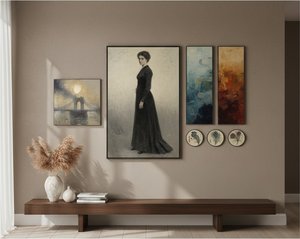
Journey through 25 iconic James Abbott McNeill Whistler paintings! Explore his masterpieces of Aestheticism, from 'Nocturne in Black and Gold' to captivating portraits. Find museum-quality art reproductions & elevate your home decor with Most-Famous-Paintings.com. Discover the full collection online.
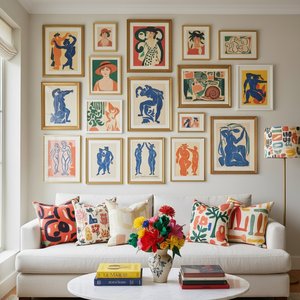
Journey through Henri Matisse's 25 most iconic paintings! Explore Fauvism, vibrant colors & the stories behind masterpieces like 'The Dance'. Find museum-quality art reproductions and curated decor ideas to elevate your space. Discover all masterpieces on Most-Famous-Paintings.com.
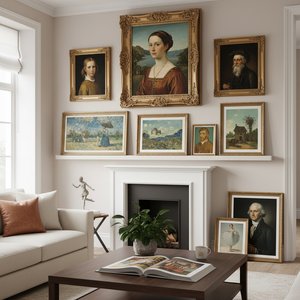
Explore 25 iconic artworks from Washington DC's National Gallery of Art! Discover masterpieces by Cézanne, Matisse & Picasso. Find museum-quality art reproductions and elevate your home decor with timeless paintings. Explore the full collection online at Most-Famous-Paintings.com.

Journey through 25 iconic Claude Monet masterpieces! Explore Impressionism’s beauty, from Water Lilies to Rouen Cathedral. Discover stunning art reproductions & curated decor ideas – explore the full collection online at Most-Famous-Paintings.com.


Stay updated with the latest art news, exclusive offers, and decoration ideas.
Tell us about your project and our art experts will provide you with 3 personalized art suggestions.
Let Us Curate 3 Options Just for You - Free!


 Buy print
 Send
Send Share
Share
 Details

 Download
 Similars
 X-Ray
X-Ray Diaporama

 Read More







 Glass option is only available in size under 110 CM