x


 Oil On PanelEarly Netherlandish Painting
 1425Late Medieval
 137.0 x 242.0 cm
 Cathedral of St Bavo
Hand-painted oil on canvas in your size and frame, made to order by our artists.





























Pick from our preset sizes that match the artwork's original proportions.

You may enter your own dimensions to fit a specific frame or space. If your selected size does not match the original image's proportions, we will either crop the artwork or extend the painting with additional hand-painted elements. A digital mockup will be sent for your approval before production begins.
Please note that the on-screen preview does not reflect the actual cropping or extension. Only the mockup will accurately show the final composition.
While custom sizes are available, we recommend selecting a dimension from the predefined list to preserve the original proportions.
Worldwide Delivery () in 3/4 weeks instead of standard 5 weeks. (18 July). No compromise on quality.


The Ghent Altarpiece: Adoration of the Lamb
Reproduction Size
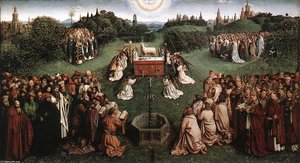
Jan van Eyck’s central panel of the Ghent Altarpiece, completed around 1432, stands as a monumental achievement in Western art. More than just a painting, it is a deeply theological statement and a breathtaking display of artistic innovation – a polyptych that transcends mere religious depiction to become a powerful meditation on faith, humanity, and divine grace.
The composition centers around the Lamb of God—a potent symbol of Christ’s sacrifice—standing regally upon an altar draped in vibrant red cloth. This central figure is encircled by a vast, diverse congregation representing all facets of Christian belief and salvation. Saints, prophets, martyrs, confessors, virgins, angels, and figures embodying various social classes converge in harmonious reverence. Van Eyck masterfully avoids visual chaos; each individual contributes to the complex narrative, their placement meticulously considered. The eye is guided through layers of detail within a lushly detailed landscape, anchored by a fountain of life symbolizing baptism and spiritual renewal at the heart of the scene.
Van Eyck’s genius lies in his pioneering use of oil paint. This medium allowed for an unprecedented level of detail, luminosity, and realism previously unattainable with traditional techniques like tempera or fresco. He employed layers of translucent glazes—a painstaking process demanding immense skill and patience—to build depth, texture, and a remarkably lifelike quality that was revolutionary for its time. Observe the sheen on the armor, the delicate folds of fabric, and even the individual hairs in the figures’ beards; these details remain astonishing today. The painting exemplifies the Early Netherlandish style, characterized by meticulous observation of nature, realistic depictions of figures, and a profound focus on symbolism.
Commissioned for St Bavo’s Cathedral in Ghent by Jodocus Vijd and his wife Lysbette, the altarpiece reflects the religious fervor and artistic patronage flourishing under the Burgundian court. It represents a pivotal moment, bridging late medieval art with the emerging Renaissance. The work incorporates elements of both Gothic tradition—in its hierarchical composition—and humanist ideals—in its naturalistic portrayal of humanity. Serving as a visual sermon for worshippers, it conveyed complex theological concepts through accessible imagery.
Every element within Adoration of the Lamb is imbued with symbolic significance. Beyond the central lamb representing Christ’s sacrifice, the lush vegetation symbolizes paradise, while the distant city represents earthly Jerusalem. The figures are not merely portraits but represent specific roles within the Christian faith—the Church Militant (those on Earth) and the Church Triumphant (those in Heaven). Understanding these layers of symbolism unlocks a deeper appreciation for the painting’s intellectual and spiritual depth. Even the smallest details carry weight, inviting contemplation and interpretation.
The painting evokes a profound sense of awe, reverence, and spiritual contemplation. The vibrant colors, intricate details, and harmonious composition create an immersive experience that draws viewers into the scene. Adoration of the Lamb is not just a visual masterpiece; it’s a testament to human faith, artistic skill, and the enduring power of religious belief. Its influence on subsequent generations of artists is immeasurable, solidifying its place as one of the most important works in art history.
A reproduction of this scale demands careful consideration. To truly appreciate Van Eyck’s meticulous detail and luminous color palette, a high-quality hand-painted oil reproduction is recommended. Consider these points:
Owning a reproduction of Adoration of the Lamb is not simply acquiring a beautiful image; it's inviting a piece of art history into your home—a timeless symbol of faith, artistry, and enduring beauty.

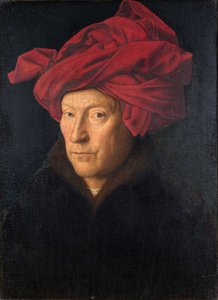
1390 - 1441 , Netherlands
Journey through Vincent van Gogh's 25 most iconic paintings! Explore 'Starry Night', 'Sunflowers,' and more—discover the stories, techniques & emotions behind these Post-Impressionist masterpieces. Find museum-quality art reproductions for your home at Most-Famous-Paintings.com.

Journey into the world of Early Netherlandish painting! Explore 10 masterpieces by Jan van Eyck, Rogier van der Weyden & more. Discover stunning detail, symbolism & Renaissance art for your home decor. Find museum-quality reproductions on Most-Famous-Paintings.com

Journey into the Early Netherlandish Renaissance! Explore 10 iconic paintings by Jan van Eyck, Rogier van der Weyden & more. Discover stunning detail, symbolism, and oil painting techniques. Find museum-quality art reproductions for your home at Most-Famous-Paintings.com.

Journey through 25 iconic artworks at the Metropolitan Museum of Art! Explore Van Gogh, Monet, Rembrandt & more. Discover art history, inspiring stories, and museum-quality reproductions to elevate your home decor. Explore the full collection on Most-Famous-Paintings.com.
Journey through Rembrandt van Rijn's 25 most iconic paintings & etchings. Explore Dutch Golden Age masterpieces, dramatic chiaroscuro, and timeless portraits. Find museum-quality art reproductions to elevate your home decor on Most-Famous-Paintings.com.


Stay updated with the latest art news, exclusive offers, and decoration ideas.
Tell us about your project and our art experts will provide you with 3 personalized art suggestions.
Let Us Curate 3 Options Just for You - Free!


 Buy print
 Send
Send Share
Share
 Details

 Download
 Similars
 X-Ray
X-Ray Diaporama
 Read More







 Glass option is only available in size under 110 CM