x

Museum-quality giclée or canvas print with fast production and flexible finish options. ( Switch to hand made Painting Switch to Image)





























Pick from our preset sizes that match the artwork's original proportions.

You may enter your own dimensions to fit a specific frame or space. If your selected size does not match the original image's proportions, we will either crop the artwork or extend the image with a mirrored or solid-fill edge. A digital mockup will be sent for your approval before production begins.
Please note that the on-screen preview does not reflect the actual cropping or extension. Only the mockup will accurately show the final composition.
While custom sizes are available, we recommend selecting a dimension from the predefined list to preserve the original proportions.
Worldwide Delivery () in 2 weeks instead of standard 4/5 weeks. (11 August)


Savarin monotype
Reproduction Size
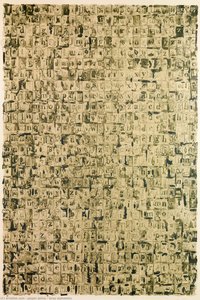
Created in the mid-1960s, “Savarin monotype” sits squarely at the crossroads of two influential artistic movements. Johns’ work emerged during a period of intense debate about the role of art in society—a reaction against the grand narratives of postwar idealism and a burgeoning fascination with popular culture. While acknowledging the legacy of Abstract Expressionists like Willem de Kooning and Jackson Pollock, Johns consciously distanced himself from their emotionally charged canvases, opting instead for a visual vocabulary grounded in recognizable symbols.
The choice of a coffee can—a ubiquitous item found in kitchens across America—is laden with symbolic significance. It speaks to the rituals of daily life and the pursuit of comfort amidst uncertainty. Johns’ deliberate simplification of form – reducing the can and utensils to their essential contours – elevates these objects beyond mere representation, transforming them into emblems of stability and familiarity. The monochromatic color scheme reinforces this sense of calm and introspection.
"Savarin monotype" possesses an understated emotional power that belies its apparent simplicity. It invites viewers to pause, observe, and consider the subtle nuances of texture and color. Unlike canvases saturated with emotion, this piece encourages a contemplative response—a recognition of beauty in restraint and a celebration of the enduring relevance of everyday experiences. Its monochrome aesthetic speaks to a desire for clarity and focus, mirroring Johns’ own artistic philosophy.

1930 - , United States of America

Find serenity with 10 minimalist masterpieces! Explore Agnes Martin, Rothko & more. Discover the stories behind iconic abstract art, neutral palettes & calming designs. Museum-quality reproductions at Most-Famous-Paintings.com – elevate your home decor today!

Explore the life & work of Sir John Tenniel, Victorian England's master illustrator & political cartoonist. Discover his iconic 'Alice in Wonderland' art and lasting impact on satire & visual culture.

Explore the fascinating history of Pop Art, from its rebellious origins to its enduring influence on contemporary artists. Discover key figures like Warhol & Lichtenstein and learn about collecting this iconic movement.

Explore the captivating Orientalist paintings of John Frederick Lewis! Discover his mastery of detail, genre scenes & influence on 19th-century British art. Learn about his life, techniques & legacy at Most-Famous-Paintings.

Discover the profound psychological impact of minimalist Color Field paintings for luxury villas. Explore Rothko & curated art reproductions with Most-Famous-Paintings.com – expert guidance, museum-quality prints, and investment advice.


Stay updated with the latest art news, exclusive offers, and decoration ideas.
Tell us about your project and our art experts will provide you with 3 personalized art suggestions.
Let Us Curate 3 Options Just for You - Free!


 Preview
 Send
Send Share
Share
 Details

 Download
 Similars
 X-Ray
X-Ray Diaporama
 Read More







 Glass option is only available in size under 110 CM