x


 OilWallArtDutch Golden Age
 1637Early Modern
 84.0 x 67.0 cm
 Frans Halsmuseum
Hand-painted oil on canvas in your size and frame, made to order by our artists.





























Pick from our preset sizes that match the artwork's original proportions.

You may enter your own dimensions to fit a specific frame or space. If your selected size does not match the original image's proportions, we will either crop the artwork or extend the painting with additional hand-painted elements. A digital mockup will be sent for your approval before production begins.
Please note that the on-screen preview does not reflect the actual cropping or extension. Only the mockup will accurately show the final composition.
While custom sizes are available, we recommend selecting a dimension from the predefined list to preserve the original proportions.
Worldwide Delivery () in 3/4 weeks instead of standard 5 weeks. (18 July). No compromise on quality.


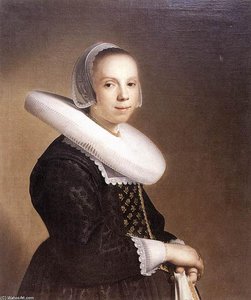
Portrait of Willemina van Braeckel
Reproduction Size
In the quiet, commanding presence of Portrait of Willemina van Braeckel, we are transported back to the year 1637, an era when the Netherlands was flourishing under a new light of prosperity and artistic mastery. Painted by the esteemed Johannes Cornelisz Verspronck, this portrait serves as more than just a likeness; it is a window into the social fabric of Haarlem. The sitter, Willemina, gazes out from the canvas with a profound, steady intensity that bridges the centuries, inviting the viewer into a silent dialogue. Her expression, characterized by a certain stern dignity, reflects the values of her time—modesty, strength, and the composed grace expected of the Dutch upper class.
The composition is a masterclass in the understated elegance of the Dutch Golden Age. Clad in the somber yet sophisticated palette of black and white, Willemina embodies the period's preference for refined simplicity. The stark contrast between her dark attire and the delicate, luminous textures of her lace collar creates a visual rhythm that draws the eye toward her face. This interplay of light and shadow—a hallmark of the era—not only provides depth to the portrait but also imbues the subject with a lifelike, breathing quality that remains captivating even after hundreds of years.
What truly distinguishes this work is Verspronck’s extraordinary technical virtuosity. As a painter who gained immense popularity among female patrons, he possessed an uncanny ability to render the tactile reality of fine materials. In this portrait, one can almost feel the crispness of the starched ruff and the intricate, gossamer threads of the lace. His brushwork is meticulous, capturing the subtle sheen of fabric and the soft luminosity of skin with a precision that borders on the photographic. This dedication to detail was not merely for show; it served to communicate the status and wealth of the sitter through the very textures she wore.
For the discerning collector or interior designer, this piece offers a profound sense of historical weight and textural richness. The way the light catches the folds of her clothing suggests a sculptural quality that brings a sophisticated, classical atmosphere to any space. Whether placed in a grand library or a contemporary gallery setting, the painting acts as an anchor of elegance. It is a work that demands attention not through loud colors, but through the quiet power of its execution and the enduring mystery held within Willemina’s gaze.
Integrating a high-quality reproduction of such a masterpiece into a modern home allows for a seamless blend of historical narrative and contemporary aesthetics. The Portrait of Willemina van Braeckel provides an excellent focal point for those seeking to introduce "Old World" charm and intellectual depth to their decor. Its monochromatic elegance makes it incredibly versatile, pairing beautifully with both minimalist modern furniture and more ornate, traditional settings.
Owning a piece that celebrates the meticulous skill of Verspronck is an opportunity to surround oneself with the spirit of the Dutch masters. It is an investment in atmosphere—a way to bring the quiet, dignified beauty of 17th-century Haarlem into the heart of the modern living experience. This portrait remains a testament to the enduring power of portraiture to capture the human essence, making it a timeless addition for any lover of fine art.


1603 - 1662 , Netherlands
Journey through Vincent van Gogh's 25 most iconic paintings! Explore 'Starry Night', 'Sunflowers,' and more—discover the stories, techniques & emotions behind these Post-Impressionist masterpieces. Find museum-quality art reproductions for your home at Most-Famous-Paintings.com.
Journey through Rembrandt van Rijn's 25 most iconic paintings & etchings. Explore Dutch Golden Age masterpieces, dramatic chiaroscuro, and timeless portraits. Find museum-quality art reproductions to elevate your home decor on Most-Famous-Paintings.com.

Journey into the Dutch Golden Age! Explore 10 iconic paintings by Rembrandt, Vermeer & Hals. Discover the stories behind these Baroque masterpieces and find museum-quality art reproductions to elevate your home decor on .
Explore the Dutch Golden Age of painting! Discover key artists like Vermeer & ter Borch, their innovative techniques, and the rich cultural context behind these Baroque masterpieces. Learn about collecting & appreciating this iconic art period.

Explore the life & work of Adriaen van Ostade, a leading Dutch Golden Age painter. Discover his realistic genre scenes, social commentary, and lasting influence on art history. Learn more at Most-Famous-Paintings.


Stay updated with the latest art news, exclusive offers, and decoration ideas.
Tell us about your project and our art experts will provide you with 3 personalized art suggestions.
Let Us Curate 3 Options Just for You - Free!


 Buy print
 Send
Send Share
Share
 Details

 Download
 Similars
 X-Ray
X-Ray Diaporama
 Read More







 Glass option is only available in size under 110 CM