


x


 Acrylic On CanvasWallArtBaroque
 1648
1648 120.0 x 98.0 cm
 Museo de Arte de Ponce
Hand-painted oil on canvas in your size and frame, made to order by our artists.





























Pick from our preset sizes that match the artwork's original proportions.

You may enter your own dimensions to fit a specific frame or space. If your selected size does not match the original image's proportions, we will either crop the artwork or extend the painting with additional hand-painted elements. A digital mockup will be sent for your approval before production begins.
Please note that the on-screen preview does not reflect the actual cropping or extension. Only the mockup will accurately show the final composition.
While custom sizes are available, we recommend selecting a dimension from the predefined list to preserve the original proportions.
Worldwide Delivery () in 3/4 weeks instead of standard 5 weeks. (18 July). No compromise on quality.


Saint Jerome Writing
Reproduction Size
Jusepe de Ribera’s “Saint Jerome Writing,” painted in 1648, isn't merely a portrait; it’s an immersion into the soul of a man wrestling with faith, intellect, and the relentless passage of time. The scene unfolds within a dimly lit study – a space deliberately shrouded in shadow, characteristic of Ribera’s masterful use of chiaroscuro, a technique that dramatically contrasts light and dark to create a powerful sense of drama and psychological depth. Before us sits Saint Jerome, not as a triumphant figure of religious iconography, but as a profoundly human individual, his brow furrowed in concentration, his hand poised over parchment, seemingly lost in the act of transcription. The painting immediately evokes a feeling of quiet contemplation, a profound solitude that speaks to the arduous task of translating scripture and the inner struggle inherent in spiritual devotion.

Ribera, a native of Xativa, Spain, forged an extraordinary career in Naples during the 17th century, becoming one of the most influential figures of the Neapolitan Baroque. His style—often described as “tenebrist”—was deeply rooted in Caravaggio’s innovations, yet Ribera developed his own distinct voice, characterized by a raw, unflinching realism and an intense emotionality. He wasn't interested in idealized beauty or polished surfaces; instead, he sought to capture the essence of human experience – its vulnerability, its struggles, and its moments of profound insight. The painting’s composition is deliberately austere, focusing entirely on Jerome and his immediate surroundings, amplifying the sense of introspection.
Born in 1591 and dying in 1652, Ribera's life was marked by both artistic triumph and personal hardship. He endured periods of poverty, illness, and even accusations of heresy, yet he consistently produced works of extraordinary power and beauty. His dedication to portraying the human condition with unflinching honesty cemented his legacy as a master of Baroque painting.
Beyond the immediate depiction of Saint Jerome, the painting is rich in symbolic meaning. The scriptorium itself—a space traditionally associated with learning, wisdom, and divine inspiration—underscores the importance of intellectual pursuit within a religious context. The muted colors, dominated by browns, ochres, and deep reds, contribute to the overall atmosphere of solemnity and contemplation. Notice how Ribera uses light not as a source of illumination but as a tool for dramatic effect, highlighting Jerome’s face and hands while leaving much of the background in shadow. This technique emphasizes his inner world—his thoughts, his struggles, and his unwavering commitment to his task.
The two books flanking the table are not merely props; they represent the Bible itself – the source of Jerome's work and the foundation of his faith. The quill pen symbolizes the act of writing, not just as a physical action but as a process of spiritual transformation. The very posture of the saint—his hunched shoulders, his furrowed brow—suggests the weight of responsibility and the intensity of his devotion.
“Saint Jerome Writing” transcends its religious subject matter to offer a universal meditation on human experience. It’s a poignant portrayal of a man grappling with doubt, seeking solace in faith, and striving for understanding in the face of an uncertain world. Ribera's masterful use of light, shadow, and composition creates a deeply moving image that continues to resonate with viewers centuries after its creation. It is a testament to the enduring power of art to capture the complexities of the human spirit—a reminder that even in solitude and contemplation, we are connected by our shared struggles and aspirations.


1591 - 1652 , Spain
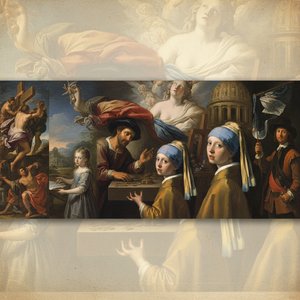
Journey through the drama & grandeur of Baroque art! Explore 10 masterpieces by Caravaggio, Rembrandt, Rubens & more. Discover stunning oil paintings, rich colors & timeless stories. Find museum-quality reproductions at .

Journey through 25 iconic Claude Monet masterpieces! Explore Impressionism’s beauty, from Water Lilies to Rouen Cathedral. Discover stunning art reproductions & curated decor ideas – explore the full collection online at Most-Famous-Paintings.com.

Journey through Baroque painting's glory! Explore 10 masterpieces by Caravaggio, Rembrandt & Vermeer. Discover dramatic lighting, rich colors & timeless stories. Find museum-quality art reproductions for your home at Most-Famous-Paintings.com.
Journey through Alte Pinakothek's 25 most iconic paintings! Explore masterpieces by Dürer, Rembrandt & Rubens. Discover art history, techniques & find museum-quality reproductions for your home at Most-Famous-Paintings.com.
Journey through 25 iconic artworks by Paul Cézanne – a master of Impressionism and Post-Impressionism. Explore his landscapes, still lifes, and the stories behind these timeless masterpieces. Discover museum-quality reproductions & curated decor at Most-Famous-Paintings.com.


Stay updated with the latest art news, exclusive offers, and decoration ideas.
Tell us about your project and our art experts will provide you with 3 personalized art suggestions.
Let Us Curate 3 Options Just for You - Free!


 Buy print
 Send
Send Share
Share
 Details

 Download
 Similars
 X-Ray
X-Ray Diaporama
 Read More







 Glass option is only available in size under 110 CM


