


x


 PaintingAbstract Art
 1998
1998 50.0 x 50.0 cm
 USI Università della Svizzera italiana
Museum-quality giclée or canvas print with fast production and flexible finish options.





























Pick from our preset sizes that match the artwork's original proportions.

You may enter your own dimensions to fit a specific frame or space. If your selected size does not match the original image's proportions, we will either crop the artwork or extend the image with a mirrored or solid-fill edge. A digital mockup will be sent for your approval before production begins.
Please note that the on-screen preview does not reflect the actual cropping or extension. Only the mockup will accurately show the final composition.
While custom sizes are available, we recommend selecting a dimension from the predefined list to preserve the original proportions.
Worldwide Delivery () in 2 weeks instead of standard 4/5 weeks. (24 July)


Untitled
Reproduction Size
This vibrant abstract composition, titled Untitled, immediately draws the eye into a dazzling interplay of form and hue. It is a testament to the power of pure visual language, where color does not merely decorate but actively participates in the structure of the piece. The canvas explodes with an energetic palette—deep blues meeting fiery reds, softened by ethereal purples, punctuated by bursts of sunny yellow, delicate pinks, and grounding touches of brown and gold. To gaze upon it is to feel a momentary suspension from the mundane, inviting contemplation into the very architecture of light and pigment.
What elevates this work beyond mere color splashing is its meticulous arrangement of geometric elements. The artist has masterfully woven together sharp lines and defined shapes, most notably several prominent triangles that guide the viewer's gaze across the surface. These triangular motifs appear strategically placed—some anchoring the upper left quadrant, others scattering energy through the middle and right fields. Complementing this angular dynamism is a softer focal point: a discernible star shape nestled in the lower expanse. This careful balance between sharp geometry and organic stellar form suggests a dialogue between human intellect and cosmic wonder, creating an overall composition that feels both exhilaratingly complex and profoundly harmonious.
Created in 1998 by Karl Schmid, this piece situates itself within the rich tradition of post-war abstraction. While Schmid’s broader career touched upon sculpture and anatomical studies, this work showcases a pure dedication to the abstract plane. The technique employed suggests careful layering and precise application, allowing the various colors to interact optically—some appearing to vibrate against their neighbors. For those drawn to art that speaks in universal visual terms rather than narrative depiction, this piece offers an immediate, visceral connection. It is art that demands participation; the viewer becomes a co-creator, completing the pattern with their own eye.
For the collector or designer seeking a statement piece capable of anchoring a modern interior, this reproduction offers unparalleled visual impact. Its 50 x 50 cm size makes it substantial enough to command attention without overwhelming a space. Imagine its vibrant energy reflected against muted textiles or polished wood—it acts as an instant focal point, injecting life and intellectual curiosity into any room. It is not just decoration; it is a conversation starter, a piece that whispers of structure, emotion, and the boundless possibilities found when color and form are set free.

The life of Karl Schmid was a profound testament to the ability of the human spirit to find beauty amidst hardship. Born in Zurich in 1914, his early years were shadowed by personal tragedy and instability; the loss of his father during the Great War and the complex mental health struggles of his mother created an environment that demanded immense resilience. Yet, it was within this crucible of adversity that Schmid developed a uniquely keen eye for the intricacies of existence. His formative training was not found in a traditional studio alone, but through the tactile, disciplined world of craftsmanship. An apprenticeship as a cabinetmaker and carpenter instilled in him a fundamental respect for material and structure—a precision that would later become the backbone of his sculptural and anatomical works.
As he matured, Schmid’s journey took him toward the intersection of art and science. His time spent in the sanatoriums of Davos, while necessitated by illness, proved to be a period of immense intellectual and creative expansion. It was here that he moved within the orbits of giants such as Oskar Kokoschka and Ernst Ludwig Kirchner. These encounters were more than mere social connections; they were profound artistic dialogues that helped shape his understanding of expressionism and the human condition. This period of shared vulnerability and creative exploration allowed Schmid to weave the raw emotion of his personal history into a sophisticated artistic language.
Schmid’s oeuvre is characterized by a remarkable fluidity, moving seamlessly between the rigid demands of scientific accuracy and the liberated movements of modern abstraction. He possessed a rare ability to bridge the gap between the empirical and the spiritual. In his anatomical illustrations, one finds a meticulous dedication to the truth of the human body, where every line serves the purpose of biological clarity. However, he never allowed science to strip away the soul of his subjects; instead, he infused his studies with an artistic grace that elevated them from mere diagrams to works of profound beauty.
This duality is perhaps most evident in his transition through various stylistic movements:
Karl Schmid remains a singular figure in Swiss art history, a polymath whose contributions spanned painting, sculpture, engraving, and teaching. He did not merely exist within a single movement; rather, he acted as a conduit between the tactile world of the artisan and the intellectual world of the avant-garde. His ability to collaborate with luminaries like Hans Arp and Kokoschka speaks to his standing within the European artistic community, yet his work remains deeply personal, rooted in his own observations of life, death, and the biological wonders of the natural world.
Today, Schmid is remembered not just for the technical mastery of his woodcarvings or the precision of his engravings, but for his ability to find a unified truth in the fragmented pieces of the human experience. His legacy continues to inspire those who seek to find the harmony between the analytical mind and the creative heart, proving that art can be both a rigorous study of reality and a transcendent escape from it.

1914 - 1998 , Switzerland
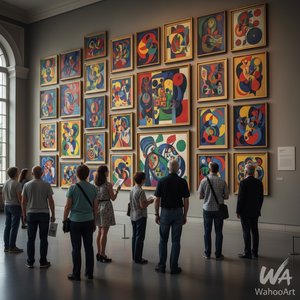
Journey through Wassily Kandinsky's 25 most iconic abstract paintings. Explore his revolutionary use of color, form & spiritual expressionism. Find museum-quality Kandinsky reproductions and elevate your home decor with Most-Famous-Paintings.com. Discover all masterpieces on Most-Famous-Paintings.com!
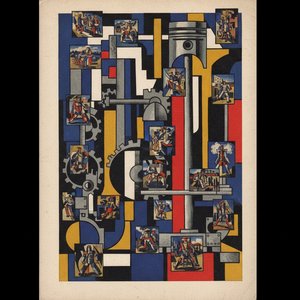
Explore 25 iconic Fernand Léger paintings that defined the Machine Age & Cubism. Discover the stories behind his bold colors, geometric forms & avant-garde style. Find museum-quality art reproductions on Most-Famous-Paintings.com.
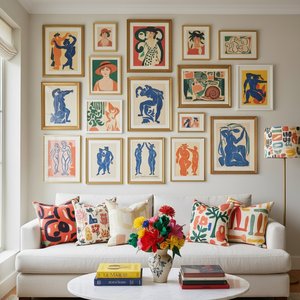
Journey through Henri Matisse's 25 most iconic paintings! Explore Fauvism, vibrant colors & the stories behind masterpieces like 'The Dance'. Find museum-quality art reproductions and curated decor ideas to elevate your space. Discover all masterpieces on Most-Famous-Paintings.com.
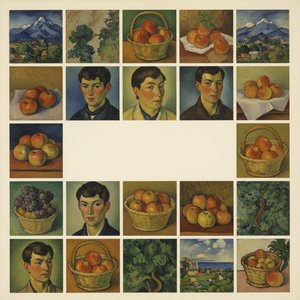
Journey through 25 iconic artworks by Paul Cézanne – a master of Impressionism and Post-Impressionism. Explore his landscapes, still lifes, and the stories behind these timeless masterpieces. Discover museum-quality reproductions & curated decor at Most-Famous-Paintings.com.

Journey through 25 iconic Claude Monet masterpieces! Explore Impressionism’s beauty, from Water Lilies to Rouen Cathedral. Discover stunning art reproductions & curated decor ideas – explore the full collection online at Most-Famous-Paintings.com.


Stay updated with the latest art news, exclusive offers, and decoration ideas.
Tell us about your project and our art experts will provide you with 3 personalized art suggestions.
Let Us Curate 3 Options Just for You - Free!


 Preview
 Buy Painting
 Send
Send Share
Share
 Details

 Download
 Similars
 X-Ray
X-Ray Diaporama
 Read More







 Glass option is only available in size under 110 CM


