x

 Abstract Expressionism
 250.0 x 260.0 cm
 Centre of Contemporary Art Znaki Czasu
Hand-painted oil on canvas in your size and frame, made to order by our artists. ( Buy Print Buy Image)





























Pick from our preset sizes that match the artwork's original proportions.

You may enter your own dimensions to fit a specific frame or space. If your selected size does not match the original image's proportions, we will either crop the artwork or extend the painting with additional hand-painted elements. A digital mockup will be sent for your approval before production begins.
Please note that the on-screen preview does not reflect the actual cropping or extension. Only the mockup will accurately show the final composition.
While custom sizes are available, we recommend selecting a dimension from the predefined list to preserve the original proportions.
Worldwide Delivery () in 3/4 weeks instead of standard 5 weeks. (18 August). No compromise on quality.


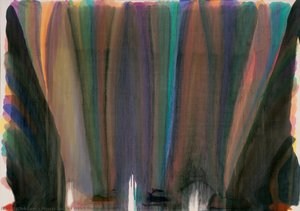
Untitled
Reproduction Size

Born on March 14, 1957, in the quiet village of Waliły, Poland, Leon Tarasewicz carries within his artistic DNA the rich, complex textures of the Polish borderlands. A painter of Belarusian origin, his work is deeply rooted in the cultural intersections of a region defined by shifting boundaries and historical echoes. Growing up in a working-class family, Tarasewicz found his calling through the transformative power of color and form, eventually honing his craft at the prestigious Academy of Fine Arts in Warsaw. Under the mentorship of the influential Tadeusz Dominik, he developed a technical foundation that would later allow him to transcend traditional boundaries, moving from classical training toward a profound exploration of space and light.
The evolution of Tarasewicz’s style is a journey from the representational to the sublime. While his early academic years provided him with the tools of meticulous observation, his mature work embraces the language of abstract expressionism and color field painting. He possesses a unique ability to capture the essence of the Polish landscape—not through literal depiction, but through an emotional resonance achieved via expansive washes of pigment and rhythmic, vertical stripes. His canvases often function as panoramic experiences, where the distinction between painting and environment begins to blur. By utilizing multiple stretcher bars connected to create vast, immersive spaces, he invites the viewer to step into a world where the horizon line vanishes, replaced by a sense of infinite geological or organic growth.
To encounter a Tarasewicz painting is to engage in a sensory dialogue with nature. His palette is famously exuberant, utilizing vivid azures, deep reds, and sun-drenched yellows to evoke the vitality of forests, rivers, and skies. Yet, beneath this surface brilliance lies a deeper, more contemplative layer of symbolism. The artist’s work often references the sublimation of sensual experience into spiritual truth, a concept reminiscent of the icon traditions found in his Belarusian heritage. Even when his works appear purely abstract, they carry the weight of the landscape's history—the furrows of a field, the movement of wind through trees, and the layered memories of a borderland territory.
A defining characteristic of his practice is his deliberate avoidance of titles. By refusing to name his pieces, Tarasewicz escapes the "trap of representation," ensuring that his work cannot be confined to a single definition or historical movement. This allows for a multiplicity of interpretations, where a viewer might see a topographical map of a distant meadow one moment and a purely rhythmic exploration of color the next. His technique creates a tension between the physical texture of the paint—which hints at earth and stone—and the ethereal quality of light that seems to emanate from within the pigment itself.
Throughout his illustrious career, Leon Tarasewicz has garnered significant international acclaim, establishing himself as a pillar of contemporary Polish art. His contributions to the academic world are equally profound; as a professor of fine arts and a lecturer at the Academy of Fine Arts in Warsaw, he has shaped the perspectives of subsequent generations of artists. His professional journey is marked by prestigious accolades that reflect both his cultural impact and his technical mastery:
Beyond the gallery walls, Tarasewicz has served as a cultural ambassador, notably representing the European Year of Intercultural Dialogue. His life’s work remains a profound meditation on the beauty of the natural world and the enduring strength of cultural identity, proving that even in abstraction, the soul of a landscape can be found.

1957 - , Poland

Explore the profound history and emotional depth of Color Field painting. From Mark Rothko to Barnett Newman, discover how pure color redefined modern art through our expert-led guide for students and collectors alike.
Explore the profound emotional depth of Lyrical Abstraction. Discover how masters like Raymond Parker used color and form to bridge Impressionism and Abstract Expressionism. Learn about this pivotal movement through our expert-led art history guide.


Stay updated with the latest art news, exclusive offers, and decoration ideas.
Tell us about your project and our art experts will provide you with 3 personalized art suggestions.
Let Us Curate 3 Options Just for You - Free!


 Preview
 Send
Send Share
Share
 Details

 Download
 Similars
 X-Ray
X-Ray Diaporama
 Read More







 Glass option is only available in size under 110 CM