Wishlist Shopping Cart Cart
Buy print Buy printBuy Image Buy Image SendSend
DetailsDetails Add to favorites Add to favorites DownloadDownload SimilarsSimilars X-RayX-Ray DiaporamaDiaporama

David

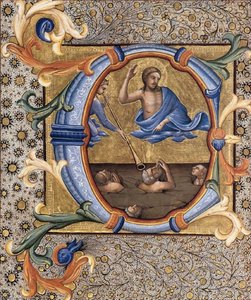
Explore Lorenzo Monaco’s ‘David’ (1408) – a stunning fresco secco depicting a regal figure in Byzantine style. Admire its rich colors, detailed textures & timeless symbolism.

Discover Lorenzo Monaco (1370-1425), a Florentine painter bridging Gothic elegance & early Renaissance innovation. Explore his spiritual art, illuminated manuscripts, and unique style.

Hand Made Oil Reproduction

Hand-painted oil on canvas in your size and frame, made to order by our artists.

P118B $10
P118H $10
P118W $10
P438Z $10
P508JH $12
P508YH $12
P805H $10
P805Z $10
P919BZ $10
P919G $10
P919XJ $10
P959ZH $10
P968JZ $12
W106C $8
W218G $10
W218JH $8
W218Y $10
W307PJ $10
W316G $10
W316PJ $8
W316Y $10
W398PJ $8
W4111J $10
W500HY $15
W500JH $15
W692G $12
W849H $8
W940BG $15
W953PJ $8

Standard
custom
CM
INCH

Pick from our preset sizes that match the artwork's original proportions.

width
height

You may enter your own dimensions to fit a specific frame or space. If your selected size does not match the original image's proportions, we will either crop the artwork or extend the painting with additional hand-painted elements. A digital mockup will be sent for your approval before production begins.
Please note that the on-screen preview does not reflect the actual cropping or extension. Only the mockup will accurately show the final composition.
While custom sizes are available, we recommend selecting a dimension from the predefined list to preserve the original proportions.

Examples of what can be changed: Replace face with customer photo; Add pet (e.g., replace cat with dog); Include hidden message in background; Change background landscape or elements.
After order, Most-Famous-Paintings.com team will email client for instructions and provide a mockup preview

Worldwide Delivery () in 3/4 weeks instead of standard 5 weeks. (18 July). No compromise on quality.

why_choose_icon
Free Worldwide Express Shipping
why_choose_icon
High-Quality Linen Canvas
why_choose_icon
Full Shipping Insurance
why_choose_icon
Customs Tax Refund Guarantee
why_choose_icon
True Color Matching Guarantee
why_choose_icon
60-Day Return Policy (Defects Only)
why_choose_icon
100% Money-Back Guarantee
why_choose_icon
Bulk Discount Offer

Total Price

-

reproduction

David

Reproduction Medium

Reproduction Size

-

Total Price

-

Quick Facts

  • Year: 1408
  • Subject or theme: Religious leadership
  • Artist: Lorenzo Monaco
  • Dimensions: 57 x 43 cm
  • Influences: Byzantine art
  • Artistic style: Formal, symbolic
  • Medium: Fresco secco

Art Quiz

There is only one correct answer for each question.

Question 1:
What artistic style is most prominently evident in Lorenzo Monaco’s ‘David’?
Question 2:
The fresco 'David' by Lorenzo Monaco is believed to have been painted in which period?
Question 3:
What technique is most likely used in the creation of ‘David’?
Question 4:
The composition of ‘David’ emphasizes which aspect?
Question 5:
Based on the description, what is a key characteristic of Lorenzo Monaco’s style?

Artwork Description

A Monastic Vision: The Genesis of Lorenzo Monaco's David

Lorenzo Monaco’s “David,” painted in 1408, isn’t merely a depiction of the biblical hero; it’s a profound expression of spiritual contemplation born from the heart of a monastic life. Born Piero di Giovanni around 1370 in Siena and later embracing the Camaldolese order at Santa Maria degli Angeli, Monaco’s artistic journey was inextricably linked to his devotion. This commitment shaped not just his subject matter but also the very essence of his style – a quiet intensity, a deliberate restraint, and an unwavering focus on symbolic representation rather than mere realism. The painting emerged from a period of transition in Florentine art, moving away from the exuberant Gothicism of the Trecento towards the nascent ideals of the Renaissance, yet Monaco’s work retains a distinctly spiritual quality that sets it apart.

The piece is believed to have been commissioned for the church of San Procolo and, remarkably, was initially attributed to Giotto by Giorgio Vasari. This attribution highlights Monaco's deep connection to the foundational figure of Florentine painting – a lineage he skillfully carried forward while forging his own unique path. The work’s early dating reflects the prevailing artistic climate of Florence at the time, characterized by a growing interest in narrative clarity and emotional resonance, elements that Monaco expertly integrated into his distinctive style.

A Byzantine Echo: Form, Color, and Technique

“David” is a masterful example of *fresco secco*, a technique where pigments are applied to dry plaster, resulting in a matte finish and a subtle textural quality. This method lends the painting an almost timeless feel, anchoring it firmly within the Byzantine tradition while simultaneously anticipating the innovations of the Renaissance. The composition itself is strikingly formal – centered on the figure of David, seated with regal composure against the dramatic backdrop of an arched gateway. The architecture isn’t merely decorative; it serves as a powerful symbol of divine authority and the stability of the kingdom.

  • Color Palette: Monaco employs a restrained yet luminous color palette dominated by deep blues, rich reds, and earthy browns. The gold of the archway is particularly striking, radiating an almost ethereal light that emphasizes David’s importance.
  • Linearity & Form: Strong, straight lines define the architecture and the folds of David's robes, creating a sense of order and control. The figures themselves are rendered with elongated proportions, characteristic of Byzantine iconography, which prioritizes spiritual significance over anatomical accuracy.
  • Texture: Monaco meticulously renders textures – the smooth surface of the chair, the intricate details of the crown, and the voluminous folds of David’s garments—imparting a remarkable sense of tactile realism despite the painting's stylized approach.

Symbolism & Spiritual Resonance

Beyond its formal beauty, “David” is laden with symbolic meaning. The seated posture suggests wisdom and judgment, while the open book or scroll represents knowledge and divine law. The arched gateway symbolizes the connection between the earthly realm and the heavens, reinforcing David’s role as a divinely appointed ruler. The dove hovering above, a clear reference to the Holy Spirit, underscores the painting's spiritual core.

Monaco’s work isn’t simply about depicting a biblical hero; it’s about conveying a profound sense of faith and devotion. The solemnity of the scene, combined with the carefully chosen symbols, invites contemplation and encourages viewers to consider their own relationship with the divine. The painting embodies the monastic ideal – a life dedicated to spiritual pursuits and a deep connection to the sacred.

A Legacy in Reproduction: Bringing Monaco’s Vision Home

Reproductions of Lorenzo Monaco's “David” offer a remarkable opportunity to bring this timeless masterpiece into your home or office. The meticulous detail, rich colors, and profound symbolism capture the essence of Monaco’s artistic vision while providing a stunning focal point for any space. Whether you appreciate the painting’s historical significance, its formal elegance, or its spiritual depth, a high-quality reproduction allows you to experience the enduring beauty of this Florentine gem.


Artist Biography

A Florentine Monk’s Vision: The World of Lorenzo Monaco

Lorenzo Monaco, born Piero di Giovanni around 1370 in Siena, occupies a fascinating and pivotal position in the transition from the Gothic grace of the Trecento to the burgeoning Renaissance ideals of the Quattrocento. Though biographical details remain scarce, his artistic journey reveals a compelling story of adaptation, innovation, and deeply felt spirituality. Apprenticed in Florence, he absorbed the lessons of masters like Giotto, Spinello Aretino, and Agnolo Gaddi – artists who established a foundation of narrative clarity and emotional resonance. However, it was his embrace of monastic life in 1390, joining the Camaldolese order at Santa Maria degli Angeli, that truly shaped both his artistic identity and earned him the name by which he is best known: Lorenzo Monaco, or “Lawrence the Monk.” This commitment to a contemplative existence profoundly influenced the character of his work, imbuing it with an introspective quality and a focus on devotional themes.

Blending Gothic Elegance with Renaissance Stirrings

Monaco’s early works, emerging in the 1390s, demonstrate a masterful command of the International Gothic style then prevalent throughout Europe. These paintings are characterized by their refined elegance, delicate linearism, and a palette initially restrained in its chromatic range. Yet even within this established framework, hints of his individual artistic voice begin to emerge. He absorbed influences from contemporaries like Lorenzo Ghiberti and Gherardo Starnina, incorporating elements of their sophisticated compositions and attention to detail. Over time, Monaco’s style evolved, becoming increasingly marked by elongated figures draped in sinuous, flowing garments, a preference for sharp edges and brilliant colors – particularly the luxurious hues of gold and lapis lazuli – and a subtle, almost ethereal quality of light. His gestures are often understated, hinting at inner emotion rather than overtly displaying it, and his spatial arrangements tend to be flattened, prioritizing symbolic resonance over strict realism. He consistently sought to depict scenes imbued with strong spiritual value, often distancing himself from the pursuit of purely naturalistic representation.

Masterpieces of Faith and Artistic Innovation

The breadth of Monaco’s artistic output is impressive, encompassing panel paintings, frescoes, and illuminated manuscripts. The Pietà, housed in Florence's Galleria dell'Accademia, stands as a testament to his early mastery, showcasing a nervous energy in its lines and a palpable sense of emotional tension. The magnificent Coronation of the Virgin, now gracing the Uffizi Gallery, exemplifies his mature style – a vibrant tapestry of saints rendered with sinuous forms and dazzling colors. The Polyptych of Monteoliveto, also in the Galleria dell'Accademia, reveals a profound spirituality that anticipates the work of Fra Angelico. Perhaps one of his most celebrated achievements is the Adoration of the Magi (1420-1422), where his innovative use of foreshortening, though lacking strict geometrical perspective, creates a compelling and visually arresting composition. His frescoes in the Bartolini Salimbeni Chapel represent one of his few surviving mural works, offering a glimpse into his skill as a large-scale decorator. These pieces demonstrate not only technical brilliance but also a deep understanding of theological symbolism and a commitment to conveying religious narratives with clarity and grace.

A Bridge Between Eras

Despite the revolutionary artistic currents sweeping Florence during his lifetime – particularly the groundbreaking innovations of Masaccio and Filippo Brunelleschi in perspective and naturalism – Lorenzo Monaco remained largely unaffected by these developments. He steadfastly maintained his distinctive style, forging a unique path that bridged the gap between late Gothic traditions and the emerging Renaissance aesthetic. Giorgio Vasari, writing in his Lives of the Artists, acknowledged Monaco’s talent while noting his untimely death from an unidentified infection around 1425. While biographical details are limited, his contributions to art history are undeniable. He stands as the last significant exponent of the Giotto style, preserving its legacy while simultaneously incorporating elements that foreshadowed the artistic transformations to come. His emphasis on spirituality, stylized forms, and refined elegance represents a distinct aesthetic within Florentine painting, leaving an enduring mark on subsequent generations of artists.

Legacy and Enduring Influence

Lorenzo Monaco’s work continues to captivate viewers with its delicate beauty, profound piety, and subtle innovations. He was not a revolutionary in the same vein as Masaccio, but his contribution lies in his ability to synthesize existing traditions into a harmonious and deeply personal style. He demonstrated that artistic excellence could flourish within the confines of established conventions, enriching them with individual expression and spiritual depth. His influence can be seen in the work of later artists who appreciated his refined technique and devotional sensibility. Today, his paintings serve as invaluable windows into a pivotal moment in art history – a time of transition, experimentation, and the enduring power of faith expressed through artistic vision.
Lorenzo Monaco

Lorenzo Monaco

1370 - 1425 , Italy

Quick Facts

  • Artistic Movement Or Style: Gothic, Early Renaissance
  • Artists Or Movements Influenced By This Artist: ['Fra Angelico']
  • Artists Who Influenced This Artist:
    • Giotto
    • Spinello Aretino
    • Agnolo Gaddi
    • Lorenzo Ghiberti
  • Date Of Birth: c. 1370
  • Date Of Death: c. 1425
  • Full Name: Lorenzo Monaco
  • Nationality: Italian
  • Notable Artworks:
    • Pietà
    • Coronation of the Virgin
    • Polyptych of Monteoliveto
    • Adoration of the Magi
  • Place Of Birth: Siena, Italy
Explore artworks organized by themes, styles, and characteristics.