Wishlist Shopping Cart Cart
Buy print Buy printBuy Image Buy Image SendSend
DetailsDetails Add to favorites Add to favorites DownloadDownload SimilarsSimilars X-RayX-Ray DiaporamaDiaporama

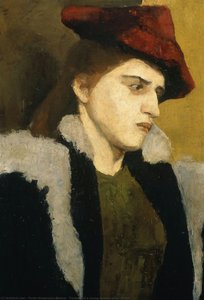
La Gitana

Louis Kronberg’s ‘La Gitana,’ a captivating 1920 portrait of a woman in a floral dress, showcases the artist's masterful use of light and shadow. This evocative piece, reminiscent of Impressionism, offers a contemplative mood and timeless beauty – discover this exquisite hand-painted reproduction.

Louis Kronberg (1872-1965) was an American figure painter celebrated for his theater scenes, ballet dancers & portraits. Influenced by Degas and French Impressionism, his works are in major museums like the Metropolitan Museum of Art.

Hand Made Oil Reproduction

Hand-painted oil on canvas in your size and frame, made to order by our artists.

P118B $10
P118H $10
P118W $10
P438Z $10
P508JH $12
P508YH $12
P805H $10
P805Z $10
P919BZ $10
P919G $10
P919XJ $10
P959ZH $10
P968JZ $12
W106C $8
W218G $10
W218JH $8
W218Y $10
W307PJ $10
W316G $10
W316PJ $8
W316Y $10
W398PJ $8
W4111J $10
W500HY $15
W500JH $15
W692G $12
W849H $8
W940BG $15
W953PJ $8

Standard
custom
CM
INCH

Pick from our preset sizes that match the artwork's original proportions.

width
height

You may enter your own dimensions to fit a specific frame or space. If your selected size does not match the original image's proportions, we will either crop the artwork or extend the painting with additional hand-painted elements. A digital mockup will be sent for your approval before production begins.
Please note that the on-screen preview does not reflect the actual cropping or extension. Only the mockup will accurately show the final composition.
While custom sizes are available, we recommend selecting a dimension from the predefined list to preserve the original proportions.

Examples of what can be changed: Replace face with customer photo; Add pet (e.g., replace cat with dog); Include hidden message in background; Change background landscape or elements.
After order, Most-Famous-Paintings.com team will email client for instructions and provide a mockup preview

Worldwide Delivery () in 3/4 weeks instead of standard 5 weeks. (18 July). No compromise on quality.

why_choose_icon
Free Worldwide Express Shipping
why_choose_icon
High-Quality Linen Canvas
why_choose_icon
Full Shipping Insurance
why_choose_icon
Customs Tax Refund Guarantee
why_choose_icon
True Color Matching Guarantee
why_choose_icon
60-Day Return Policy (Defects Only)
why_choose_icon
100% Money-Back Guarantee
why_choose_icon
Bulk Discount Offer

Total Price

-

reproduction

La Gitana

Reproduction Medium

Reproduction Size

-

Total Price

-

Quick Facts

  • Medium: Oil on canvas
  • Year: 1920
  • Artist: Louis Kronberg
  • Title: La Gitana
  • Subject or theme: Gypsy woman
  • Movement: Impressionism
  • Dimensions: 63 x 80 cm

Artwork Description

A Portrait of Quiet Contemplation: Louis Kronberg’s “La Gitana”

Louis Kronberg's "La Gitana," painted in 1920, is more than just a portrait; it’s a carefully constructed moment of serene introspection. Measuring 63 x 80 cm, this work immediately draws the viewer into the woman’s gaze – a downward cast that suggests both vulnerability and profound thought. Kronberg, born in Boston in 1872, was a pivotal figure bridging academic realism with the burgeoning Impressionist movement, a legacy evident in the meticulous detail of his brushwork combined with an evocative use of light.

  • The Subject: The central figure is a young woman, identified as “La Gitana” (the Gypsy), a common subject for Kronberg reflecting his interest in portraying figures from marginalized communities.
  • Technical Mastery: Kronberg’s training under Tarbell and Benson at the Boston Museum School is palpable in the painting's refined technique – smooth gradations of color, precise rendering of fabric folds, and an almost photographic attention to detail.
  • Historical Context: Painted during a period of significant artistic change, "La Gitana" represents a conservative yet sophisticated approach within the American art scene, influenced by European masters while maintaining a distinctly American sensibility.

Decoding Symbolism and Composition

The composition itself is subtly layered with symbolic meaning. The woman’s downward gaze invites speculation – what occupies her thoughts? The floral dress, likely of the period, speaks to both beauty and perhaps a connection to nature, while the flower woven into her hair adds an element of romantic fragility. Notably, two birds are positioned within the background landscape; one on the left and another towards the right. These avian figures, often associated with freedom and spirituality, could represent aspirations or perhaps a longing for escape – themes frequently explored in portraiture of this era.

  • Birds as Symbolism: The inclusion of birds is particularly noteworthy, suggesting themes of liberty, aspiration, and the connection between humanity and nature.
  • Color Palette: Kronberg employs a muted color palette dominated by earth tones – browns, greens, and ochres – creating a sense of quietude and timelessness.

Kronberg’s Artistic Philosophy & The Legacy of “La Gitana”

Louis Kronberg's artistic philosophy centered on capturing the essence of his subjects with both technical precision and emotional depth. He sought to portray not just appearances but also the inner lives of those he depicted, a characteristic that elevates "La Gitana" beyond a simple likeness. Awarded the Longfellow Traveling Scholarship, Kronberg’s extensive travels – including formative years in Paris – exposed him to diverse artistic influences, ultimately shaping his unique style. “La Gitana” stands as a testament to this journey, showcasing his ability to synthesize European academic training with an increasingly personal and expressive vision.

A Timeless Piece for Your Collection

Most-Famous-Paintings offers a meticulously crafted hand-painted reproduction of Louis Kronberg’s "La Gitana," capturing the essence of this evocative portrait. This reproduction ensures that you can experience the beauty, tranquility, and subtle symbolism of this remarkable artwork in your own space. Perfect for collectors seeking a piece of American art history or interior designers aiming to create an atmosphere of quiet contemplation, this reproduction is a lasting tribute to Louis Kronberg’s artistic legacy.


Artist Biography

A Life Immersed in Light and Shadow: The World of Louis Kronberg

Born in Boston in 1872, Louis Kronberg embarked on a journey that would position him as a significant bridge between the academic traditions of his era and the burgeoning currents of Impressionism. His early artistic foundations were firmly laid at the Boston Museum School, where he studied under the esteemed guidance of Edmund C. Tarbell and Frank Weston Benson. These instructors instilled in him a dedication to meticulous technique and a refined aesthetic sensibility—qualities that would remain hallmarks of his work throughout his long career. Kronberg’s talent was quickly recognized; he was awarded the prestigious Longfellow Traveling Scholarship, an honor that provided him with the invaluable opportunity to further his studies abroad. This scholarship propelled him towards New York's Art Students League and then across the Atlantic to Paris, where he spent several formative years at the Académie Julian from 1894 to 1896. In Paris, he absorbed the lessons of Jean-Paul Laurens and Jean-Joseph Benjamin-Constant, while also benefiting from private instruction with Raphaël Collin—a period that profoundly shaped his artistic vision.

The Allure of Degas and the Parisian Influence

It was in Paris that Kronberg encountered a pivotal influence: Edgar Degas. The innovative compositions and captivating depictions of ballet dancers by Degas resonated deeply with the young artist, sparking a lifelong fascination with capturing fleeting moments and the drama inherent in performance. This encounter ignited within him an appreciation for the Impressionist movement’s emphasis on light, atmosphere, and subjective experience. Kronberg didn't simply mimic Degas; rather, he synthesized these new influences with his existing academic training, developing a unique style characterized by soft, harmonious colors punctuated by decisive contrasts. He became particularly drawn to scenes of the theater, ballet dancers, and intimate portraits—subjects that allowed him to explore themes of elegance, grace, and human emotion. His compositions reveal a masterful understanding of light and shadow, creating an atmosphere that is both captivating and emotionally resonant. The French training instilled in him a sense of refinement and sophistication, evident in every brushstroke.

A Career Spanning Continents: From Boston to Palm Beach

Upon returning from Europe, Kronberg established himself as a respected artist and educator. He took on an instructional role at the Copley Society of Art in Boston, generously sharing his knowledge and passion with aspiring artists. Throughout his career, he maintained studios in Boston, New York, and Paris, frequently traveling between these cultural hubs to seek inspiration and work on new projects. This peripatetic lifestyle allowed him to absorb diverse influences and maintain a fresh perspective. He also forged a close relationship with Isabella Stewart Gardner, the renowned art collector and patron, serving as a trusted advisor in her acquisitions for her famed museum. His paintings began to gain recognition, with works like “Behind the Footlights” (now held at the Pennsylvania Academy in Philadelphia) and “The Pink Sash” (part of the Metropolitan Museum of Art’s collection) establishing his reputation. These pieces exemplify his ability to capture not just likenesses but also the very essence of his subjects—the energy of a performance, the quiet dignity of a portrait sitter.

Recognition, Legacy, and Philanthropic Spirit

Kronberg was an active participant in the artistic community, holding memberships in prestigious organizations such as the Boston Art Club, the Guild of Boston Artists, the Salmagundi Club, and the Société Nationale des Beaux-Arts in Paris. His contributions were consistently recognized through awards and honors, including accolades at the Pan-Pacific Exposition in San Francisco (1915) and the Chevalier Legion of Honor from France (1951). Beyond his artistic achievements, Kronberg was known for his generous spirit and commitment to supporting fellow artists. He famously provided financial assistance to Arthur Clifton Goodwin for over fifteen years—a testament to his belief in fostering creativity and nurturing talent within the art world. Louis Kronberg passed away in West Palm Beach, Florida, in 1965 at the age of 92, leaving behind a rich artistic legacy that continues to be celebrated today. He remains an important figure in American art history, remembered for his ability to seamlessly blend traditional techniques with modern sensibilities and for capturing the vibrant cultural life of the early 20th century with grace and sensitivity. His work serves as a poignant reminder of the enduring power of art to illuminate the human experience.
Louis Kronberg

Louis Kronberg

1872 - 1965 , United States of America

Quick Facts

  • Artistic Movement Or Style: Impressionism
  • Artists Who Influenced This Artist: ['Edgar Degas']
  • Date Of Birth: Dec 20, 1872
  • Date Of Death: Mar 9, 1965
  • Full Name: Louis Kronberg
  • Nationality: American
  • Notable Artworks:
    • Behind the Footlights
    • The Pink Sash
    • La Gitana
  • Place Of Birth: Boston, USA
Explore artworks organized by themes, styles, and characteristics.