x


 Oil On CanvasWallArtSurrealist Painting
 1954Modern
 47.0 x 56.0 cm
Hand-painted oil on canvas in your size and frame, made to order by our artists.





























Pick from our preset sizes that match the artwork's original proportions.

You may enter your own dimensions to fit a specific frame or space. If your selected size does not match the original image's proportions, we will either crop the artwork or extend the painting with additional hand-painted elements. A digital mockup will be sent for your approval before production begins.
Please note that the on-screen preview does not reflect the actual cropping or extension. Only the mockup will accurately show the final composition.
While custom sizes are available, we recommend selecting a dimension from the predefined list to preserve the original proportions.
Worldwide Delivery () in 3/4 weeks instead of standard 5 weeks. (18 July). No compromise on quality.


The Sky inflames
Reproduction Size
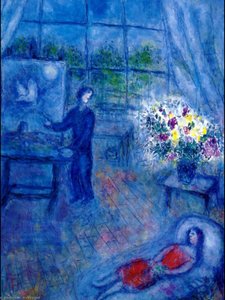
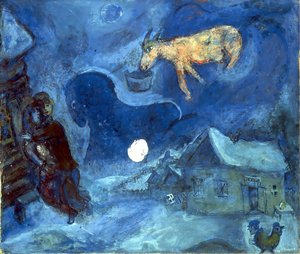
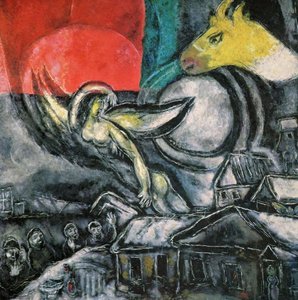
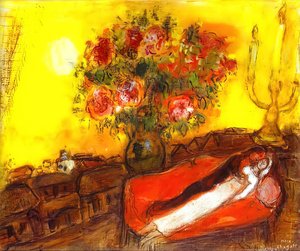
Marc Chagall's "The Sky Inflames," painted in 1954, isn’t merely a depiction of a scene; it’s an immersion into the artist’s intensely personal and profoundly symbolic world. This oil on canvas, measuring 47 x 56 cm, transcends simple representation, offering instead a glimpse into the heart of Chagall's unique artistic vision—a blend of surrealism, Jewish folklore, and a deeply felt nostalgia for his childhood in Vitebsk. The painting immediately captivates with its dominant palette of warm yellows, reminiscent of both sunrise and twilight, creating an atmosphere that is simultaneously inviting and subtly unsettling – a hallmark of Chagall’s distinctive style.
At the center of this luminous world lies a woman reclining on a bed, her posture suggesting peaceful rest or perhaps even slumber. This figure, often interpreted as a representation of Chagall's beloved wife, Valentina Kulagina, is enveloped in a dreamlike haze. Surrounding her are scattered chairs and an abundance of vibrant flowers – predominantly reds and pinks – that seem to bloom directly from the canvas itself. The careful placement of a vase adds a touch of domestic tranquility amidst the fantastical elements, grounding the scene while simultaneously hinting at a deeper narrative.
Chagall’s work is renowned for its rich symbolism, and “The Sky Inflames” is no exception. The yellow sky itself isn't simply a backdrop; it represents an emotional state—a feeling of warmth, joy, or perhaps even longing. Flowers, universally associated with beauty, fertility, and remembrance, play a crucial role in conveying this sentiment. Their profusion speaks to the abundance of life and love within Chagall’s world. The bed, a recurring motif in his oeuvre, symbolizes rest, refuge, and the realm of dreams—a space where memories and emotions coalesce.
The presence of the candelabrum is particularly intriguing. Its ornate form suggests tradition, faith, and perhaps even a connection to Chagall’s Jewish heritage. It acts as a focal point, drawing the eye and adding another layer of complexity to the painting's symbolic language. The intertwined figures on the bed further reinforce themes of intimacy, companionship, and the enduring power of love.
Marc Chagall’s artistic journey is a fascinating one, bridging the gap between traditional figurative art and the radical experimentation of modernism. Born Moishe Shagal in 1887 in Vitebsk, Belarus, he initially trained as a sign painter before embarking on a career that would ultimately define him as one of the most important artists of the 20th century. His early work was influenced by Russian folk art and religious iconography, but he quickly developed his own distinctive style—characterized by flattened perspectives, bold colors, and dreamlike imagery.
Chagall’s association with the École de Paris further shaped his artistic development, exposing him to the ideas of Cubism, Surrealism, and other avant-garde movements. However, he remained committed to figurative representation and narrative storytelling, ensuring that his work retained a strong connection to his personal experiences and cultural roots. “The Sky Inflames,” painted during a period when Chagall was exploring more abstract forms, exemplifies this delicate balance—a testament to the artist’s ability to synthesize diverse influences while maintaining a uniquely individual voice.
Most-Famous-Paintings offers meticulously crafted hand-painted reproductions of Marc Chagall's “The Sky Inflames,” allowing you to bring this captivating masterpiece into your own space. Our skilled artists replicate the painting’s vibrant colors, intricate details, and emotional depth with unparalleled precision. Whether you are an art collector, a design enthusiast, or simply someone who appreciates beauty, a Most-Famous-Paintings reproduction of "The Sky Inflames" is a stunning addition to any collection or interior.
Explore our selection of sizes and canvas options to find the perfect representation for your needs. Each reproduction is created with archival-quality materials, ensuring that it will retain its brilliance and beauty for generations to come. Discover more about this artwork here.

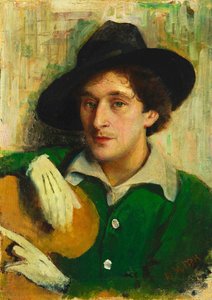
1887 - 1985 , Belarus
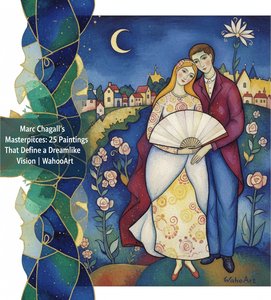
Journey into the dreamlike world of Marc Chagall! Explore 25 iconic paintings, from 'I and the Village' to his vibrant surrealist masterpieces. Discover the stories & techniques behind these timeless artworks – find museum-quality Chagall reproductions on Most-Famous-Paintings.com.
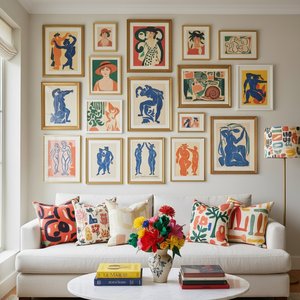
Journey through Henri Matisse's 25 most iconic paintings! Explore Fauvism, vibrant colors & the stories behind masterpieces like 'The Dance'. Find museum-quality art reproductions and curated decor ideas to elevate your space. Discover all masterpieces on Most-Famous-Paintings.com.

Journey through 25 iconic Claude Monet masterpieces! Explore Impressionism’s beauty, from Water Lilies to Rouen Cathedral. Discover stunning art reproductions & curated decor ideas – explore the full collection online at Most-Famous-Paintings.com.

Journey through 25 iconic artworks by Paul Cézanne – a master of Impressionism and Post-Impressionism. Explore his landscapes, still lifes, and the stories behind these timeless masterpieces. Discover museum-quality reproductions & curated decor at Most-Famous-Paintings.com.
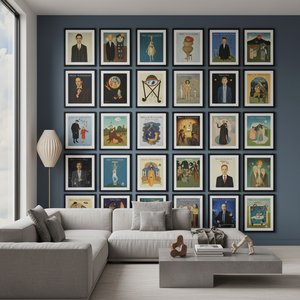
Explore 25 iconic René Magritte paintings & delve into the world of surrealism. Discover the stories behind 'The Son of Man', 'Golconda' & more. Find museum-quality art reproductions and elevate your home decor with Most-Famous-Paintings.com.


Stay updated with the latest art news, exclusive offers, and decoration ideas.
Tell us about your project and our art experts will provide you with 3 personalized art suggestions.
Let Us Curate 3 Options Just for You - Free!


 Buy print
 Send
Send Share
Share
 Details

 Download
 Similars
 X-Ray
X-Ray Diaporama
 Read More







 Glass option is only available in size under 110 CM