Wishlist Shopping Cart Cart
Buy print Buy printBuy Image Buy Image SendSend
DetailsDetails Add to favorites Add to favorites DownloadDownload SimilarsSimilars X-RayX-Ray DiaporamaDiaporama

Study for ''Given: 1. The Waterfall, 2. Illuminating Gas''

Marcel Duchamp’s ‘Study for Given: 1. The Waterfall, 2. Illuminating Gas’ – a striking abstract nude study in oil & line. Explore Cubist form & texture.

Marcel Duchamp: Revolutionary artist who challenged art's definition with Dadaism & readymades like 'Fountain.' Explore his iconic works & philosophical impact.

Hand Made Oil Reproduction

Hand-painted oil on canvas in your size and frame, made to order by our artists.

P118B $10
P118H $10
P118W $10
P438Z $10
P508JH $12
P508YH $12
P805H $10
P805Z $10
P919BZ $10
P919G $10
P919XJ $10
P959ZH $10
P968JZ $12
W106C $8
W218G $10
W218JH $8
W218Y $10
W307PJ $10
W316G $10
W316PJ $8
W316Y $10
W398PJ $8
W4111J $10
W500HY $15
W500JH $15
W692G $12
W849H $8
W940BG $15
W953PJ $8

Standard
custom
CM
INCH

Pick from our preset sizes that match the artwork's original proportions.

width
height

You may enter your own dimensions to fit a specific frame or space. If your selected size does not match the original image's proportions, we will either crop the artwork or extend the painting with additional hand-painted elements. A digital mockup will be sent for your approval before production begins.
Please note that the on-screen preview does not reflect the actual cropping or extension. Only the mockup will accurately show the final composition.
While custom sizes are available, we recommend selecting a dimension from the predefined list to preserve the original proportions.

Examples of what can be changed: Replace face with customer photo; Add pet (e.g., replace cat with dog); Include hidden message in background; Change background landscape or elements.
After order, Most-Famous-Paintings.com team will email client for instructions and provide a mockup preview

Worldwide Delivery () in 3/4 weeks instead of standard 5 weeks. (18 July). No compromise on quality.

why_choose_icon
Free Worldwide Express Shipping
why_choose_icon
High-Quality Linen Canvas
why_choose_icon
Full Shipping Insurance
why_choose_icon
Customs Tax Refund Guarantee
why_choose_icon
True Color Matching Guarantee
why_choose_icon
60-Day Return Policy (Defects Only)
why_choose_icon
100% Money-Back Guarantee
why_choose_icon
Bulk Discount Offer

Total Price

-

reproduction

Study for ''Given: 1. The Waterfall, 2. Illuminating Gas''

Reproduction Medium

Reproduction Size

-

Total Price

-

Quick Facts

  • subject: Nude female figure
  • year: 1949
  • title: Study for ''Given: 1. The Waterfall, 2. Illuminating Gas''
  • medium: Oil on canvas (presumed)
  • artist: Marcel Duchamp

Art Quiz

There is only one correct answer for each question.

Question 1:
To which artistic movements is Marcel Duchamp's 'Study for ''Given: 1. The Waterfall, 2. Illuminating Gas'' ' most closely associated?
Question 2:
What is the primary subject matter of this artwork?
Question 3:
The description notes that Duchamp's work often challenges traditional notions of art. Which of his famous works exemplifies this challenge most prominently?
Question 4:
How would you best describe the artist's approach to form in 'Study for ''Given: 1. The Waterfall, 2. Illuminating Gas'' '?
Question 5:
What is a key characteristic emphasized in the artwork's description, alongside form?

Artwork Description

A Study in Form: Marcel Duchamp’s ‘Given: 1. The Waterfall, 2. Illuminating Gas’

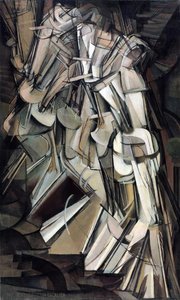
This captivating work by Marcel Duchamp, created in 1949, is not a finished painting but rather a meticulously planned *study* for his ambitious and enigmatic final project, “Étant donnés” (Given). It offers a compelling glimpse into the artist's evolving artistic concerns and provides valuable insight into the complex layers of meaning embedded within his larger work. The piece presents an abstracted nude female figure dramatically positioned against a textured, undulating backdrop.

Deconstructing the Figure: Style & Technique

Duchamp’s approach here is decidedly anti-illusionistic. He eschews traditional representational techniques in favor of a highly stylized and geometric rendering. The figure is broken down into simplified planes and angular lines, reminiscent of Cubism and early Modernist aesthetics. This fragmentation isn't about accurately depicting the human form; it’s about exploring its essential structure and challenging conventional notions of beauty. The artist employs a limited palette of browns and earth tones, emphasizing texture through visible brushstrokes and layered paint application – suggesting an almost sculpted quality to both figure and ground. The technique prioritizes form, line, and surface over realistic depiction.

Duchamp & the Nude: A Historical Context

Throughout art history, the nude has served as a vehicle for exploring ideals of beauty, mythology, and religious narratives. Duchamp, however, subverts this tradition. While acknowledging the historical weight of the nude in Western art – from classical Greek sculpture to Renaissance masterpieces – he deliberately dismantles its conventional associations. His work exists within a post-war artistic landscape grappling with existentialism and challenging established norms. The history of the nude is complex; as explored by scholars like Kenneth Clark, there's a distinction between being “naked” (stripped of clothing) and presenting a carefully constructed "nude" – an idealized form. Duchamp’s work leans towards a deconstruction of both concepts, offering something altogether different.

Unveiling the Symbolism: Beyond Representation

The title itself, “Given: 1. The Waterfall, 2. Illuminating Gas,” is deliberately ambiguous and invites multiple interpretations. Duchamp was fascinated by wordplay and paradoxes, often embedding hidden meanings within his titles and imagery. The waterfall could symbolize a flow of energy or unconscious desires, while the illuminating gas might represent revelation or exposure. However, Duchamp resisted definitive explanations, preferring to leave room for individual interpretation. The work’s power lies in its open-endedness; it doesn't *tell* you what to think but rather *provokes* questions about perception, desire, and the nature of representation.

Emotional Resonance & Artistic Legacy

Despite its abstract style, this study evokes a powerful sense of tension and mystery. The figure’s contorted pose and fragmented form suggest vulnerability and perhaps even a subtle eroticism, though it's presented in a detached, almost clinical manner. This deliberate ambiguity is characteristic of Duchamp’s work. It challenges viewers to confront their own preconceptions about the body, sexuality, and art itself. As a precursor to “Étant donnés,” this study stands as a testament to Duchamp’s innovative spirit and his enduring influence on 20th-century art – particularly Conceptual Art and its emphasis on ideas over aesthetics. It's a piece that rewards careful contemplation and continues to resonate with audiences today.

Considerations for Collectors & Designers

  • A Statement Piece: This artwork, or a high-quality reproduction, serves as a striking focal point in any collection.
  • Modern Interiors: Its abstract form and muted color palette complement modern and minimalist interior design schemes.
  • Conversation Starter: Duchamp’s work is renowned for its intellectual depth and ability to spark dialogue.
  • Historical Significance: Owning a piece connected to such an influential artist adds prestige and cultural value.

Artist Biography

A Revolutionary Spirit: The Life and Art of Marcel Duchamp

Marcel Duchamp, born Henri-Robert-Marcel Duchamp in 1887 in Blainville-Crevon, Normandy, was more than an artist; he was a philosophical provocateur who fundamentally altered the course of modern art. His early life, though seemingly conventional – nurtured within a family that appreciated artistic expression with both brothers pursuing successful careers as artists – hinted at the iconoclasm to come. Duchamp initially pursued formal training, mastering traditional techniques and experimenting with post-impressionist styles. However, this academic foundation served not as an end in itself, but as a springboard for questioning the very nature of art, its purpose, and its definition. He wasn’t content merely to depict the world; he sought to challenge how we perceive it, and what constitutes artistic value. This restless intellectual curiosity would become the defining characteristic of his prolific career.

From Cubism to Dada: A Rejection of Convention

Duchamp's artistic journey was marked by a constant evolution, a deliberate shedding of established norms. His initial engagement with Cubism, evident in works like *Portrait of Chess Players* (1911), demonstrated an interest in fragmented forms and multiple perspectives – a departure from traditional representation. Yet, he quickly moved beyond purely aesthetic concerns, recognizing that simply rearranging visual elements wasn’t enough to address the deeper questions swirling within him. The horrors of World War I fueled this discontent, leading Duchamp to embrace Dadaism, a movement born out of disillusionment and a rejection of logic, reason, and traditional artistic values. It was within the Dadaist framework that Duchamp truly began to dismantle conventional notions of art. He wasn’t interested in creating beautiful objects; he wanted to provoke thought, challenge assumptions, and expose the arbitrariness of aesthetic judgment. This period saw the birth of his most radical innovation: the ‘readymade’.

The Readymades and the Subversion of Art

The introduction of readymades – ordinary manufactured objects selected and presented as art – was Duchamp’s most significant contribution to the 20th century. These weren't simply found objects; they were deliberate acts of artistic subversion. By taking an everyday item, like a urinal (*Fountain*, 1917), signing it “R. Mutt,” and submitting it to an art exhibition, Duchamp challenged the very definition of artistic skill and authorship. Was it the artist’s hand that created the work, or was it the artist's *idea*? This question became central to his practice and laid the groundwork for Conceptual Art. Other notable readymades like *L.H.O.O.Q.* (1919), a postcard reproduction of the Mona Lisa defaced with a mustache and goatee, were playful yet pointed critiques of art history and established cultural icons. These works weren’t meant to be admired for their aesthetic qualities; they were intended to provoke debate and force viewers to reconsider their preconceived notions about what constitutes art. Duchamp believed that art should reside in the mind, not merely in the eye.

Legacy and Enduring Influence

Marcel Duchamp's impact on subsequent generations of artists is immeasurable. He fundamentally altered our understanding of art, paving the way for movements like Conceptual Art, Minimalism, Pop Art, and countless others. His emphasis on the artist’s idea – the concept behind the work – over its aesthetic qualities continues to inspire artists today.
  • Cubism: Early exploration of fractured forms and spatial representation.
  • Dadaism: Rejection of logic, reason, and traditional artistic values in response to World War I.
  • Conceptual Art: Emphasis on the idea behind the artwork rather than its aesthetic qualities.
His work continues to provoke debate and challenge viewers to reconsider their assumptions about creativity and artistic expression. Duchamp wasn’t simply an artist; he was a philosopher, a provocateur, and a revolutionary who dared to question everything. He remains a central figure in discussions about the nature of art and its role in society, his legacy resonating powerfully within the contemporary art world. The Large Glass (1915-1923), with its complex symbolism and enigmatic imagery, stands as a testament to his intellectual rigor and enduring influence. Duchamp’s work is not about providing answers; it's about asking questions – questions that continue to challenge and inspire us today.
Marcel Duchamp

Marcel Duchamp

1887 - 1968 , France

Quick Facts

  • Artistic Movement Or Style:
    • Cubism
    • Dadaism
    • Conceptual Art
  • Artists Or Movements Influenced By This Artist:
    • Conceptual Art
    • Pop Art
    • Minimalism
  • Date Of Birth: July 28, 1887
  • Date Of Death: October 2, 1968
  • Full Name: Marcel Duchamp
  • Nationality: French-American
  • Notable Artworks:
    • Fountain
    • L.H.O.O.Q.
    • The Large Glass
    • Boîte-en-valise
  • Place Of Birth: Blainville, France
Explore artworks organized by themes, styles, and characteristics.