


x


Museum-quality giclée or canvas print with fast production and flexible finish options. ( Switch to hand made Painting Switch to Image)





























Pick from our preset sizes that match the artwork's original proportions.

You may enter your own dimensions to fit a specific frame or space. If your selected size does not match the original image's proportions, we will either crop the artwork or extend the image with a mirrored or solid-fill edge. A digital mockup will be sent for your approval before production begins.
Please note that the on-screen preview does not reflect the actual cropping or extension. Only the mockup will accurately show the final composition.
While custom sizes are available, we recommend selecting a dimension from the predefined list to preserve the original proportions.
Worldwide Delivery () in 2 weeks instead of standard 4/5 weeks. (30 July)


Untitled 76
Reproduction Size
Mark Rothko (1903 – 1970), born Markus Yakovlevich Rothkowitz in Dvinsk, Latvia, stands as one of the most influential figures in Abstract Expressionism. His artistic life began amidst considerable hardship—the anxieties surrounding his family’s Jewish heritage within the Pale of Settlement and the trauma of losing his father during immigration to Portland, Oregon—experiences that instilled a profound empathy for human suffering and shaped his unwavering commitment to exploring existential questions.
His signature style involved layering rectangles of saturated hues – predominantly crimson, orange, yellow, and blue – onto canvases of monumental scale. These blocks of color weren’t merely decorative; they were meticulously crafted to evoke profound emotional responses in the viewer. Rothko believed that color itself possessed inherent expressive power, capable of conveying feelings without resorting to explicit depiction.
The symbolism embedded within Rothko’s paintings is deliberately ambiguous. Critics have interpreted his works as meditations on spirituality, grief, and the sublime—representations of inner landscapes rather than external realities. The rectangles themselves can be seen as symbols of containment and illumination, encapsulating vastness while simultaneously radiating warmth and serenity. Ultimately, Rothko sought to create art that resonated with viewers on a visceral level, prompting contemplation and fostering a connection to something beyond oneself.
“Color is my passion,” Rothko declared repeatedly throughout his career. “It’s the most direct route to the human soul.” His legacy continues to inspire artists and collectors alike—a testament to the enduring power of art to communicate emotion, provoke thought, and illuminate the mysteries of existence.
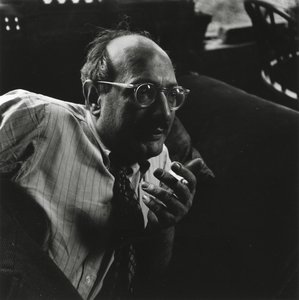
1903 - 1970 , Latvia

Explore the captivating world of Color Field painting! Discover its origins, key artists like Rothko & Newman, philosophical depth, and lasting influence on modern art. Expert insights for collectors.

Explore the profound emotional depth of Mark Rothko's abstract expressionism. Discover the history, techniques & lasting impact of this pivotal Color Field painter. Expert insights for collectors and art enthusiasts.

Explore the vibrant world of Gene Davis and the Washington Color School. Discover his iconic stripe paintings, innovative techniques, and lasting impact on American abstract art. A deep dive for collectors & enthusiasts.

Explore the groundbreaking abstract expressionism of Morris Louis, a pioneer of Color Field painting. Discover his innovative techniques, influential series & lasting legacy in post-war American art. Learn more at Most-Famous-Paintings.

Explore the profound world of Color Field painting with Most-Famous-Paintings. Discover key artists like Rothko & Newman, its philosophical roots, and lasting impact on modern art. Expert insights for collectors.


Stay updated with the latest art news, exclusive offers, and decoration ideas.
Tell us about your project and our art experts will provide you with 3 personalized art suggestions.
Let Us Curate 3 Options Just for You - Free!


 Preview
 Send
Send Share
Share
 Details

 Download
 Similars
 X-Ray
X-Ray Diaporama
 Read More







 Glass option is only available in size under 110 CM


