Wishlist Shopping Cart Cart
Buy print Buy printBuy Image Buy Image SendSend
DetailsDetails Add to favorites Add to favorites DownloadDownload SimilarsSimilars X-RayX-Ray DiaporamaDiaporama

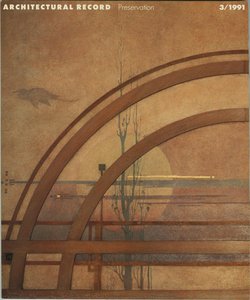
The White House\n\n[front view]

Explore the iconic White House design by Massimo Vignelli and his associates – a groundbreaking publication program prioritizing clarity, consistency & cost-effectiveness for the National Park Service.

Massimo Vignelli (1931-2014): Italian design icon renowned for minimalist graphic designs, including the NYC subway map & corporate identities. Explore his legacy!

Hand Made Oil Reproduction

Hand-painted oil on canvas in your size and frame, made to order by our artists.

P118B $10
P118H $10
P118W $10
P438Z $10
P508JH $12
P508YH $12
P805H $10
P805Z $10
P919BZ $10
P919G $10
P919XJ $10
P959ZH $10
P968JZ $12
W106C $8
W218G $10
W218JH $8
W218Y $10
W307PJ $10
W316G $10
W316PJ $8
W316Y $10
W398PJ $8
W4111J $10
W500HY $15
W500JH $15
W692G $12
W849H $8
W940BG $15
W953PJ $8

Standard
custom
CM
INCH

Pick from our preset sizes that match the artwork's original proportions.

width
height

You may enter your own dimensions to fit a specific frame or space. If your selected size does not match the original image's proportions, we will either crop the artwork or extend the painting with additional hand-painted elements. A digital mockup will be sent for your approval before production begins.
Please note that the on-screen preview does not reflect the actual cropping or extension. Only the mockup will accurately show the final composition.
While custom sizes are available, we recommend selecting a dimension from the predefined list to preserve the original proportions.

Examples of what can be changed: Replace face with customer photo; Add pet (e.g., replace cat with dog); Include hidden message in background; Change background landscape or elements.
After order, Most-Famous-Paintings.com team will email client for instructions and provide a mockup preview

Worldwide Delivery () in 3/4 weeks instead of standard 5 weeks. (18 July). No compromise on quality.

why_choose_icon
Free Worldwide Express Shipping
why_choose_icon
High-Quality Linen Canvas
why_choose_icon
Full Shipping Insurance
why_choose_icon
Customs Tax Refund Guarantee
why_choose_icon
True Color Matching Guarantee
why_choose_icon
60-Day Return Policy (Defects Only)
why_choose_icon
100% Money-Back Guarantee
why_choose_icon
Bulk Discount Offer

Total Price

-

reproduction

The White House\n\n[front view]

Reproduction Medium

Reproduction Size

-

Total Price

-

Quick Facts

  • Influences: Castiglioni Brothers
  • Location: National Park Service Collection
  • Notable elements or techniques: Standardized grid, black identification band
  • Subject or theme: Architecture
  • Artistic style: Minimalist
  • Year: 1989
  • Artist: Massimo Vignelli & Vignelli Associates

Art Quiz

There is only one correct answer for each question.

Question 1:
What was the primary purpose of designing this brochure for the National Park Service?
Question 2:
The Vignelli Design Team emphasized which core principles in their approach to designing NP publications?
Question 3:
What architectural style is predominantly represented in the depiction of The White House?
Question 4:
The inclusion of a clock within the drawing serves to convey what symbolic message about time and governance?
Question 5:
Massimo Vignelli's apprenticeship with Castiglioni brothers instilled in him a belief that design should primarily focus on:

Artwork Description

A Legacy of Simplicity: Exploring Massimo Vignelli’s Vision for the White House Brochure

Massimo Vignelli's contribution to graphic design extends far beyond mere aesthetics; it embodies a profound belief in communicating information effectively while elevating visual experience. His work on the National Park Service brochure for The White House stands as a testament to this philosophy, representing not just a promotional piece but a carefully considered articulation of architectural grandeur and institutional purpose. Created in 1989, this publication exemplifies Vignelli’s signature style—a disciplined elegance rooted in geometric precision and restrained color palettes—resulting in an enduring symbol of American heritage.

The Genesis of Form: Vignelli's Design Principles

Vignelli’s approach stemmed from a deep understanding of the Unigrid Design Specifications, adopted by the NPS to standardize print materials across its vast network. Recognizing the challenge of conveying complex data within a limited space, Vignelli prioritized clarity and hierarchy. He eschewed ornate embellishments, opting instead for a grid system—a cornerstone of his design methodology—that ensured consistent visual organization. This meticulous framework dictated the placement of text blocks and photographic images, creating a balanced composition that guided the viewer’s eye through the brochure's content. The selection of typeface – Helvetica—further reinforced Vignelli’s commitment to legibility and universality, reflecting his conviction that typography should serve as an instrument for communication rather than decoration.

A Geometric Ode to Monumentality

The visual language employed in the White House brochure is strikingly reductive yet powerfully expressive. Vignelli utilized a muted color palette – primarily creams and browns—to evoke the timelessness of the building itself, mirroring its enduring presence within American history. The dominant geometric shapes—squares and rectangles—were deliberately chosen to convey stability and authority, mirroring the architectural structure’s solidity. Furthermore, the careful positioning of photographic images—depicting interior spaces and exterior views—provided contextual information without overwhelming the overall design. These elements worked in concert to communicate not only facts about the White House but also its inherent dignity and grandeur.

Symbolism Embedded in Detail

Beyond its structural considerations, the brochure’s design incorporates subtle symbolic gestures. The prominent clock – a recurring motif in Vignelli's work—represents time itself, emphasizing the historical significance of the building and acknowledging its role as a focal point for national governance. Similarly, the restrained use of whitespace contributes to a sense of openness and tranquility, countering the perceived formality of presidential residences. These understated choices underscore Vignelli’s belief that design can communicate emotion without resorting to overt sentimentality—a characteristic that resonates powerfully with the brochure's intended audience.

Enduring Influence: Vignelli’s Legacy

The White House brochure remains a remarkable example of modernist graphic design, demonstrating how simplicity and precision can elevate communication and create lasting impressions. Its enduring popularity speaks to the timeless appeal of Vignelli’s aesthetic—a style characterized by intellectual rigor and unwavering devotion to form. More than just a promotional tool, it embodies Vignelli's profound conviction that visual culture should serve as a conduit for knowledge and inspiration, cementing his place among the most influential designers of the late 20th century.

Artist Biography

A Life Dedicated to Form: The World of Massimo Vignelli

Born in Milan, Italy, in 1931, Massimo Vignelli’s journey was one of unwavering dedication to the principles of modernist design. From a young age, he demonstrated an innate understanding of visual communication, beginning his formal training in architecture at the Politecnico di Milano and later continuing at the Università Iuav di Venezia. However, it was an apprenticeship with the esteemed Castiglioni brothers – pioneers in Italian industrial design – that truly ignited his passion for shaping the world through thoughtful creation. This early exposure instilled in him a belief in functionality, simplicity, and the power of elegant solutions to everyday problems. He wasn’t merely designing objects; he was crafting experiences, streamlining interactions, and elevating the mundane into the memorable. This formative period laid the groundwork for a career that would redefine visual culture across continents.

From Italy to New York: A Transatlantic Vision

Vignelli's path led him to America in 1966, where he became instrumental in establishing the New York office of Unimark International. This marked a pivotal moment, not only for his career but also for the landscape of American design. Unimark quickly rose to prominence, and Vignelli’s contributions – most notably the enduring logo for American Airlines – solidified his reputation as a master of corporate identity. However, a growing divergence in creative philosophy prompted him to embark on an independent venture. In 1971, alongside his wife and lifelong collaborator, Lella Vignelli, he founded Vignelli Associates. This partnership proved extraordinarily fruitful, becoming synonymous with sophisticated design solutions that spanned graphic design, interior design, product design, and architecture. The firm’s ethos was rooted in a belief that good design should be accessible, timeless, and profoundly useful – principles they consistently championed throughout their careers.

Iconic Creations: A Legacy of Clarity

Massimo Vignelli's influence is woven into the fabric of modern life. Perhaps his most recognizable achievement is the redesign of the New York City Subway map in 1972. While initially controversial for its departure from strict geographical accuracy, it was a bold statement in clarity and usability. Vignelli prioritized legibility and intuitive navigation over literal representation, creating a diagrammatic map that continues to guide millions of commuters daily. This project exemplifies his core design philosophy: prioritizing communication above all else. Beyond the subway map, Vignelli Associates left an indelible mark on countless brands and institutions. Their work for Bloomingdale’s – including the iconic brown paper bag with its simple white logo – transformed a shopping experience into a statement of style. They designed furniture for Knoll, packaging for Heller, and corporate identities that became instantly recognizable symbols of quality and innovation. His *Heller Rainbow Dinnerware* stands as a testament to his minimalist aesthetic, showcasing vibrant color within clean geometric forms. The *Tredicesima Triennale di Milano* poster exemplifies his bold use of color and shape, while the *Knoll Design* cover demonstrates his ability to create striking visuals for renowned brands.

A Lasting Impact: Beyond Aesthetics

Massimo Vignelli’s impact extends far beyond individual projects; he fundamentally reshaped how we perceive design itself. He was a staunch advocate for typographic discipline, famously advocating for a limited palette of typefaces – believing that true creativity lies not in endless options but in masterful execution with carefully chosen tools. His book, *The Vignelli Canon*, became a manifesto for designers, outlining his principles of clarity, simplicity, and enduring elegance. He wasn’t simply creating visually pleasing objects; he was striving to create order out of chaos, to communicate effectively, and to elevate the human experience through thoughtful design. His work continues to inspire generations of designers, reminding them that true innovation lies in stripping away the unnecessary and focusing on the essential. The Vignelli Center for Design Studies at the Rochester Institute of Technology serves as a lasting tribute to his legacy, preserving an extensive archive of his work and fostering continued exploration of his groundbreaking ideas. He passed away in 2014, but his designs remain powerfully present, shaping our world with their enduring elegance and unwavering commitment to clarity.

Quick Facts

  • Artistic Movement Or Style: Modernism, Minimalism
  • Date Of Birth: January 10, 1931
  • Date Of Death: May 27, 2014
  • Full Name: Massimo Vignelli
  • Nationality: Italian
  • Notable Artworks:
    • Heller Rainbow Dinnerware
    • Tredicesima Triennale di Milano
    • Knoll Design (cover)
  • Place Of Birth: Milan, Italy
Explore artworks organized by themes, styles, and characteristics.