


x

 OilWallArtSurrealism
 1940Modern
 23.0 x 19.0 cm
Museum-quality giclée or canvas print with fast production and flexible finish options. ( Buy Hand Made Painting Buy Image)





























Pick from our preset sizes that match the artwork's original proportions.

You may enter your own dimensions to fit a specific frame or space. If your selected size does not match the original image's proportions, we will either crop the artwork or extend the image with a mirrored or solid-fill edge. A digital mockup will be sent for your approval before production begins.
Please note that the on-screen preview does not reflect the actual cropping or extension. Only the mockup will accurately show the final composition.
While custom sizes are available, we recommend selecting a dimension from the predefined list to preserve the original proportions.
Worldwide Delivery () in 2 weeks instead of standard 4/5 weeks. (22 August)


Marlene (Mother and son)
Reproduction Size
In the hauntingly beautiful 1940 masterpiece “Marlene (Mother and son),” Max Ernst invites viewers into a realm where the boundaries between the human psyche and the natural world dissolve. Created during one of the most turbulent eras in modern history, this painting transcends a simple depiction of maternity to become an arresting meditation on primal instincts and subconscious desires. The composition presents a striking, dreamlike tableau: a woman with vibrant red hair stands poised atop a large bird, her form embodying both vulnerability and a strange, mythic strength. Beside her, the presence of a child suggests a profound, almost elemental bond, weaving a narrative of protection and continuity amidst a landscape that feels plucked directly from a fever dream.
The emotional resonance of the piece is deeply tied to its historical moment. Painted at the height of the Second World War, the work reflects the profound anxieties of an era marked by destruction and the fragmentation of established values. Through his use of Surrealist imagery, Ernst captures the psychological distress of the time, using the dreamscape as a sanctuary for exploring themes of loss and resilience. For the collector or interior designer, this painting offers more than just visual intrigue; it provides a window into the human capacity to find meaning and connection even when the rational world is in chaos.
To understand the visceral impact of “Marlene,” one must look toward Ernst’s mastery of automatism. Eschewing the rigid constraints of traditional academic painting, Ernst utilized techniques designed to bypass conscious thought and tap into the hidden depths of the mind. His process involved a meticulous yet spontaneous layering of textures, often employing methods such as dripping paint or creating complex collage-like surfaces that suggest a sense of organic growth and decay. This deliberate unevenness creates a tactile, breathing quality on the canvas, where every stroke feels like an unfiltered expression of the artist's internal landscape.
This technique allows the viewer to experience the painting as a living entity. The way the light seems to catch on the textured surfaces and the fluid, almost liquid transitions between figures and background contribute to its hypnotic effect. For those seeking to incorporate such a profound piece into a curated space, the technical complexity of the work ensures that it remains a captivating focal point, offering new layers of discovery upon every viewing.
The symbolic vocabulary of “Marlene (Mother and son)” is rich with archetypal meaning. Central to the work is the motif of the bird—a recurring element in Ernst’s oeuvre. In this composition, the bird serves as a literal foundation for the woman, yet metaphorically, it represents freedom, aspiration, and the soaring power of the spirit. The scattered birds throughout the scene further amplify this sense of interconnectedness between humanity and the wild, untamed forces of nature. These avian figures act as messengers from the subconscious, bridging the gap between the earthly maternal bond and the infinite sky.
The juxtaposition of the naked, vulnerable female form with the powerful, grounded presence of the bird creates a tension that is both unsettling and deeply moving. It speaks to the duality of existence: the fragility of life and the enduring strength of instinct. As an investment in fine art reproduction, this piece serves as a sophisticated conversation starter, bringing a sense of intellectual depth and mythic grandeur to any high-end interior, whether it be a private gallery, a study, or a contemporary living space.

Max Ernst, born Maximilian Maria Ernst on April 1st, 1891, in Brühl, Germany, was a restless spirit destined to become one of the most pivotal figures in 20th-century art. His journey wasn’t one of conventional artistic training; rather, it was a self-directed exploration fueled by philosophical inquiry, psychological fascination, and a profound disillusionment with societal norms. Ernst's father, a teacher of the deaf and an amateur painter, instilled in him both a sensitivity to the world and a rebellious streak against established authority. This early duality would become a defining characteristic of his artistic vision.
Ernst’s academic pursuits at the University of Bonn – encompassing philosophy, art history, literature, psychology, and psychiatry – were not merely diversions but foundational elements that deeply informed his later work. He wasn't simply interested in *how* to paint; he was grappling with *why*. This intellectual curiosity led him to encounter the groundbreaking works of Picasso, Van Gogh, and Gauguin at the Sonderbund exhibition in Cologne in 1912, a moment that irrevocably altered his artistic trajectory. The seeds of modernism had been sown.
The cataclysm of World War I proved to be a watershed moment for Ernst. His experiences as a soldier on both the Eastern and Western fronts left him profoundly shaken, fostering a deep skepticism towards established order and a yearning for new modes of expression. This disillusionment found fertile ground in the burgeoning Dada movement, which he embraced wholeheartedly after returning to Cologne in 1918. Alongside Hans Arp – a lifelong friend and collaborator – Ernst became a central figure in the Cologne Dada group, rejecting traditional artistic conventions and embracing absurdity, chance, and anti-rationality.
However, Dada was merely a stepping stone. In the early 1920s, Ernst migrated to Paris and joined the ranks of the Surrealists, led by André Breton. This marked a shift towards exploring the realm of dreams, the unconscious mind, and the irrational. Influenced by the psychoanalytic theories of Sigmund Freud, Ernst sought to unlock the hidden depths of human experience through his art. He wasn’t interested in depicting reality as it appeared but rather in revealing the underlying psychological forces that shaped it.
Ernst's artistic innovation extended beyond subject matter; he was a relentless experimenter with technique. He didn’t simply adopt existing methods—he invented new ones. Perhaps his most famous contribution is frottage, a process of rubbing pencil or charcoal over textured surfaces to create unexpected and evocative images. This technique, born from a moment of boredom while observing wood grain, allowed Ernst to tap into the subconscious and generate forms that defied conscious control. Closely related was grattage, where paint is scraped across canvas revealing underlying layers.
He also masterfully employed collage, assembling disparate elements – images from magazines, scientific illustrations, photographs – into surreal compositions that challenged conventional notions of representation. These techniques weren’t merely stylistic choices; they were integral to his exploration of the unconscious and his desire to disrupt traditional artistic boundaries. His paintings often feature recurring symbolic imagery: birds (particularly his alter ego Loplop), desolate landscapes, unsettling juxtapositions, and a pervasive sense of mystery.
The outbreak of World War II forced Ernst to flee Europe, finding refuge in the United States. He continued to paint and experiment with new techniques throughout his exile, eventually returning to France after the war where he remained active until his death on April 1st, 1976, in Paris. His influence on subsequent generations of artists is immeasurable.
Max Ernst’s contributions to Dada and Surrealism were nothing short of groundbreaking. He challenged artistic norms, delved into the depths of the subconscious mind, and invented innovative techniques that continue to inspire artists today. He wasn't merely a painter; he was an explorer, a provocateur, and a visionary who expanded the boundaries of art itself. His work remains a testament to the power of imagination, the allure of the irrational, and the enduring quest to understand the complexities of the human psyche.
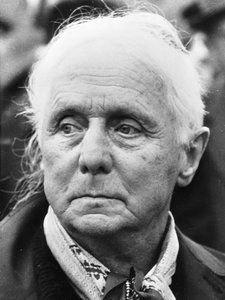
1891 - 1976 , Germany

Explore the profound depths of Surrealism. From Dalí’s dreamscapes to Magritte’s enigmas, master the history of the subconscious mind through our expert art guide and discover museum-quality oil reproductions of the world's most iconic surrealist masterpieces.


Stay updated with the latest art news, exclusive offers, and decoration ideas.
Tell us about your project and our art experts will provide you with 3 personalized art suggestions.
Let Us Curate 3 Options Just for You - Free!


 Preview
 Send
Send Share
Share
 Details

 Download
 Similars
 X-Ray
X-Ray Diaporama
 Read More







 Glass option is only available in size under 110 CM


