


x
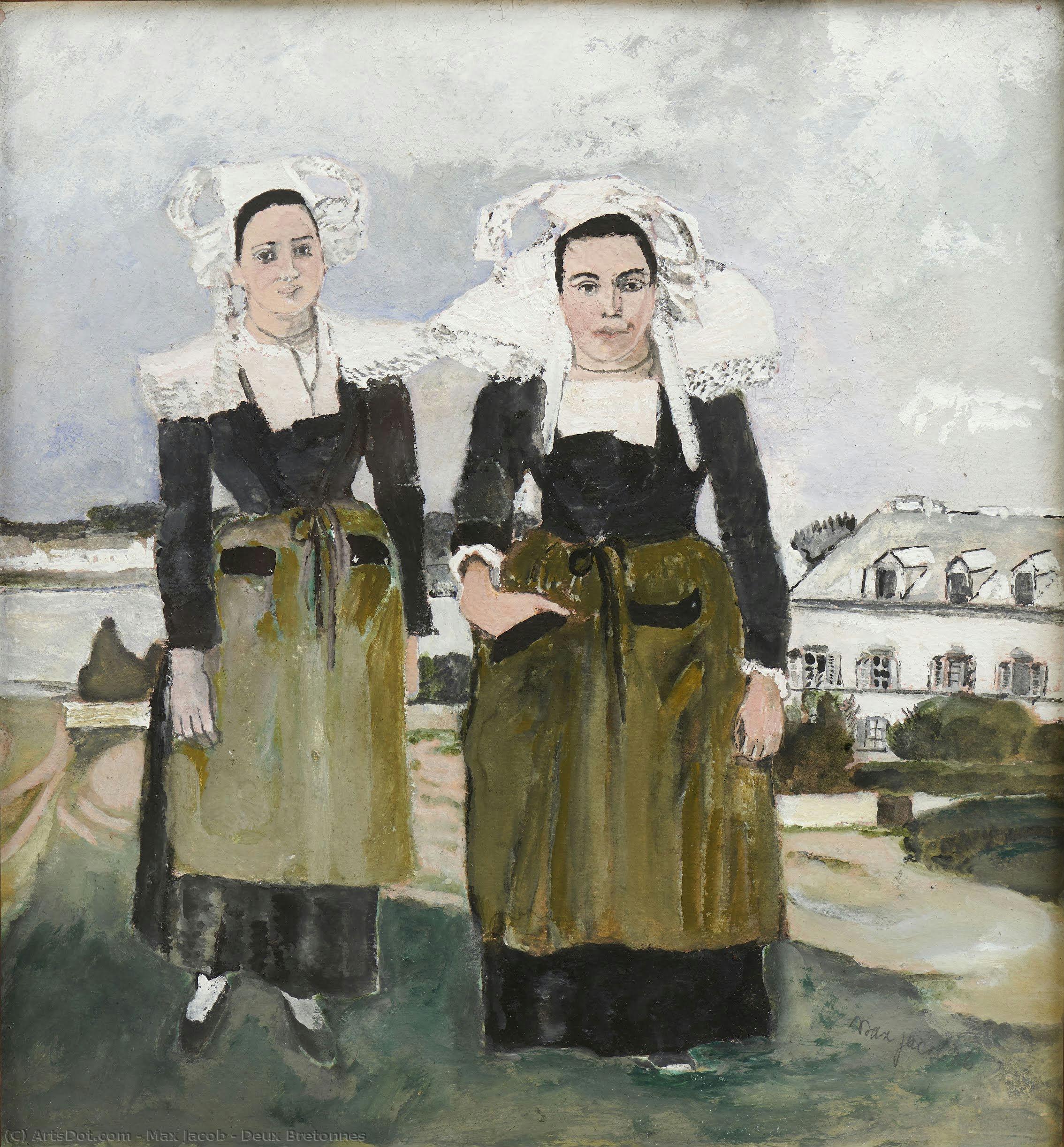
Museum-quality giclée or canvas print with fast production and flexible finish options. ( Buy Hand Made Painting Buy Image)
Pick from our preset sizes that match the artwork's original proportions.

You may enter your own dimensions to fit a specific frame or space. If your selected size does not match the original image's proportions, we will either crop the artwork or extend the image with a mirrored or solid-fill edge. A digital mockup will be sent for your approval before production begins.
Please note that the on-screen preview does not reflect the actual cropping or extension. Only the mockup will accurately show the final composition.
While custom sizes are available, we recommend selecting a dimension from the predefined list to preserve the original proportions.
Worldwide Delivery () in 2 weeks instead of standard 4/5 weeks. (18 August)


Deux Bretonnes
Reproduction Size

Max Jacob (French: [maks ʒakɔb]; July 12, 1876 – March 5, 1944) was a French poet, painter, writer, and critic. A pivotal figure in the early 20th-century avant-garde, he served as an important link between Symbolism and Surrealism.
Born in Quimper, Brittany, France, Jacob spent his childhood immersed in the region’s culture. He initially pursued studies at the Paris Colonial School in 1897 but soon abandoned them to dedicate himself to a career as an artist. This decision marked the beginning of a multifaceted artistic journey.
Jacob quickly became integrated into the Parisian art scene, forging close relationships with some of the most influential artists and writers of his time. He was among the first friends Pablo Picasso made in Paris, even sharing a room with him on Boulevard Voltaire. Through Picasso, Jacob met Guillaume Apollinaire, who subsequently introduced Picasso to Georges Braque. His circle also included Jean Cocteau, Jean Hugo, Christopher Wood, and Amedeo Modigliani, who famously painted his portrait in 1916.
Jacob’s artistic output spanned multiple disciplines. As a poet, he developed a unique style characterized by free verse, playful language, and exploration of spiritual themes. His prose poems, particularly Le Cornet à dés (The Dice Box), published in 1917, are considered groundbreaking works that anticipate Surrealist techniques. His paintings, while less widely known than his literary work, demonstrate a similar experimentation with form and subject matter.
Beyond Le Cornet à dés, Jacob authored several other significant works including the novel Saint Matorel (1911) and the free verse collection Le Laboratoire Central (1921). His writings often delve into philosophical and religious questions. La Défense de Tartuffe (1919) exemplifies his complex attitudes towards faith and morality.
In 1909, Jacob claimed to have experienced a vision of Christ, leading to his conversion to Catholicism. He hoped this conversion would resolve his internal conflicts regarding his homosexuality, though it proved a complex and ultimately unresolved struggle. This deeply personal journey profoundly influenced his artistic expression.
Max Jacob’s importance lies in his role as a transitional figure between Symbolism and Surrealism. He fostered connections among key artists, encouraging experimentation and pushing the boundaries of artistic expression. His work anticipated many of the themes and techniques that would define 20th-century art and literature. The psychoanalyst Jacques Lacan famously attributed the quote “the truth is always new” to Jacob, highlighting his enduring philosophical impact.
During World War II, as a Jew living in France, Jacob faced increasing persecution. He was arrested by the Gestapo in 1944 and died at the Drancy internment camp shortly thereafter. His legacy continues to inspire artists and scholars interested in the intersection of art, spirituality, and identity.

1876 - 1944 , France


Stay updated with the latest art news, exclusive offers, and decoration ideas.
Tell us about your project and our art experts will provide you with 3 personalized art suggestions.
Let Us Curate 3 Options Just for You - Free!


 Preview
 Send
Send Share
Share
 Details

 Download
 Similars
 X-Ray
X-Ray Diaporama

 Read More




































 Glass option is only available in size under 110 CM





