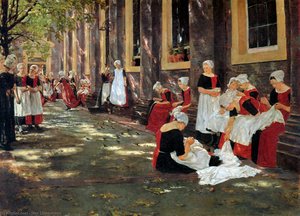
x


 Oil On CanvasWallArtImpressionism
 1922
1922 100.0 x 75.0 cm
 The Royal Society
Hand-painted oil on canvas in your size and frame, made to order by our artists.





























Pick from our preset sizes that match the artwork's original proportions.

You may enter your own dimensions to fit a specific frame or space. If your selected size does not match the original image's proportions, we will either crop the artwork or extend the painting with additional hand-painted elements. A digital mockup will be sent for your approval before production begins.
Please note that the on-screen preview does not reflect the actual cropping or extension. Only the mockup will accurately show the final composition.
While custom sizes are available, we recommend selecting a dimension from the predefined list to preserve the original proportions.
Worldwide Delivery () in 3/4 weeks instead of standard 5 weeks. (18 July). No compromise on quality.


Albert Einstein (1879–1955)
Reproduction Size
Max Liebermann's 1922 portrait of Albert Einstein isn’t merely a likeness; it’s a carefully constructed distillation of intellect, contemplation, and the burgeoning promise of a revolutionary mind. Painted during a pivotal period in Einstein’s career – immediately following his Nobel Prize win and the confirmation of his theories through the Eddington-Dyson eclipse observations – this oil painting transcends simple representation, offering a glimpse into the very essence of scientific genius. Liebermann, a master of Impressionism tempered with a keen observational eye, avoids the stark formality often associated with portraits of prominent figures, instead opting for an intimacy that draws the viewer directly into Einstein’s world.
The composition itself is deceptively simple: Einstein occupies most of the frame, his face turned slightly towards the left, creating a sense of quiet engagement. His hands, resting loosely on what appears to be a table or desk, subtly convey a restless energy – a mind constantly in motion, grappling with complex ideas. Liebermann’s brushwork is deliberately loose and expressive, eschewing sharp lines for a more impressionistic approach. This technique isn't about photographic accuracy; it’s about capturing the *feeling* of Einstein, his thoughtful demeanor, and the aura of intellectual intensity that surrounded him. The use of browns and ochres dominates the palette, lending the painting a warm, almost contemplative atmosphere – a visual echo of the quiet hours spent in deep thought.
Liebermann’s stylistic choices are deeply rooted in the tenets of Impressionism. He prioritizes capturing fleeting moments and subjective impressions over meticulous detail. This is evident in the way he renders light, using broken brushstrokes to suggest the play of illumination across Einstein's face and clothing. The shallow perspective further enhances this effect, creating a sense of immediacy and drawing the viewer into the scene as if they are witnessing this portrait firsthand. Unlike traditional portraits that often aim for an idealized representation, Liebermann’s Einstein is presented with a certain vulnerability – a hint of weariness around the eyes, suggesting the immense mental effort required to unravel the mysteries of the universe.
The historical context surrounding the painting is crucial to understanding its significance. 1922 was a time of great intellectual ferment in Europe, marked by the rise of modern physics and a growing sense of optimism about the future. Einstein’s work had already begun to transform our understanding of space, time, and gravity, and he was quickly becoming a global icon. Liebermann's portrait captures this moment perfectly, presenting Einstein not just as a brilliant scientist but also as a symbol of human ingenuity and progress.
Beyond its technical merits, the painting is rich in symbolic meaning. The seated posture suggests contemplation and intellectual rigor – qualities inextricably linked to Einstein's legacy. The hands, resting casually yet deliberately, represent his engagement with ideas, his willingness to explore new possibilities. The muted color palette contributes to a sense of quiet introspection, inviting the viewer to share in Einstein’s mental landscape. It is important to note that Liebermann was not simply depicting a famous scientist; he was attempting to capture something deeper – the very spirit of scientific inquiry and the relentless pursuit of knowledge.
Furthermore, the painting subtly reflects the broader cultural anxieties of the era. The rise of science and technology was accompanied by concerns about the potential consequences of unchecked progress. Liebermann’s portrait, with its emphasis on intellectual contemplation, can be interpreted as a reminder of the importance of ethical considerations alongside scientific advancement. It's a poignant image that speaks to both the brilliance and the responsibility inherent in pushing the boundaries of human understanding.
Reproductions of Liebermann’s Einstein portrait offer an exceptional opportunity to bring this remarkable work into any setting. The textured brushwork, the subtle nuances of light and shadow, and the intimate portrayal of a scientific icon are all faithfully captured in high-quality reproductions. Whether displayed in a study, a gallery, or a private residence, this painting continues to resonate with viewers today, serving as a powerful reminder of the enduring legacy of Albert Einstein and the transformative power of art.


1847 - 1935 , Germany

Transform your cherished photos into timeless oil paintings with Most-Famous-Paintings's expert artists. Museum-quality reproductions & custom portraits, crafted to last a lifetime. Discover the art of personal legacy.

Explore the captivating world of Impressionism! Discover its history, key artists, techniques & enduring legacy. Find museum-quality reproductions and expert art consultation at Most-Famous-Paintings.
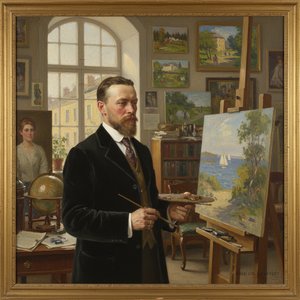
Explore the life & work of Albert Edelfelt, a pioneering Finnish Realist painter who bridged Impressionism & national identity. Discover his masterpieces and lasting influence on art history.

Step back into the glamour of the Roaring '20s! Explore 10 iconic artworks by artists like Tamara de Lempicka & Edward Hopper. Discover Art Deco, Jazz Age style & museum-quality reproductions at Most-Famous-Paintings.com. Explore the full collection online.

Journey into the heart of Impressionism! Explore 10 masterpieces by Monet, Renoir & Degas that revolutionized landscape art. Discover their stories, techniques & find museum-quality reproductions to elevate your home decor on Most-Famous-Paintings.com.


Stay updated with the latest art news, exclusive offers, and decoration ideas.
Tell us about your project and our art experts will provide you with 3 personalized art suggestions.
Let Us Curate 3 Options Just for You - Free!


 Buy print
 Send
Send Share
Share
 Details

 Download
 Similars
 X-Ray
X-Ray Diaporama
 Read More







 Glass option is only available in size under 110 CM