


x


Purchase a high-resolution, enhanced digital image, far superior to the online preview.
Each file is meticulously prepared by our in-house specialists using advanced tools and expert manual retouching. We ensure every image has exceptional clarity, precise color accuracy, and fine detail.
The final file is delivered via email within 72 hours, optimized for immediate use in professional, editorial, and print environments. This is the same quality trusted by top-tier design studios, publishers, and galleries.
Download a high-resolution file for personal display, printing, and creative projects. ( Switch to Print Switch to hand made Painting)
When you choose Most-Famous-Paintings.com, you're not just getting an image - you're receiving a professionally enhanced digital artwork, crafted with precision and backed by a satisfaction guarantee. Here's everything that comes with your order, automatically:

Your high-resolution digital image file will be emailed to you within 72 hours of ordering - ready for immediate use.

Your artwork is professionally optimized using advanced AI tools and manual editing, ensuring maximum detail, clarity, and color accuracy.

Accidentally deleted or lost your file? No worries - we'll resend it to you anytime, free of charge.

Enjoy your artwork instantly with zero customs, duties, or delivery fees - digital downloads are always tax-free.

We ensure your digital image reflects the original colors as closely as possible using professional tools and color management.

If you're not satisfied with your digital image, we'll revise it or refund 100% within 60 days - no questions asked.

Not satisfied? Get a full refund within 60 days of receiving your digital file - no questions asked.

Buy 3 images, save 10% - Buy 5, save 15% - Buy 10+, save 20%. Great for creative projects, galleries, and agencies.
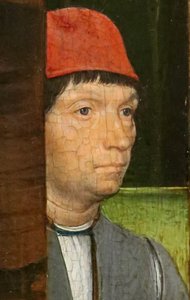
Hans Memling’s “untitled (6791)” – more commonly understood as his depiction of the Triumph of Saint Michael – is not merely a painting; it's a meticulously crafted theological statement, a visual sermon rendered with the astonishing detail characteristic of the Early Netherlandish masters. The work plunges us into a dramatic confrontation between celestial power and infernal darkness, embodying the eternal struggle between good and evil with an intensity that resonates even centuries after its creation. Memling doesn’t simply *show* us this battle; he invites us to witness it, drawing us into a claustrophobic space where the weight of divine judgment feels palpable.
To appreciate “untitled (6791)” fully is to understand its place within the blossoming artistic landscape of 15th-century Bruges. Memling, having honed his skills under Rogier van der Weyden in Brussels, brought a refined sensibility to the city’s thriving art scene. His technique exemplifies the hallmarks of the Northern Renaissance: an almost obsessive attention to detail, a preference for oil paints applied in delicate layers – or glazes – that build up luminosity and depth, and a compositional approach that prioritizes clarity of narrative over strict adherence to perspective. Look closely at Saint Michael’s armor; it isn't merely gold, but a shimmering surface reflecting an inner light. Observe the expressions etched onto the faces of the damned—each contorted in unique agony. This is not generalized suffering, but individualized torment. The subtle use of geometric forms – squares, rectangles, and circles – provides an underlying structure to the seemingly chaotic scene, lending it a sense of harmony despite its dramatic subject matter.
The painting’s power extends far beyond its technical brilliance; it is deeply imbued with symbolism. Saint Michael, archangel and warrior of God, stands as an unwavering beacon of righteousness, his raised sword a potent symbol of justice and the triumph over evil. Around him, angels proclaim victory with resounding blasts from their horns. Below unfolds a harrowing vision of damnation: naked figures, chained and writhing in despair, represent fallen humanity consumed by sin. The inclusion of scales is particularly significant – representing divine judgment, carefully weighing each soul’s worth. These aren't merely decorative elements; they are integral to the painting’s moral narrative. Even the hazy landscape in the background isn’t a realistic depiction of place but rather an atmospheric backdrop that amplifies the spiritual drama unfolding in the foreground, focusing our attention on the central conflict and its eternal consequences.
Hans Memling flourished in Bruges during a period of immense wealth and artistic patronage. The city was a vital hub for commerce, attracting merchants, aristocrats, and clergymen who eagerly commissioned works like “untitled (6791)” to express their piety and status. Memling’s clientele weren't simply seeking beautiful objects; they desired devotional pieces that would inspire contemplation and reinforce their faith. This painting likely served as such an object – perhaps adorning a private chapel or enriching the interior of a church, prompting viewers to reflect on their own mortality and spiritual well-being. It is a testament to the religious fervor and moralizing tendencies prevalent in 15th-century Northern Europe, a period deeply concerned with salvation and the consequences of earthly transgression. The enduring appeal of Memling’s work lies not only in its aesthetic beauty but also in its ability to simultaneously inspire reverence and provoke profound introspection.

Germany


Stay updated with the latest art news, exclusive offers, and decoration ideas.
Tell us about your project and our art experts will provide you with 3 personalized art suggestions.
Let Us Curate 3 Options Just for You - Free!


 Send
Send Share
Share
 Details

 Download
 Similars
 Diaporama
 Read More


