


x


 Modernism
 Modern
 50.0 x 40.0 cm
 Gallery of M. A. Bazovsky
Hand-painted oil on canvas in your size and frame, made to order by our artists.





























Pick from our preset sizes that match the artwork's original proportions.

You may enter your own dimensions to fit a specific frame or space. If your selected size does not match the original image's proportions, we will either crop the artwork or extend the painting with additional hand-painted elements. A digital mockup will be sent for your approval before production begins.
Please note that the on-screen preview does not reflect the actual cropping or extension. Only the mockup will accurately show the final composition.
While custom sizes are available, we recommend selecting a dimension from the predefined list to preserve the original proportions.
Worldwide Delivery () in 3/4 weeks instead of standard 5 weeks. (18 July). No compromise on quality.


Pastorale
Reproduction Size
In the quietude of Mikuláš Galanda’s Pastorale, the viewer is transported into a timeless landscape where the boundaries between humanity and nature dissolve into a harmonious rhythm. This evocative piece captures a moment of profound stillness, centered around a gathering of cattle that anchors the composition. On the left, a trio of cows stands in intimate proximity, their forms suggesting a shared, silent communion, while a solitary bull commands the center of the scene, lending a sense of strength and groundedness to the meadow. The presence of two figures—one observing the herd with quiet contemplation and another positioned near the bull—infuses the landscape with a gentle human narrative, transforming a simple agricultural scene into a poetic meditation on coexistence.
The painting serves as more than just a depiction of rural life; it is an exploration of atmosphere and presence. The way the animals are distributed across the canvas creates a sense of depth that draws the eye from the immediate foreground into the soft, receding layers of the background. For the collector or interior designer, this work offers a sophisticated balance of subject matter and spatial arrangement, making it an ideal centerpiece for spaces that require a touch of tranquility and organic warmth. The composition invites the observer to linger, finding peace in the rhythmic placement of life within the pastoral expanse.
To understand the soul of Pastorale, one must look toward the pioneering spirit of its creator. Mikuláš Galanda stands as a titan of Slovak modern art, a visionary who bridged the gap between traditional motifs and the avant-garde movements of early 20th-century Europe. Having refined his craft in the prestigious academies of Budapest and Prague, Galanda brought a cosmopolitan sophistication to the local landscape. His work often sought to distill the essence of rural life through a lens of modern clarity, stripping away unnecessary clutter to focus on form, weight, and emotional resonance.
In this particular work, we see the echoes of his journey through Paris and Kraków, where he encountered the shifting tides of European aesthetics. While the subject matter remains rooted in the pastoral traditions of his homeland, the execution hints at a modern sensibility that values structural integrity and symbolic simplicity. For those seeking to adorn their homes with art that carries historical weight, a reproduction of this piece offers a connection to the very foundations of Slovak modernism—a piece that is both a window into a bygone era and a timeless contribution to the canon of fine art.
Integrating a high-quality reproduction of Pastorale into a contemporary living space provides an opportunity to introduce texture, narrative, and calm. The painting’s palette and subject matter possess a unique versatility; it complements the understated elegance of minimalist decor as easily as it enhances the rich, layered textures of a classical or rustic interior. Because the work focuses on the organic shapes of the animals and the soft interplay of light within the meadow, it acts as a visual anchor that promotes a sense of groundedness.
For the art lover, owning such a piece is an act of preserving a moment of pastoral grace. The emotional impact of Galanda’s work lies in its ability to evoke nostalgia and peace, making it a profound addition to any curated collection. Whether placed in a sunlit study or a quiet corner of a grand salon, Pastorale continues to tell its story of life, nature, and the enduring beauty of the landscape, offering an everlasting sense of serenity to all who behold it.

In the vibrant tapestry of Central European art history, few figures loom as large or as transformative as Mikuláš Galanda. Born in 1895 in the quiet surroundings of Malá Ves near Turčianske Teplice, Slovakia, Galanda emerged not merely as a painter, but as a visionary architect of a new visual language for his nation. His journey was one of profound intellectual and aesthetic evolution, moving from the classical foundations of his early training toward a sophisticated, avant-garde synthesis that would define Slovak modernism. To look upon his work is to witness the birth of a modern identity, captured through bold lines and a rhythmic approach to form.
Galanda’s artistic soul was forged in the prestigious academies of Budapest and Prague. His time at the Academy of Fine Arts in Budapest from 1914 to 1916 provided him with a rigorous technical discipline, while his subsequent studies at the Academy of Arts, Architecture and Design in Prague between 1922 and 1923 exposed him to the burgeoning currents of European modernism. These formative years were crucial; they allowed him to absorb the structural complexities of Cubism and the expressive potential of graphic design, which he would later weave into a uniquely Slovak aesthetic. He did not simply mimic international trends; rather, he distilled them, creating a style that felt both cosmopolitain and deeply rooted in his homeland.
The professional life of Galanda was marked by an extraordinary versatility that bridged the gap between fine art and graphic communication. He understood that modern art must live within the pulse of contemporary culture, a belief he demonstrated through his role as the first graphical editor for Dav magazine from 1924 to 1926. This position allowed him to shape the visual discourse of his era, bringing a sense of structured modernity to the printed page. His influence extended into the realm of education and collaboration; notably, his period sharing an atelier with the legendary Ľudovít Fulla from 1929 to 1932 stands as a landmark moment in Slovak art history, representing a powerful union of creative minds working toward a unified modern vision.
Galanda’s reach was truly international, transcending the borders of Slovakia to find resonance in the great art capitals of Europe. His travels to Paris and his exhibitions in Kraków served as vital touchpoints, allowing him to showcase his unique perspective to a wider audience and solidify his reputation as a pioneer. The recognition he garnered was both academic and prestigious, evidenced by his appointment as a professor at the School of Handcrafts in Bratislava and his receipt of the Krajinská cena M. R. Štefánika. These accolades were not merely personal triumphs but milestones for the Slovak art scene, signaling its arrival on the broader European stage.
The enduring legacy of Mikuláš Galanda lies in his ability to harmonize the geometric precision of modernism with a poignant, humanistic sensibility. His works often feature figures and scenes that possess a rhythmic, almost musical quality, where space and form are treated with a deliberate, structural grace. Whether through his masterful illustrations or his evocative paintings, he sought to capture the essence of a changing world. Today, his contributions remain foundational; his presence is felt in the halls of the Mestská Galéria in Bratislava and continues to inspire collectors and scholars alike.
To explore the breadth of his impact, one can look at the key pillars of his career:
As we reflect on his life, we see an artist who refused to be confined by tradition, instead choosing to build a bridge between the historical past and an experimental future. Mikuláš Galanda remains a towering figure, a master of form whose work continues to resonate with the strength and clarity of a true modernist icon.

1895 - 1938 , Slovakia

Explore the captivating history of pastoral art from classical Arcadia to modern masterpieces. Discover key artists like Millet & Cole at Most-Famous-Paintings. Find serene landscape paintings for your home.

Explore the rich history of pastoral art from classical Arcadia to contemporary interpretations. Discover key artists, themes & collecting tips at Most-Famous-Paintings.

Explore the captivating history of pastoral art, from classical Arcadia to 19th-century masterpieces. Discover key artists like Millet & Cole and find serene landscape paintings for your home at Most-Famous-Paintings.
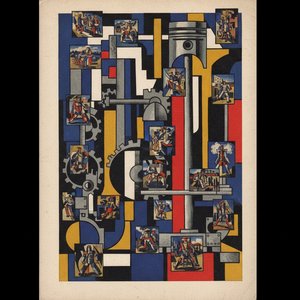
Explore 25 iconic Fernand Léger paintings that defined the Machine Age & Cubism. Discover the stories behind his bold colors, geometric forms & avant-garde style. Find museum-quality art reproductions on Most-Famous-Paintings.com.
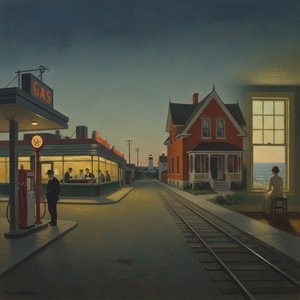
Explore 25 iconic Edward Hopper paintings & their stories. Discover American realism, urban loneliness, and timeless beauty through his masterpieces. Find museum-quality art reproductions & curated decor ideas at Most-Famous-Paintings.com.


Stay updated with the latest art news, exclusive offers, and decoration ideas.
Tell us about your project and our art experts will provide you with 3 personalized art suggestions.
Let Us Curate 3 Options Just for You - Free!


 Buy print
 Send
Send Share
Share
 Details

 Download
 Similars
 X-Ray
X-Ray Diaporama
 Read More







 Glass option is only available in size under 110 CM


