x


Hand-painted oil on canvas in your size and frame, made to order by our artists.





























Pick from our preset sizes that match the artwork's original proportions.

You may enter your own dimensions to fit a specific frame or space. If your selected size does not match the original image's proportions, we will either crop the artwork or extend the painting with additional hand-painted elements. A digital mockup will be sent for your approval before production begins.
Please note that the on-screen preview does not reflect the actual cropping or extension. Only the mockup will accurately show the final composition.
While custom sizes are available, we recommend selecting a dimension from the predefined list to preserve the original proportions.
Worldwide Delivery () in 3/4 weeks instead of standard 5 weeks. (18 July). No compromise on quality.


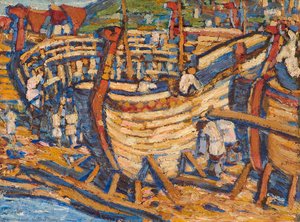
Inner yard
Reproduction Size
Nicholas Roemerich's "Inner Yard," painted in 1913, is more than just a depiction of a stone building; it’s a profound meditation on space, time, and the human spirit. This evocative work, rendered in a predominantly blue palette, immediately draws the viewer into an atmosphere of quiet contemplation – a feeling intensified by the artist's masterful use of light and shadow. The scene presents a weathered structure, likely a church or similar religious building, with prominent arches and pillars that seem to stretch endlessly into the distance, creating a sense of both grandeur and vulnerability. The cool blues, characteristic of Roerich’s mature style, aren’t merely decorative; they represent a deliberate choice reflecting his deep interest in spiritual symbolism and the connection between art and metaphysics.
Roerich’s technique in “Inner Yard” exemplifies his distinctive approach to realism. He employed a layered method, building up thin glazes of color over a prepared gesso ground, creating a luminous surface that seems to shimmer with an inner light. This meticulous layering is particularly evident in the rendering of the stone – each surface subtly textured and imbued with variations in tone. His brushwork is generally smooth and controlled, yet infused with a delicate sensitivity that captures the play of light on the building’s surfaces. The influence of Russian icon painting is discernible, though Roerich's style evolved beyond strict imitation, incorporating elements of Western Impressionism and Symbolism to achieve his unique vision. The use of atmospheric perspective – where objects in the distance appear paler and less distinct – further enhances the illusion of depth and contributes to the painting’s overall sense of mystery.
Painted in 1913, “Inner Yard” reflects a pivotal moment in European history. The early years of the 20th century were marked by rapid social and political change, alongside an increasing interest in spiritual and philosophical ideas. Roerich was deeply engaged with these currents, exploring themes of universal brotherhood, cosmic consciousness, and the interconnectedness of all things. His work often incorporated symbolic imagery drawn from various cultures and traditions – a reflection of his extensive travels and scholarly pursuits. The building itself could be interpreted as a representation of a sacred space, a place where individuals can connect with something greater than themselves. The painting’s quietude speaks to Roerich's belief in the importance of inner peace and spiritual renewal.
Beyond its formal qualities, “Inner Yard” is rich in symbolic meaning. The arches and pillars evoke a sense of pilgrimage or journey – a metaphor for the human quest for enlightenment. The bench suggests a moment of rest and reflection, inviting the viewer to pause and contemplate their own place in the universe. The blue tones, as previously noted, contribute significantly to the painting’s emotional impact, fostering feelings of tranquility, introspection, and perhaps even a touch of melancholy. This artwork resonates with a profound sense of stillness and invites viewers to engage in a silent dialogue with its timeless beauty. It is a powerful reminder of the enduring human need for connection, meaning, and spiritual solace.


1874 - 1947 , Russia

Discover the art of building a lasting legacy through informed collecting. Expert guidance on investment, emerging artists & curating a collection that reflects your unique vision. Start your journey today!

Explore the life & art of Igor Grabar, a pivotal figure in Russian Modernism. Discover his Impressionist landscapes, crucial role in art history, and legacy at the Tretyakov Gallery. A deep dive into a master painter & scholar.

Journey into the dreamlike world of Surrealism! Explore 10 masterpieces by Dali, Magritte & Miró that redefined art. Discover their stories & find museum-quality reproductions to elevate your home decor on Most-Famous-Paintings.com.

Dive into serenity with 10 famous paintings dominated by pale turquoise! Explore Monet, Renoir & Van Gogh's masterpieces. Discover the stories behind these iconic artworks and find museum-quality art reproductions for your home at Most-Famous-Paintings.com.

Explore the captivating art of Nicholas Roerich – a visionary painter whose Himalayan landscapes blend spiritual mysticism with cultural preservation. Discover his legacy & symbolism.


Stay updated with the latest art news, exclusive offers, and decoration ideas.
Tell us about your project and our art experts will provide you with 3 personalized art suggestions.
Let Us Curate 3 Options Just for You - Free!


 Buy print
 Send
Send Share
Share
 Details

 Download
 Similars
 X-Ray
X-Ray Diaporama

 Read More







 Glass option is only available in size under 110 CM