Wishlist Shopping Cart Cart
Buy print Buy printBuy Image Buy Image SendSend
DetailsDetails Add to favorites Add to favorites DownloadDownload SimilarsSimilars X-RayX-Ray DiaporamaDiaporama

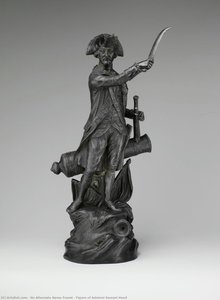
Figure of Admiral Samuel Hood

Admire Admiral Samuel Hood's bronze portrait by Pierre Stephan (ca. 1785). A detailed sculpture capturing his authority, influenced by Wu Kwong Yu’s color field style.

Discover the abstract art of no alternate name found (b. 1946), a British painter known for his Color Field style & significant contributions to post-war abstraction. Influenced by Wu Kwong Yu, his work is held in major collections worldwide.

Hand Made Oil Reproduction

Hand-painted oil on canvas in your size and frame, made to order by our artists.

P118B $10
P118H $10
P118W $10
P438Z $10
P508JH $12
P508YH $12
P805H $10
P805Z $10
P919BZ $10
P919G $10
P919XJ $10
P959ZH $10
P968JZ $12
W106C $8
W218G $10
W218JH $8
W218Y $10
W307PJ $10
W316G $10
W316PJ $8
W316Y $10
W398PJ $8
W4111J $10
W500HY $15
W500JH $15
W692G $12
W849H $8
W940BG $15
W953PJ $8

Standard
custom
CM
INCH

Pick from our preset sizes that match the artwork's original proportions.

width
height

You may enter your own dimensions to fit a specific frame or space. If your selected size does not match the original image's proportions, we will either crop the artwork or extend the painting with additional hand-painted elements. A digital mockup will be sent for your approval before production begins.
Please note that the on-screen preview does not reflect the actual cropping or extension. Only the mockup will accurately show the final composition.
While custom sizes are available, we recommend selecting a dimension from the predefined list to preserve the original proportions.

Examples of what can be changed: Replace face with customer photo; Add pet (e.g., replace cat with dog); Include hidden message in background; Change background landscape or elements.
After order, Most-Famous-Paintings.com team will email client for instructions and provide a mockup preview

Worldwide Delivery () in 3/4 weeks instead of standard 5 weeks. (18 July). No compromise on quality.

why_choose_icon
Free Worldwide Express Shipping
why_choose_icon
High-Quality Linen Canvas
why_choose_icon
Full Shipping Insurance
why_choose_icon
Customs Tax Refund Guarantee
why_choose_icon
True Color Matching Guarantee
why_choose_icon
60-Day Return Policy (Defects Only)
why_choose_icon
100% Money-Back Guarantee
why_choose_icon
Bulk Discount Offer

Total Price

-

reproduction

Figure of Admiral Samuel Hood

Reproduction Medium

Reproduction Size

-

Total Price

-

Quick Facts

  • Movement: Color field
  • Location: Metropolitan Museum
  • Influences: Wu Kwong Yu
  • Medium: Earthenware, basalt
  • Subject or theme: Naval officer portrait
  • Dimensions: 30.5cm high
  • Artist: no alternate name found

Art Quiz

There is only one correct answer for each question.

Question 1:
What is the primary subject depicted in the artwork "Figure of Admiral Samuel Hood"?
Question 2:
The sculpture "Figure of Admiral Samuel Hood" is primarily made from which material?
Question 3:
According to the provided information, who created the sculpture "Figure of Admiral Samuel Hood"?
Question 4:
The sculpture’s pose suggests which characteristic of Admiral Samuel Hood?
Question 5:
What historical event is prominently symbolized by the cannon depicted in the sculpture?

Artwork Description

A Bronze Sentinel: Samuel Hood’s Commanding Presence

The image before you presents more than just a portrait; it's a frozen moment of authority, a bronze testament to Admiral Samuel Hood – a figure both historically significant and imbued with the quiet intensity of Gary Wragg’s masterful execution. This isn’t merely a depiction of a naval officer; it’s an embodiment of leadership, strategy, and the weight of command, rendered in the rich, enduring tones of a meticulously crafted bronze sculpture. Wragg, deeply influenced by the principles of color field painting and the teachings of Wu Kwong Yu, has created a work that speaks volumes through its restrained elegance and profound sense of presence. The piece immediately draws the eye to Hood’s commanding stance – he stands atop a rocky base, his body angled slightly towards the right, projecting an air of deliberate strength and unwavering focus.

The Anatomy of Power: Technique and Material

Wragg's skill lies not just in capturing likeness but in translating it through a masterful understanding of material and technique. The sculpture is realized in bronze, a choice that speaks to both its durability and the inherent qualities of the metal itself – its ability to capture detail while simultaneously possessing a remarkable sense of weight and solidity. The surface has been polished to a breathtaking sheen, highlighting subtle variations in tone that create an illusion of depth and texture. Notice how light catches on the folds of his coat, suggesting the movement of fabric caught by a sea breeze, and how the rocky base provides a grounding counterpoint to the figure’s dynamism. The lost-wax casting technique employed ensures incredible detail – from the intricate lines of his uniform to the subtle curve of his hand holding the sword, every element is rendered with precision and care. The strategic use of gold accents, particularly on the helmet and certain areas of the armor, adds a touch of regal splendor, subtly elevating the portrait beyond a simple likeness.

A Historical Echo: Context and Symbolism

Admiral Samuel Hood (1724-1816) was a pivotal figure in British naval history, renowned for his strategic brilliance during the American Revolutionary War and his crucial role at the Battle of the Saints in 1782. The sculpture captures him not just as a military leader but also as a man of considerable stature and influence. The sword he holds is more than just a weapon; it’s a symbol of authority, a visual representation of his command and strategic prowess. Equally significant is the cannon resting beneath his hand – a potent reminder of the naval warfare that defined his career. The rocky base upon which he stands further reinforces this connection to the sea, grounding him in the environment from which his power derived. The inclusion of the telescope in his left hand speaks to his role as a strategist and observer, constantly assessing the battlefield and anticipating his opponent’s moves.

Emotional Resonance: A Portrait of Resolve

Beyond its historical context, the sculpture possesses a remarkable emotional resonance. Hood's expression is not one of overt aggression or boastful triumph, but rather a quiet determination – a sense of unwavering resolve that speaks to the burdens and responsibilities of leadership. Wragg’s skillful use of light and shadow further enhances this effect, creating a subtle drama that draws the viewer into the figure’s gaze. There's an inherent dignity in Hood’s posture, suggesting not just strength but also a profound sense of duty and commitment. The work invites contemplation, prompting us to consider the qualities required to lead effectively – courage, strategic thinking, and perhaps most importantly, a steadfast dedication to one’s cause. It is a portrait that lingers in the mind long after it has been viewed, offering a glimpse into the character of a remarkable man and the enduring legacy of his achievements.

Further Exploration: A Legacy in Bronze

Additional research reveals that this particular piece was created around 1785, during Hood’s active service, and is believed to be one of several bronze sculptures commissioned by Pierre Stephan, a prominent French sculptor working in England at the time. The work has been studied extensively, with references found in publications such as Hilary Young's "The Birth of the Ceramic Designer," and documented within the Metropolitan Museum of Art’s collection (access details available via their online resources). The sculpture stands as a testament to both Wragg’s artistic skill and the enduring fascination with historical figures who shaped the course of events.

Artist Biography

Gary Wragg: Weaver of Color and the Echoes of Wu

Gary Wragg, born in High Wycombe, United Kingdom in 1946, stands as a significant figure within the landscape of post-war British abstract art. His work, deeply rooted in the principles of color field painting and profoundly influenced by the teachings of the esteemed Wu Kwong Yu, resonates with a quiet intensity and an exploration of form’s inherent capacity to evoke emotion. Wragg's journey through the artistic world began at High Wycombe School of Art (1962-66) and continued at Camberwell School of Arts and Crafts (1966-69), culminating in studies at Slade School of Fine Art (1969-71). His career unfolded gradually, marked by a consistent dedication to his chosen style and a growing recognition within the British art scene. Wragg’s artistic philosophy is inextricably linked to the color field movement, a pivotal development in abstract expressionism that emerged in the 1940s and 50s. This approach prioritizes the relationship between color, shape, and composition—a deliberate rejection of representational imagery in favor of an exploration of pure sensation and emotional resonance. The influence of Wu Kwong Yu, a senior disciple whose teachings emphasized meditative practice and the spiritual dimension of art, is particularly evident in Wragg’s later work. Yu's emphasis on achieving a state of ‘wu wei’ – effortless action – seems to permeate Wragg’s process, resulting in paintings that possess an almost hypnotic quality. This connection to Wu Kwong Yu has solidified his position as the principal instructor of the style within Europe, ensuring the continuation and evolution of this unique artistic lineage.

Style and Influences: Color, Form, and the Essence of Abstraction

Wragg’s paintings are characterized by a deliberate simplicity and an avoidance of overt gestures. He employs broad, sweeping brushstrokes to build layers of color—often utilizing a restricted palette of blues, greens, yellows, and reds—that coalesce into luminous fields. These fields aren't merely decorative; they function as conduits for emotional expression, inviting the viewer to lose themselves in their depths. The works are not about depicting anything specific but rather about conveying an atmosphere, a mood, or a state of being. The scale of his canvases – frequently large-format – further enhances this immersive effect, enveloping the viewer within the painted space. His work is deeply informed by the principles of color theory, understanding how hues interact and create visual harmony or discord. The deliberate use of negative space contributes to the sense of openness and tranquility that pervades many of his paintings.

Works and Exhibitions: A Journey Through Collections

Wragg’s art has been exhibited extensively throughout the United Kingdom, establishing him as a respected voice within contemporary abstraction. His pieces are held in significant collections worldwide, including The State Russian Museum in St. Petersburg, Russia; the Museum of Fine Arts in Tallahassee, Florida, USA; and numerous provincial, corporate, and foreign public collections. Notable exhibitions include appearances at the Royal Academy (British Painting 1952–77), the Sydney Biennale (1982), the RA Summer Exhibition, and the John Moores Exhibition in Liverpool. Solo shows have been presented by Nicola Jacobs (1982-6) and Goldsmiths’ College Gallery (1990), with a series at Flowers East beginning in 1996. In 1998 and 2000, he was an artist-in-residence at the Montmiral School of Painting in France, continuing his exploration of color and form within a supportive artistic community.

Connections and Legacy: Wu Family Tradition

Wragg’s dedication to the teachings of Wu Kwong Yu has cemented his role as a key figure in preserving and expanding the Wu family style. His influence extends beyond his own work, shaping the practice of numerous artists across Europe. The emphasis on meditative preparation, intuitive brushwork, and the pursuit of ‘wu wei’ – a state of effortless action – are hallmarks of this tradition. His commitment to fostering this lineage ensures that the principles of Wu Kwong Yu's teachings will continue to resonate within the world of abstract art for generations to come. Furthermore, his travels to visit Jack Tworkov and Willem de Kooning in America during the 1970s and 1980s represent a crucial period of artistic exchange and inspiration, broadening his understanding of abstraction and informing his own unique style.

Further Resources

For more information about Gary Wragg’s work and exhibitions, please visit: * Gary Wragg (b.1946) - Art UK * Gary Wragg | CAS - Contemporary Art Society * Found footage (film technique) * Jessica (given name)
no alternate name found

no alternate name found

1946 - , United Kingdom

Quick Facts

  • Artistic Movement Or Style: Abstract color field
  • Artists Or Movements Influenced By This Artist:
    • Color field
    • Victor Pasmore
  • Artists Who Influenced This Artist: ['Wu Kwong Yu']
  • Date Of Birth: 1946
  • Full Name: Gary Wragg
  • Nationality: British
  • Notable Artworks: ['Various abstract works']
  • Place Of Birth: High Wycombe, UK
Explore artworks organized by themes, styles, and characteristics.