x

Hand-painted oil on canvas in your size and frame, made to order by our artists.





























Pick from our preset sizes that match the artwork's original proportions.

You may enter your own dimensions to fit a specific frame or space. If your selected size does not match the original image's proportions, we will either crop the artwork or extend the painting with additional hand-painted elements. A digital mockup will be sent for your approval before production begins.
Please note that the on-screen preview does not reflect the actual cropping or extension. Only the mockup will accurately show the final composition.
While custom sizes are available, we recommend selecting a dimension from the predefined list to preserve the original proportions.
Worldwide Delivery () in 3/4 weeks instead of standard 5 weeks. (18 July). No compromise on quality.


Hope
Reproduction Size
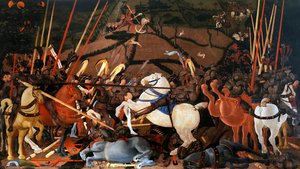
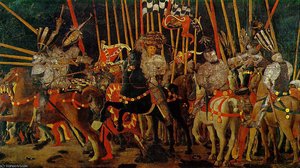
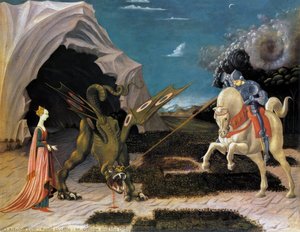
Paolo Uccello's “Hope,” painted around 1435, is not merely a depiction of a woman reaching towards the heavens; it’s a profound exploration of faith, perspective, and the burgeoning humanist ideals of the Early Renaissance. This captivating work, housed within the Duomo di Firenze (Florence Cathedral), offers a glimpse into Uccello's unique artistic vision – one characterized by an obsessive pursuit of mathematical precision blended with a vibrant, almost theatrical use of color and movement.
Uccello’s background as a barber-surgeon, coupled with his family’s noble lineage, instilled in him both a practical eye for detail and an appreciation for refined aesthetics. He wasn't simply a painter; he was a meticulous investigator, fascinated by the mechanics of sight and how to translate three-dimensional space onto a two-dimensional surface. This intellectual curiosity is strikingly evident in “Hope,” where he masterfully employs linear perspective – a technique still relatively new at this time – to create an illusion of depth that draws the viewer into the scene.
At the heart of the painting stands a woman, her posture radiating both serenity and fervent aspiration. She’s draped in a simple yet elegant green gown, its color echoing the lush foliage surrounding her – a subtle nod to nature's enduring symbolism of hope and renewal. Her hands are raised towards the sky, not in supplication, but with an expression of confident expectation. The gesture is crucial; it isn’t passive waiting, but active reaching, suggesting a belief in a future filled with promise.
The figure's face remains partially obscured, adding to her enigmatic quality and allowing viewers to project their own hopes and desires onto the image. She appears to be gazing at an unseen celestial event – perhaps a radiant angel or a divine manifestation – further emphasizing the painting’s spiritual core. The composition is carefully balanced; the woman occupies the central space, while the surrounding figures—a man on the left and two others on the right—create a dynamic backdrop that reinforces her upward trajectory.
Uccello's mastery of color is immediately apparent. He utilizes a rich palette – yellows, blues, reds, and whites – to create a luminous effect, particularly in the depiction of the sky. The use of layered glazing techniques gives the colors depth and vibrancy, while strategically placed highlights draw attention to key elements within the composition. Notice how he employs atmospheric perspective, with distant objects appearing paler and less distinct, further enhancing the illusion of space.
The painting’s surface is characterized by a smooth, polished finish, indicative of Uccello's meticulous preparation and application of paint. His attention to detail extends beyond color; he carefully renders the folds of the woman’s gown, the textures of the surrounding foliage, and even the subtle expressions on the faces of the supporting figures. This dedication to realism, combined with his innovative use of perspective, distinguishes “Hope” as a landmark achievement in Renaissance art.
"Hope" was likely commissioned for the Chapel of Our Lady of the Assumption within Florence’s Duomo. The chapel's design reflects the broader artistic trends of the period, incorporating elements of Gothic and Early Renaissance styles. The painting’s theme—hope—resonates deeply with the religious context of the commission, aligning with the church’s desire to inspire faith and devotion among its congregation.
Beyond its immediate religious significance, “Hope” embodies the humanist ideals that were gaining momentum during the Early Renaissance. The focus on human experience, particularly the aspiration for a better future, reflects a shift away from purely theological concerns towards a more worldly perspective. Uccello’s innovative use of perspective and his masterful rendering of space demonstrate a desire to understand and represent the world in a more accurate and compelling way – a hallmark of Renaissance art.
Most-Famous-Paintings offers meticulously crafted, hand-painted reproductions of Paolo Uccello's “Hope,” allowing you to bring this iconic masterpiece into your home or office. Our skilled artists replicate Uccello’s distinctive style and techniques with the utmost care, ensuring that each reproduction captures the painting’s original beauty and emotional impact. Choose from a range of sizes and canvas materials to perfectly complement your décor. Experience the timeless allure of “Hope” – a testament to Renaissance artistry and enduring human aspiration.


1397 - 1475 , Italy

Explore the revolutionary art of Paolo Uccello, a Florentine Renaissance master who pioneered perspective. Discover his iconic paintings like 'St. George & The Dragon' and learn about his lasting influence on art history.
Journey through the Early Renaissance! Explore 10 iconic paintings by Botticelli, Leonardo da Vinci & Michelangelo. Discover their stories, techniques & lasting impact. Find museum-quality art reproductions and elevate your home decor with .
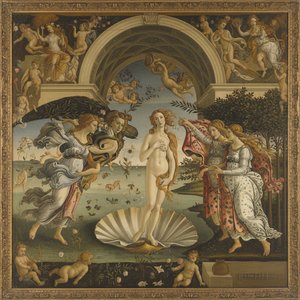
Journey through Botticelli's world with 25 iconic Renaissance paintings. Explore 'Birth of Venus,' 'Primavera,' and more—stories, techniques & timeless beauty. Find museum-quality art reproductions for your home at Most-Famous-Paintings.com.
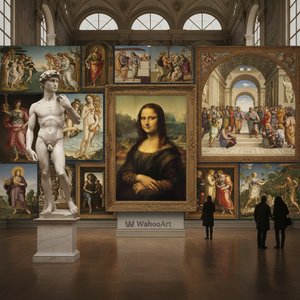
Journey through the Italian Renaissance with 10 iconic masterpieces by Leonardo da Vinci, Michelangelo & Raphael. Explore art history, techniques & timeless beauty. Find museum-quality reproductions and elevate your home decor on .

Explore the rich history & enduring artistry of fresco painting – from Giotto to Michelangelo! Discover techniques, conservation efforts, & modern applications. Learn how Most-Famous-Paintings brings this timeless art form to your home.


Stay updated with the latest art news, exclusive offers, and decoration ideas.
Tell us about your project and our art experts will provide you with 3 personalized art suggestions.
Let Us Curate 3 Options Just for You - Free!


 Buy print
 Send
Send Share
Share
 Details

 Download
 Similars
 X-Ray
X-Ray Diaporama


 Read More







 Glass option is only available in size under 110 CM