x

Museum-quality giclée or canvas print with fast production and flexible finish options. ( Buy Hand Made Painting Buy Image)
Pick from our preset sizes that match the artwork's original proportions.

You may enter your own dimensions to fit a specific frame or space. If your selected size does not match the original image's proportions, we will either crop the artwork or extend the image with a mirrored or solid-fill edge. A digital mockup will be sent for your approval before production begins.
Please note that the on-screen preview does not reflect the actual cropping or extension. Only the mockup will accurately show the final composition.
While custom sizes are available, we recommend selecting a dimension from the predefined list to preserve the original proportions.
Worldwide Delivery () in 2 weeks instead of standard 4/5 weeks. (19 August)


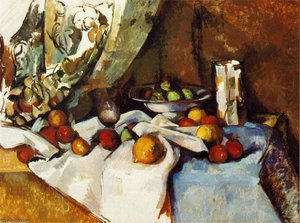
Hydrangeas
Reproduction Size

Paul César Helleu was born in Vannes, Brittany, France, in 1859. His father, a customs inspector, passed away when Helleu was still a teenager. Despite his mother's initial reservations, he moved to Paris at a young age to pursue his artistic ambitions. He studied at Lycée Chaptal and, at the remarkably young age of sixteen, gained admission to the prestigious École des Beaux-Arts. There, he received formal training under Jean-Léon Gérôme.
Helleu's early exposure to the Impressionist movement during the Second Impressionist Exhibition in 1876 proved pivotal. He was deeply influenced by artists like John Singer Sargent, James McNeill Whistler, and Claude Monet, captivated by their innovative techniques and focus on outdoor scenes—a stark contrast to traditional studio practices.
To support himself early in his career, Helleu worked for Théodore Deck’s ceramic workshop, hand-painting decorative plates. This experience honed his technical skills. A significant turning point came with his meeting and mentorship under Giovanni Boldini, a portrait painter known for his bravura style. Boldini's influence significantly shaped Helleu's artistic direction.
A close friendship developed between Helleu and John Singer Sargent, which lasted throughout their lives. Sargent’s encouragement and support were crucial to Helleu’s early career. Helleu's mastery of drypoint etching was a defining characteristic of his work. Introduced to the technique by James Jacques Tissot, he quickly became a virtuoso, employing it with the same dynamism and sophistication as his pastels.
Helleu is best known for his portraits of elegant women from Parisian society during the Belle Époque. Notable subjects included the Duchess of Marlborough, the Marchesa Casati, Belle da Costa Greene, Louise Chéruit, and Helena Rubenstein. His ability to capture their beauty and grace with a refined elegance earned him widespread acclaim.
Paul César Helleu’s work embodies the spirit of the Belle Époque—a period characterized by optimism, elegance, and artistic innovation. His portraits offer a valuable glimpse into the lives and fashions of Parisian high society during this era.
Helleu’s work is represented in major museums worldwide, including the Musée d'Orsay and the Louvre in Paris, as well as the Tate in London and the Metropolitan Museum of Art in New York.

1859 - 1927 , France
Explore the ethereal beauty of pastel art. From Renaissance origins to Impressionist mastery, discover the history, technique, and velvety textures that define this luminous medium in our expert guide for art connoisseurs.

Explore the ethereal beauty of Impressionist masterpieces. Discover how masters like Degas and Renoir used pastel to capture light and serenity. A connoisseur's guide to art history, texture, and the enduring allure of soft-focus fine art for collectors.


Stay updated with the latest art news, exclusive offers, and decoration ideas.
Tell us about your project and our art experts will provide you with 3 personalized art suggestions.
Let Us Curate 3 Options Just for You - Free!


 Preview
 Send
Send Share
Share
 Details

 Download
 Similars
 X-Ray
X-Ray Diaporama
 Read More




































 Glass option is only available in size under 110 CM