x


 Oil On CanvasWallArtPost-Impressionism
 189019th Century
 21.0 x 20.0 cm
Purchase a high-resolution, enhanced digital image, far superior to the online preview.
Each file is meticulously prepared by our in-house specialists using advanced tools and expert manual retouching. We ensure every image has exceptional clarity, precise color accuracy, and fine detail.
The final file is delivered via email within 72 hours, optimized for immediate use in professional, editorial, and print environments. This is the same quality trusted by top-tier design studios, publishers, and galleries.
Download a high-resolution file for personal display, printing, and creative projects. ( Switch to Print Switch to hand made Painting)
When you choose Most-Famous-Paintings.com, you're not just getting an image - you're receiving a professionally enhanced digital artwork, crafted with precision and backed by a satisfaction guarantee. Here's everything that comes with your order, automatically:

Your high-resolution digital image file will be emailed to you within 72 hours of ordering - ready for immediate use.

Your artwork is professionally optimized using advanced AI tools and manual editing, ensuring maximum detail, clarity, and color accuracy.

Accidentally deleted or lost your file? No worries - we'll resend it to you anytime, free of charge.

Enjoy your artwork instantly with zero customs, duties, or delivery fees - digital downloads are always tax-free.

We ensure your digital image reflects the original colors as closely as possible using professional tools and color management.

If you're not satisfied with your digital image, we'll revise it or refund 100% within 60 days - no questions asked.

Not satisfied? Get a full refund within 60 days of receiving your digital file - no questions asked.

Buy 3 images, save 10% - Buy 5, save 15% - Buy 10+, save 20%. Great for creative projects, galleries, and agencies.
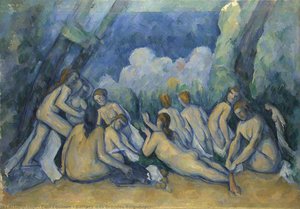
Paul Cézanne's "Bathsheba," painted in 1890, is more than just a portrait; it’s a carefully constructed meditation on intimacy, observation, and the very nature of representation. Emerging from the Post-Impressionist movement—a reaction against the fleeting impressions of its predecessor—Cézanne sought to capture not merely what he *saw*, but how he *felt* about what he saw. This painting, housed in private collections, offers a rare glimpse into his evolving artistic vision and his profound engagement with both classical narrative and modern form.
The scene depicts two women seated together before a tree, bathed in the diffused light of an afternoon. The woman on the left is rendered with a remarkable degree of naturalism, her nudity a deliberate choice that invites contemplation about vulnerability and exposure. In contrast, the woman to her right wears a modest dress, creating a visual dialogue between openness and restraint. They are engaged in what appears to be a quiet conversation or perhaps absorbed in shared observation – the details remain deliberately ambiguous, encouraging the viewer to project their own interpretations onto the scene.
Cézanne’s genius lies not just in his subject matter but in his revolutionary approach to painting itself. He moved decisively away from the Impressionist obsession with capturing momentary light and color, instead prioritizing structure and form. Notice how he employs “constructive strokes”—bold, deliberate lines that build up the image like a sculptor working with clay. These strokes create a sense of solidity and permanence, transforming the figures and the tree into geometric forms—a precursor to Cubism. The background is deliberately simplified, almost abstracted, further emphasizing the foreground subjects and their interaction.
The painting’s historical context is crucial to understanding its significance. Cézanne was deeply influenced by classical mythology, particularly the story of Bathsheba, the biblical queen who famously captivated King David. While the specific narrative isn't overtly depicted, the scene evokes a sense of timelessness and quiet dignity reminiscent of ancient depictions of female figures in repose. The inclusion of the bench and book adds another layer of meaning—suggesting a moment of respite, intellectual engagement, or perhaps simply shared companionship. The two birds perched above the woman on the right are subtle details that contribute to the painting’s serene atmosphere, hinting at freedom and connection with nature.
“Bathsheba” is a testament to Cézanne's ability to imbue a seemingly simple scene with profound emotional resonance. It’s a work that rewards careful observation, inviting viewers to contemplate not only the figures themselves but also the artist’s innovative techniques and his enduring legacy as a pioneer of modern art. Its quiet intimacy and masterful use of form continue to captivate audiences today, solidifying its place as one of Cézanne's most compelling and influential paintings.
Born in Aix-en-Provence, France, in 1839, Paul Cézanne was a pivotal figure bridging the gap between Impressionism and Cubism. Initially destined for a legal career, he abandoned his family’s expectations to pursue art with unwavering dedication. His early influences included Romanticism and the Barbizon school, but he quickly developed a distinctive style characterized by structured compositions, deliberate brushwork, and an exploration of form and color that defied traditional conventions.
Cézanne's artistic journey was marked by a constant striving for new ways to represent reality. He experimented with perspective, light, and color, pushing the boundaries of painting and laying the groundwork for future generations of avant-garde artists. His work wasn’t always immediately appreciated; he faced criticism for his unconventional approach, but his influence grew steadily over time, eventually shaping the course of modern art.
What distinguishes Cézanne’s paintings is his revolutionary technique—the use of “constructive strokes.” Unlike Impressionists who sought to capture fleeting moments of light, Cézanne meticulously built up forms using bold, deliberate lines. These strokes created a sense of solidity and permanence, transforming the figures and objects in his paintings into geometric shapes.
He often employed a technique called “broken color,” applying small, separate brushstrokes of pure color to create an optical mixture that appeared more vibrant and luminous than simply blending colors together. This approach allowed him to capture the nuances of light and shadow with remarkable precision while simultaneously emphasizing the underlying structure of his subjects. His landscapes, in particular, are characterized by their simplified forms and carefully constructed compositions—a departure from the atmospheric effects favored by Impressionists.
Paul Cézanne’s influence on modern art is profound and far-reaching. He is considered a forefather of Fauvism and a key precursor to Cubism, with artists like Pablo Picasso drawing direct inspiration from his work. His innovative approach to painting—his emphasis on form, structure, and the manipulation of color—forever changed the way artists perceived and represented the world.
Today, Cézanne’s paintings continue to be admired for their beauty, technical mastery, and enduring emotional resonance. They are studied in art schools around the world and remain a source of inspiration for contemporary artists. Reproductions like this one offer a tangible connection to this remarkable artist and his revolutionary vision.


1839 - 1906 , France


Stay updated with the latest art news, exclusive offers, and decoration ideas.
Tell us about your project and our art experts will provide you with 3 personalized art suggestions.
Let Us Curate 3 Options Just for You - Free!


 Preview
 Send
Send Share
Share
 Details

 Download
 Similars
 X-Ray
X-Ray Diaporama
 Read More