x


 Oil On CanvasWallArtPost-Impressionism
 187919th Century
 45.0 x 55.0 cm
Hand-painted oil on canvas in your size and frame, made to order by our artists.





























Pick from our preset sizes that match the artwork's original proportions.

You may enter your own dimensions to fit a specific frame or space. If your selected size does not match the original image's proportions, we will either crop the artwork or extend the painting with additional hand-painted elements. A digital mockup will be sent for your approval before production begins.
Please note that the on-screen preview does not reflect the actual cropping or extension. Only the mockup will accurately show the final composition.
While custom sizes are available, we recommend selecting a dimension from the predefined list to preserve the original proportions.
Worldwide Delivery () in 3/4 weeks instead of standard 5 weeks. (18 July). No compromise on quality.


fruit - -
Reproduction Size
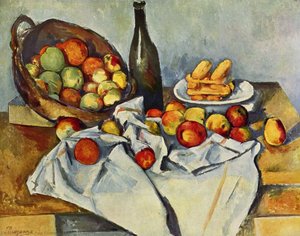
Paul Cézanne's 'Fruit,' painted in 1879, isn’t merely a still life; it’s a pivotal moment in the history of art – a quiet revolution conducted with apples, bowls, and bottles. This deceptively simple composition, measuring just 45 x 55 cm, encapsulates Cézanne's radical departure from traditional representation and his profound influence on the burgeoning movements that would reshape the 20th century. More than a depiction of everyday objects, it’s an exploration of form, structure, and the very essence of seeing – a testament to Cézanne’s belief that art should capture not just what is *seen*, but how it is *felt*. The painting immediately draws the viewer in with its muted palette of ochres, browns, and greens, creating a sense of earthy solidity. Yet, within this apparent stillness lies an intense dynamism, born from Cézanne’s meticulous observation and his deliberate manipulation of perspective.
Cézanne's artistic journey began with a deep respect for the established traditions of Romanticism and Realism. However, he quickly recognized the limitations of these approaches, particularly within the context of Impressionism. He sought to move beyond capturing fleeting impressions of light and color – as championed by his contemporaries like Camille Pissarro – and instead delve into the underlying geometric structure of objects. ‘Fruit’ exemplifies this shift. Notice how Cézanne doesn't simply paint an apple; he dissects it, revealing its essential forms—the curves of the skin, the planes of the flesh, the subtle shadows that define its volume. This is not a photograph; it’s a carefully constructed study in form and space, anticipating the geometric explorations of Cubism by decades.
Cézanne's technique is instantly recognizable. He employed a series of repetitive, exploratory brushstrokes – often small and broken—to build up surfaces with layers of color. These aren’t blended smoothly; instead, they retain their individual character, creating a textured, almost sculptural effect. Observe how he uses planes of color to define the shapes of the fruit and surrounding objects, suggesting depth and volume without relying on traditional perspective. The bowls, bottles, and vase are not merely placed in the composition; they actively shape it, contributing to its overall structure. This deliberate use of texture and form was revolutionary at the time, challenging the conventions of academic painting and paving the way for a more abstract approach to representation.
Initially, Cézanne’s work faced skepticism and even ridicule from critics who found his style unconventional. However, figures like Camille Pissarro and Ambroise Vollard recognized his genius and championed his art, providing crucial support during a period of artistic transition. Vollard's decision to organize a solo exhibition in 1895 proved pivotal, bringing Cézanne’s work to a wider audience and establishing him as a key figure in the development of modern art. His influence extended far beyond his immediate circle; artists like Henri Matisse and Pablo Picasso famously declared that “Cézanne is the father of us all,” acknowledging his profound impact on their own artistic explorations. ‘Fruit,’ therefore, stands not just as a beautiful painting but as a crucial document in the evolution of Western art – a harbinger of the radical changes to come.
Most-Famous-Paintings offers exquisite hand-painted reproductions of Paul Cézanne’s ‘Fruit,’ meticulously crafted by our team of skilled artists. Each reproduction captures the essence of the original painting, faithfully recreating its subtle color palette, textured brushstrokes, and dynamic composition. Whether you're an art enthusiast, a collector seeking to expand your collection, or simply looking for a stunning piece of artwork to enhance your interior space, a Most-Famous-Paintings reproduction of ‘Fruit’ is a timeless investment – a tangible connection to one of the most influential artists in modern history. Explore our range of sizes and framing options today and bring this revolutionary work into your world.


1839 - 1906 , France
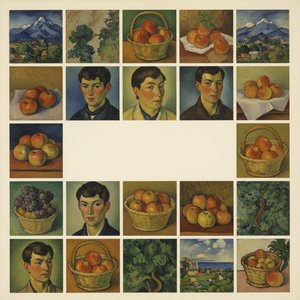
Journey through 25 iconic artworks by Paul Cézanne – a master of Impressionism and Post-Impressionism. Explore his landscapes, still lifes, and the stories behind these timeless masterpieces. Discover museum-quality reproductions & curated decor at Most-Famous-Paintings.com.
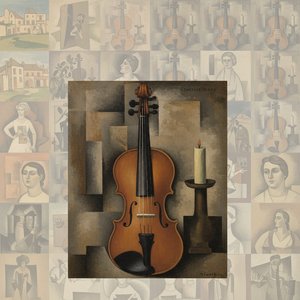
Explore 25 iconic Georges Braque paintings that revolutionized Cubism & modern art. Discover the stories behind his masterpieces, from Fauvism to Analytical Cubism. Find museum-quality reproductions & elevate your home decor with Most-Famous-Paintings.com.

Journey through 25 iconic Claude Monet masterpieces! Explore Impressionism’s beauty, from Water Lilies to Rouen Cathedral. Discover stunning art reproductions & curated decor ideas – explore the full collection online at Most-Famous-Paintings.com.

Explore the rich history of still life painting with Most-Famous-Paintings. Discover Dutch Masters, decode vanitas symbolism & learn about collecting timeless art. Expert insights and museum-quality reproductions.

Explore the rich history of still life painting & the symbolism of fruit across art movements. Discover masterpieces from Caravaggio to Cézanne with Most-Famous-Paintings – expert guidance & museum-quality reproductions.


Stay updated with the latest art news, exclusive offers, and decoration ideas.
Tell us about your project and our art experts will provide you with 3 personalized art suggestions.
Let Us Curate 3 Options Just for You - Free!


 Buy print
 Send
Send Share
Share
 Details

 Download
 Similars
 X-Ray
X-Ray Diaporama
 Read More







 Glass option is only available in size under 110 CM