x


Hand-painted oil on canvas in your size and frame, made to order by our artists.





























Pick from our preset sizes that match the artwork's original proportions.

You may enter your own dimensions to fit a specific frame or space. If your selected size does not match the original image's proportions, we will either crop the artwork or extend the painting with additional hand-painted elements. A digital mockup will be sent for your approval before production begins.
Please note that the on-screen preview does not reflect the actual cropping or extension. Only the mockup will accurately show the final composition.
While custom sizes are available, we recommend selecting a dimension from the predefined list to preserve the original proportions.
Worldwide Delivery () in 3/4 weeks instead of standard 5 weeks. (18 July). No compromise on quality.


Landscape
Reproduction Size
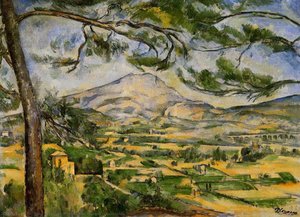
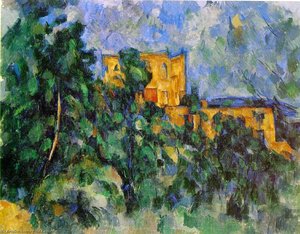
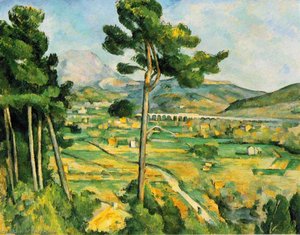
Paul Cézanne’s “Landscape,” painted in 1881, isn’t merely a depiction of a small provincial town; it’s a carefully constructed meditation on the relationship between humanity and nature, rendered with the quiet intensity that would come to define his revolutionary approach to painting. This work, often overlooked amidst the more celebrated Mont Sainte-Victoire series, offers a profound glimpse into Cézanne's evolving artistic vision – a bridge between the fleeting impressions of Impressionism and the nascent explorations of Cubism. The scene unfolds with a deliberate simplicity: a cluster of modest houses nestled within a dense forest, all bathed in the muted light of a winter’s day. Snow blankets the ground, lending an ethereal quality to the familiar landscape, while figures – likely engaged in daily routines – are scattered throughout the composition, adding a subtle layer of human presence without disrupting the overall sense of serene observation.
Cézanne's technique here is particularly revealing. He eschews the bright, broken brushstrokes characteristic of Impressionism, opting instead for more controlled and deliberate applications of paint. Notice how he builds up forms through layers of color – a subtle shift from cool blues and greens in the background to warmer ochres and browns in the foreground. This layering creates an illusion of depth and solidity, moving away from the purely optical representation favored by his predecessors. The trees aren’t sketched with delicate lines; they are blocks of color, suggesting volume and mass rather than simply mimicking their appearance. Similarly, the houses are simplified geometric shapes, hinting at underlying structure rather than striving for photographic accuracy. This deliberate reduction of form is a key element in Cézanne's exploration of pictorial space – he was less concerned with accurately representing what he *saw* and more interested in how he could represent what he *felt* about what he saw.
The forest surrounding the town isn’t presented as a wild, untamed wilderness. Instead, it acts as a carefully considered framework for the scene, providing both visual depth and symbolic resonance. Cézanne frequently depicted forests in his work, often viewing them as a source of stability and grounding – a counterpoint to the perceived chaos of modern life. The dense foliage suggests a sense of enclosure, inviting contemplation and offering a refuge from the bustle of human activity. The trees themselves are not rendered with individual detail; they’re treated as unified masses, contributing to the overall composition rather than competing for attention. This approach reflects Cézanne's broader interest in reducing complex natural forms to their essential geometric components – a principle that would later profoundly influence artists like Picasso and Braque.
The presence of several figures within the landscape is noteworthy. They aren’t presented as active participants in the scene, but rather as integrated elements within the composition—almost akin to still life subjects. Cézanne often included human forms in his landscapes, not necessarily to depict specific individuals, but to provide a sense of scale and context. The horse near one of the houses subtly anchors the scene, suggesting a connection between rural life and the rhythms of the natural world. These figures are deliberately ambiguous, their identities obscured by Cézanne’s simplified rendering style. They invite the viewer to project their own interpretations onto the scene, fostering a sense of personal engagement with the artwork.
“Landscape” exemplifies Cézanne's pivotal role in transitioning art from the Impressionist focus on capturing fleeting moments to a more structured and conceptual approach. He wasn’t simply painting what he saw; he was exploring the underlying geometry of form, seeking to reveal the essential structure beneath the surface appearance. This work demonstrates his growing interest in reducing complex natural forms to their fundamental shapes – a precursor to Cubism's fragmented perspectives. It is a testament to Cézanne’s profound influence on 20th-century art, and a beautiful example of how a seemingly simple landscape can be imbued with layers of meaning and artistic innovation. A hand-painted reproduction offers a remarkable opportunity to experience the quiet power and enduring beauty of this pivotal work.


1839 - 1906 , France
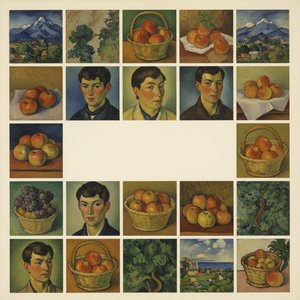
Journey through 25 iconic artworks by Paul Cézanne – a master of Impressionism and Post-Impressionism. Explore his landscapes, still lifes, and the stories behind these timeless masterpieces. Discover museum-quality reproductions & curated decor at Most-Famous-Paintings.com.

Journey through 25 iconic artworks at the Metropolitan Museum of Art! Explore Van Gogh, Monet, Rembrandt & more. Discover art history, inspiring stories, and museum-quality reproductions to elevate your home decor. Explore the full collection on Most-Famous-Paintings.com.
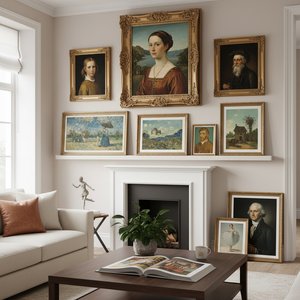
Explore 25 iconic artworks from Washington DC's National Gallery of Art! Discover masterpieces by Cézanne, Matisse & Picasso. Find museum-quality art reproductions and elevate your home decor with timeless paintings. Explore the full collection online at Most-Famous-Paintings.com.
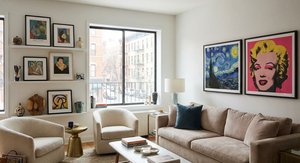
Journey through MoMA's 25 most iconic artworks! Explore Van Gogh, Picasso, Warhol & more. Discover the stories behind masterpieces of modern art and find museum-quality reproductions for your home at Most-Famous-Paintings.com.

Journey into the heart of Impressionism! Explore 10 masterpieces by Monet, Renoir & Degas that revolutionized landscape art. Discover their stories, techniques & find museum-quality reproductions to elevate your home decor on Most-Famous-Paintings.com.


Stay updated with the latest art news, exclusive offers, and decoration ideas.
Tell us about your project and our art experts will provide you with 3 personalized art suggestions.
Let Us Curate 3 Options Just for You - Free!


 Buy print
 Send
Send Share
Share
 Details

 Download
 Similars
 X-Ray
X-Ray Diaporama

 Read More







 Glass option is only available in size under 110 CM