x

Purchase a high-resolution, enhanced digital image, far superior to the online preview.
Each file is meticulously prepared by our in-house specialists using advanced tools and expert manual retouching. We ensure every image has exceptional clarity, precise color accuracy, and fine detail.
The final file is delivered via email within 72 hours, optimized for immediate use in professional, editorial, and print environments. This is the same quality trusted by top-tier design studios, publishers, and galleries.
Download a high-resolution file for personal display, printing, and creative projects. ( Buy Print Buy Hand Made Painting)
When you choose Most-Famous-Paintings.com, you're not just getting an image - you're receiving a professionally enhanced digital artwork, crafted with precision and backed by a satisfaction guarantee. Here's everything that comes with your order, automatically:

Your high-resolution digital image file will be emailed to you within 72 hours of ordering - ready for immediate use.

Your artwork is professionally optimized using advanced AI tools and manual editing, ensuring maximum detail, clarity, and color accuracy.

Accidentally deleted or lost your file? No worries - we'll resend it to you anytime, free of charge.

Enjoy your artwork instantly with zero customs, duties, or delivery fees - digital downloads are always tax-free.

We ensure your digital image reflects the original colors as closely as possible using professional tools and color management.

If you're not satisfied with your digital image, we'll revise it or refund 100% within 60 days - no questions asked.

Not satisfied? Get a full refund within 60 days of receiving your digital file - no questions asked.

Buy 3 images, save 10% - Buy 5, save 15% - Buy 10+, save 20%. Great for creative projects, galleries, and agencies.
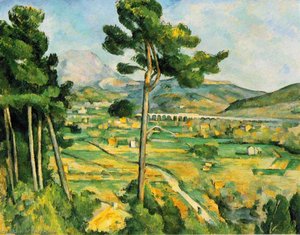
Painted in 1867 during a pivotal period of artistic transition, Paul Cézanne's "Landscape" isn’t merely a depiction of a rural scene; it’s a carefully constructed exploration of perception and the very nature of seeing. This work, housed within the Yale University Art Gallery, represents a crucial stepping stone in Cézanne’s evolution from the Impressionist palette to the nascent forms of Cubism, marking his deliberate departure from fleeting impressions towards a more structured, geometric representation of reality. The painting captures a dirt road winding through a verdant landscape – a familiar subject for Cézanne, who frequently returned to the views surrounding his home in Provence. However, it’s not the idyllic beauty of the scene that dominates; rather, it's the artist’s deliberate manipulation of space and color that commands attention.
Cézanne’s technique is immediately striking. He abandons the traditional Impressionist pursuit of capturing a momentary light effect, instead employing a more methodical approach. Thick, visible brushstrokes—a hallmark of his style—build up layers of paint to define form and volume. Notice how he doesn't simply *paint* the road; he sculpts it with color, creating an illusion of depth and solidity. The grass on either side isn’t rendered as a wash of green but rather as distinct planes of varying shades, suggesting texture and materiality. This deliberate layering is key to Cézanne’s revolutionary approach – he was less interested in replicating what the eye *sees* than in conveying how the mind *interprets* that visual information.
Scattered along the road are several figures, rendered with a remarkable degree of anonymity. They aren't portraits; they’re fragments of human presence within the broader landscape. Their placement is carefully considered – some closer to the viewer, others receding into the distance – creating a sense of spatial depth and inviting the observer to contemplate their relationship to the scene. The two dogs, one positioned centrally and another on the right, add an element of domesticity and perhaps even a hint of narrative, suggesting a quiet moment of rural life. The horse standing off to the left adds further context, hinting at agricultural activity or transport.
Interestingly, Cézanne’s use of perspective is deliberately ambiguous. He doesn't adhere strictly to linear perspective, creating an unsettling sense of spatial distortion. This wasn’t a conscious attempt to mislead the viewer but rather a reflection of his belief that reality itself is constructed within our minds. By fracturing traditional perspective, he forces us to actively engage with the painting and reconstruct its spatial relationships.
While seemingly simple in composition, “Landscape” resonates with deeper symbolic meanings. The dirt road can be interpreted as a metaphor for life’s journey – a winding path through an uncertain future. The figures represent humanity's place within the natural world, highlighting our connection to both the tangible and the intangible. Cézanne himself described his work as "the thinking of things," suggesting that he sought to capture not just appearances but also the underlying essence of his subjects.
The painting’s overall mood is one of serene contemplation. Despite the somewhat unsettling spatial distortions, there's a palpable sense of peace and tranquility. Cézanne masterfully evokes a feeling of timelessness, inviting us to pause and reflect on the beauty and complexity of the natural world. It’s a testament to his ability to transform a commonplace landscape into a profound meditation on perception, form, and the human condition.
“Landscape” is more than just a beautiful painting; it's a pivotal work in art history. Cézanne’s radical approach to representation paved the way for the development of Cubism and other avant-garde movements of the 20th century. His emphasis on structure, form, and color profoundly influenced generations of artists, shaping the course of modern art and leaving an enduring legacy that continues to inspire today.


1839 - 1906 , France


Stay updated with the latest art news, exclusive offers, and decoration ideas.
Tell us about your project and our art experts will provide you with 3 personalized art suggestions.
Let Us Curate 3 Options Just for You - Free!


 Preview
 Send
Send Share
Share
 Details

 Download
 Similars
 X-Ray
X-Ray Diaporama

 Read More