x

Museum-quality giclée or canvas print with fast production and flexible finish options. ( Buy Hand Made Painting Buy Image)





























Pick from our preset sizes that match the artwork's original proportions.

You may enter your own dimensions to fit a specific frame or space. If your selected size does not match the original image's proportions, we will either crop the artwork or extend the image with a mirrored or solid-fill edge. A digital mockup will be sent for your approval before production begins.
Please note that the on-screen preview does not reflect the actual cropping or extension. Only the mockup will accurately show the final composition.
While custom sizes are available, we recommend selecting a dimension from the predefined list to preserve the original proportions.
Worldwide Delivery () in 2 weeks instead of standard 4/5 weeks. (19 August)


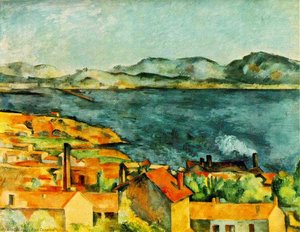
The roofs
Reproduction Size
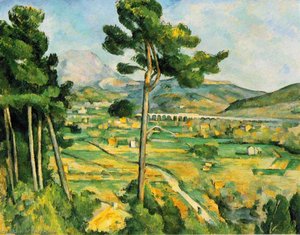
Paul Cézanne’s “The Roofs,” painted in 1890, isn’t merely a depiction of a cityscape; it’s a profound meditation on the very essence of seeing. Often referred to as "Group of Houses," this work represents a pivotal moment in Cézanne's artistic journey – a deliberate departure from the fleeting impressions of Impressionism and a crucial step toward the nascent forms of Cubism. The painting captures a view of Mont Sainte-Victoire, the towering mountain that dominated Cézanne’s life and art, viewed from a slightly elevated perspective. It’s not a photograph; it's an attempt to distill the *experience* of looking at this iconic landmark into a visual language entirely its own.
Cézanne’s technique here is revolutionary for his time. He abandons traditional linear perspective, opting instead for a fragmented and overlapping arrangement of geometric shapes – rectangles, squares, and triangles – that define the buildings and their roofs. These forms aren't rendered with smooth transitions; rather, they are sharply delineated, creating a sense of solidity and weight despite the loose brushstrokes. The color palette is muted, dominated by ochres, browns, and greens, lending the scene a quiet, almost melancholic atmosphere. Notice how Cézanne doesn’t attempt to create a realistic illusion of depth; instead, he uses variations in tone and scale to suggest distance and recession – a technique that anticipates the spatial experimentation of 20th-century artists.
Cézanne's exploration of form was deeply influenced by his study of Japanese woodblock prints. He was particularly fascinated by the way these prints flattened space, emphasizing shapes and patterns over realistic representation. This influence is evident in “The Roofs” through its simplified forms and the deliberate lack of atmospheric perspective. The composition echoes the bold outlines and graphic clarity found in Ukiyo-e art, creating a visual rhythm that draws the eye across the canvas. He wasn’t simply copying Japanese aesthetics; he was actively translating their principles into his own artistic vocabulary.
Mont Sainte-Victoire held a particularly powerful significance for Cézanne. He painted it obsessively throughout his career, attempting to capture its essence in countless variations. “The Roofs” is not just a landscape; it’s a visual record of this ongoing struggle – a testament to the artist's relentless pursuit of understanding and representing the mountain’s complex geometry. The repetitive patterns of the roofs can be interpreted as a metaphor for Cézanne’s own artistic process: a constant cycle of observation, experimentation, and revision. The muted colors also contribute to a sense of timelessness, suggesting that this landscape is both specific to a particular place and universal in its representation of nature.
“The Roofs” stands as a crucial bridge between Impressionism and the radical innovations of early 20th-century art. Cézanne’s emphasis on form, his rejection of traditional perspective, and his use of fragmented shapes paved the way for artists like Picasso and Braque, who would later develop Cubism. This painting isn't just a beautiful landscape; it’s a foundational work that fundamentally altered our understanding of how art could represent reality. Its enduring appeal lies in its ability to evoke a sense of both familiarity and strangeness – a reminder of the beauty and complexity of the natural world, seen through the unique vision of one of history’s most influential artists.


1839 - 1906 , France
Journey through 25 iconic artworks by Paul Cézanne – a master of Impressionism and Post-Impressionism. Explore his landscapes, still lifes, and the stories behind these timeless masterpieces. Discover museum-quality reproductions & curated decor at Most-Famous-Paintings.com.

Journey through Paul Klee's 25 most iconic paintings & prints. Explore his abstract style, Bauhaus influence, and vibrant color palettes. Find museum-quality art reproductions & decor ideas at Most-Famous-Paintings.com. Discover all masterpieces online.

Explore the rich symbolism of the red dress in art history! From ancient power displays to iconic portraits like Cézanne’s 'Madame Cezanne', discover the cultural and artistic significance behind this captivating color. Expert analysis & insights.

Explore the evolution of cityscape painting from Realism to contemporary art with Most-Famous-Paintings. Discover key artists & invest in timeless urban visions. Expert guidance, museum-quality reproductions.

Explore the evolution of cityscape painting from historical maps to Impressionist masterpieces. Discover artists like Caillebotte & Utrillo. Find museum-quality reproductions at Most-Famous-Paintings.


Stay updated with the latest art news, exclusive offers, and decoration ideas.
Tell us about your project and our art experts will provide you with 3 personalized art suggestions.
Let Us Curate 3 Options Just for You - Free!


 Preview
 Send
Send Share
Share
 Details

 Download
 Similars
 X-Ray
X-Ray Diaporama

 Read More







 Glass option is only available in size under 110 CM