x

Museum-quality giclée or canvas print with fast production and flexible finish options. ( Buy Hand Made Painting Buy Image)
Pick from our preset sizes that match the artwork's original proportions.

You may enter your own dimensions to fit a specific frame or space. If your selected size does not match the original image's proportions, we will either crop the artwork or extend the image with a mirrored or solid-fill edge. A digital mockup will be sent for your approval before production begins.
Please note that the on-screen preview does not reflect the actual cropping or extension. Only the mockup will accurately show the final composition.
While custom sizes are available, we recommend selecting a dimension from the predefined list to preserve the original proportions.
Worldwide Delivery () in 2 weeks instead of standard 4/5 weeks. (17 August)


untitled (4517)
Reproduction Size
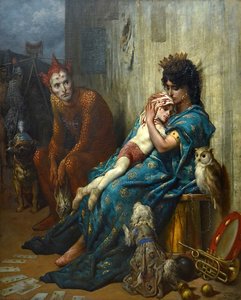
This compelling monochrome engraving, simply titled “Untitled (4517),” offers a profoundly moving glimpse into a pivotal moment in biblical history. Executed by the masterful hand of Paul Gustave Doré, this work transcends mere illustration; it's a meticulously crafted tableau brimming with dramatic tension, architectural grandeur, and a palpable sense of spiritual significance. Dating from the 19th century, during a period of intense interest in historical narrative and religious themes, Doré’s engraving stands as a testament to his unparalleled skill in capturing both the literal details and the emotional weight of the scene – the laying of the cornerstone of the Temple in Jerusalem.
The composition immediately commands attention. Doré employs a hierarchical arrangement, placing Hiram Abiff, the architect responsible for the Temple’s construction, prominently above the throng of laborers. This deliberate focus draws the viewer's eye and establishes a clear narrative trajectory. The expansive landscape, rendered with remarkable depth and perspective, unfolds across a vast expanse, showcasing not just the monumental stone structure itself – likely an idealized representation of the Temple – but also surrounding buildings and the organized chaos of construction activity. The artist’s use of heavy lines is crucial; they define forms with precision while simultaneously conveying a dynamic sense of movement and texture, particularly evident in the meticulously rendered stonework and the folds of the laborers' clothing.
Doré’s mastery lies in his skillful manipulation of the engraving technique. He utilized a burin tool to carve intricate lines into a metal plate – typically zinc or copper – creating a textured surface that simulates the rough-hewn quality of stone and the tactile feel of fabric. This process, demanding immense patience and control, is what allows for such dramatic shading and volume. The varying shades of grey achieved through this method are not simply stylistic choices; they actively contribute to the scene’s three-dimensionality, enhancing the illusion of depth and drawing the viewer into the heart of the action. The sheer scale of the project – estimated to have involved 40 block cutters at its peak – speaks volumes about Doré's ambition and the meticulousness of his approach.
Beyond its immediate depiction, “Untitled (4517)” is rich in symbolic meaning. The laying of the cornerstone represents divine intervention, the beginning of a sacred endeavor, and ultimately, faith itself. The geometric shapes – blocks, pyramids, and human figures – reinforce the architectural theme, emphasizing the Temple’s role as a center of worship and order. Doré's work is firmly rooted in 19th-century historical illustration, mirroring the popular fascination with biblical narratives and classical aesthetics that characterized the era. The scene reflects the religious fervor of the time, aligning with broader artistic trends seeking to convey moral and spiritual truths through powerful imagery. It’s a poignant reminder of a foundational event in Jewish history and a testament to Doré's ability to translate complex theological concepts into a visually arresting experience.
The dramatic lighting, casting stark shadows that heighten the sense of volume and depth, further amplifies the emotional impact of the engraving. It’s a scene charged with both labor and reverence, chaos and order. Doré's work has resonated across generations, influencing artists like Vincent van Gogh, who famously recreated “Prisoners’ Round” in oil, demonstrating its enduring power. This reproduction offers an opportunity to own a piece of art history – a tangible connection to one of the most celebrated illustrations of all time, showcasing Doré’s unparalleled skill and vision.


1832 - 1883 , France

Explore the exquisite world of Victorian Illustration. Discover the masters of the Golden Age, from Arthur Rackham to Edmund Dulac, through an in-depth historical journey into the era's unparalleled detail and narrative artistry.


Stay updated with the latest art news, exclusive offers, and decoration ideas.
Tell us about your project and our art experts will provide you with 3 personalized art suggestions.
Let Us Curate 3 Options Just for You - Free!


 Preview
 Send
Send Share
Share
 Details

 Download
 Similars
 X-Ray
X-Ray Diaporama

 Read More




































 Glass option is only available in size under 110 CM