


x


Hand-painted oil on canvas in your size and frame, made to order by our artists.
Pick from our preset sizes that match the artwork's original proportions.

You may enter your own dimensions to fit a specific frame or space. If your selected size does not match the original image's proportions, we will either crop the artwork or extend the painting with additional hand-painted elements. A digital mockup will be sent for your approval before production begins.
Please note that the on-screen preview does not reflect the actual cropping or extension. Only the mockup will accurately show the final composition.
While custom sizes are available, we recommend selecting a dimension from the predefined list to preserve the original proportions.
Worldwide Delivery () in 3/4 weeks instead of standard 5 weeks. (18 July). No compromise on quality.


Crowned love and profane Love
Reproduction Size

Guido Reni, also known as Le Guide, was born in Bologna, Italy, in 1575. He was the only child of Daniele Reni, a musician, and Ginevra Pozzi, also from a musical family. This upbringing instilled in him an appreciation for harmony and form that would later influence his artistic style. At the young age of nine, Guido began his apprenticeship under Denis Calvaert, a Flemish painter working in Bologna. He studied alongside fellow aspiring artists Albani and Domenichino, forming a strong foundation in classical principles.
Reni’s artistic career spanned several Italian cities, including Rome, Naples, and his native Bologna. His early work showed the influence of Calvaert and the Carracci brothers, emphasizing anatomical accuracy and dramatic composition. However, Reni quickly developed a distinctive style characterized by its elegant classicism, refined technique, and emotional intensity. He became a dominant figure in the Bolognese School, known for its emphasis on academic training and idealized forms.
Reni's oeuvre encompasses a wide range of subjects, including religious scenes, mythological narratives, and allegorical representations. Some of his most celebrated works include:
Reni's style is often described as eclectic classicism. He blended the precision of classical art with the dynamism and emotion of the Baroque period. His figures are typically idealized, possessing a serene beauty and graceful movement.
Guido Reni played a crucial role in shaping the development of High Baroque style in Italy. He influenced generations of artists with his refined technique, elegant compositions, and emotional depth. His work can be found in prominent museums worldwide, including the Palace of Capodimonte in Naples. Reni’s legacy extends beyond painting; he was also a poet and a respected intellectual figure in his time.
His art continues to inspire artists and art enthusiasts today, solidifying his place as one of the most important painters of the 17th century. His influence can be seen in subsequent Baroque artists who sought to emulate his gracefulness and emotional power.
Guido Reni died in Bologna in 1642, leaving behind a rich artistic legacy that continues to captivate audiences centuries later.

1575 - 1642 , Italy

Journey through 25 iconic artworks at the Metropolitan Museum of Art! Explore Van Gogh, Monet, Rembrandt & more. Discover art history, inspiring stories, and museum-quality reproductions to elevate your home decor. Explore the full collection on Most-Famous-Paintings.com.
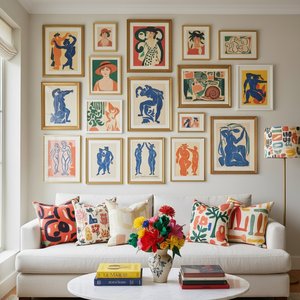
Journey through Henri Matisse's 25 most iconic paintings! Explore Fauvism, vibrant colors & the stories behind masterpieces like 'The Dance'. Find museum-quality art reproductions and curated decor ideas to elevate your space. Discover all masterpieces on Most-Famous-Paintings.com.
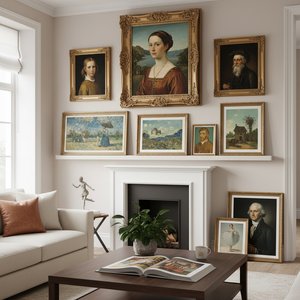
Explore 25 iconic artworks from Washington DC's National Gallery of Art! Discover masterpieces by Cézanne, Matisse & Picasso. Find museum-quality art reproductions and elevate your home decor with timeless paintings. Explore the full collection online at Most-Famous-Paintings.com.
Journey through 25 iconic James Abbott McNeill Whistler paintings! Explore his masterpieces of Aestheticism, from 'Nocturne in Black and Gold' to captivating portraits. Find museum-quality art reproductions & elevate your home decor with Most-Famous-Paintings.com. Discover the full collection online.
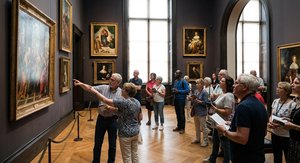
Journey through Alte Pinakothek's 25 most iconic paintings! Explore masterpieces by Dürer, Rembrandt & Rubens. Discover art history, techniques & find museum-quality reproductions for your home at Most-Famous-Paintings.com.


Stay updated with the latest art news, exclusive offers, and decoration ideas.
Tell us about your project and our art experts will provide you with 3 personalized art suggestions.
Let Us Curate 3 Options Just for You - Free!


 Buy print
 Send
Send Share
Share
 Details

 Download
 Similars
 X-Ray
X-Ray Diaporama


 Read More




































 Glass option is only available in size under 110 CM


