x


 Mixed MediaWallArtOrphism
 1914
1914 104.0 x 84.0 cm
Hand-painted oil on canvas in your size and frame, made to order by our artists.





























Pick from our preset sizes that match the artwork's original proportions.

You may enter your own dimensions to fit a specific frame or space. If your selected size does not match the original image's proportions, we will either crop the artwork or extend the painting with additional hand-painted elements. A digital mockup will be sent for your approval before production begins.
Please note that the on-screen preview does not reflect the actual cropping or extension. Only the mockup will accurately show the final composition.
While custom sizes are available, we recommend selecting a dimension from the predefined list to preserve the original proportions.
Worldwide Delivery () in 3/4 weeks instead of standard 5 weeks. (18 July). No compromise on quality.


Political Drama
Reproduction Size
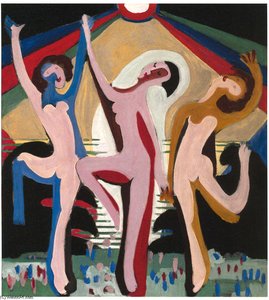
To stand before Robert Delaunay’s Political Drama is not merely to observe a painting; it is to step into a vibrant, pulsating field of pure chromatic energy. Created in the charged atmosphere of 1914, this work captures a moment suspended between figuration and abstraction—a visual echo of the tumultuous era from which it emerged. The composition immediately draws the eye into its heart, where two figures seem caught in an ethereal ballet against a backdrop that defies simple description. Delaunay, a pioneer whose life was dedicated to unlocking the expressive potential of color itself, has woven together geometric rigor with emotional fluidity, resulting in a piece that feels both intellectually stimulating and deeply soulful.
What distinguishes this work is Delaunay’s masterful handling of color theory. The background is dominated by nested, concentric rings—a breathtaking study in optical vibration. These rings are not uniform; they fracture into quadrants, each corner kissed by a different hue: lemon yellow meeting slate blue, lilac whispering against cobalt. This systematic division of color across the circular forms speaks to an almost scientific understanding of light, yet it feels utterly spontaneous. The artist employs flat planes of color, allowing the juxtaposition of adjacent tones—the vivid red next to the cool mint green, for instance—to create a shimmering illusion that seems to breathe off the canvas. Notice how these vibrant circles soften and mute as they approach the edges, grounding the celestial energy within the frame.
Against this dazzling chromatic vortex move the figures. To our right, the woman commands attention with her royal blue feathered hat, a splash of saturated color against the abstract geometry. Her dress, rendered with an intriguing collage element suggesting paper, adds a tactile layer to the otherwise smooth planes of paint. On the left, the man appears caught in a dramatic backward fall, his outstretched arm—a striking amethyst purple tipped with red—reaching toward the central nexus of circles. These figures are not merely placed within the background; they seem intrinsically connected to it, as if their very poses and colors are dictated by the underlying rhythm of the rings. They embody human drama played out upon a canvas governed by pure optical law.
The title itself, Political Drama, hints at the profound undercurrents beneath the surface beauty. While the subject matter is abstract—a dance of color and form—the tension between the figures suggests narrative conflict, a human drama played out against the backdrop of historical upheaval. The circular motifs themselves often symbolize eternity, cycles, or universal forces. In this context, they might represent the relentless, cyclical nature of history or emotion itself. Owning a reproduction of this piece is to invite that dialogue into your space—a conversation between structured intellect and unrestrained feeling.
For the discerning collector or designer seeking an anchor point of sophisticated color theory, Political Drama offers unparalleled depth. It transcends mere decoration; it functions as a visual thesis on modern perception. Whether placed in a grand hall where its scale (104 x 84 cm) can be appreciated, or curated within a more intimate setting, the piece demands contemplation. It is an invitation to look closer, to trace the line from the vivid blue of the skirt to the muted tones near the edge, and to feel the electric charge that Robert Delaunay captured at the dawn of modern abstraction.


1885 - 1941 , France
Journey through Wassily Kandinsky's 25 most iconic abstract paintings. Explore his revolutionary use of color, form & spiritual expressionism. Find museum-quality Kandinsky reproductions and elevate your home decor with Most-Famous-Paintings.com. Discover all masterpieces on Most-Famous-Paintings.com!
Journey through Henri Matisse's 25 most iconic paintings! Explore Fauvism, vibrant colors & the stories behind masterpieces like 'The Dance'. Find museum-quality art reproductions and curated decor ideas to elevate your space. Discover all masterpieces on Most-Famous-Paintings.com.
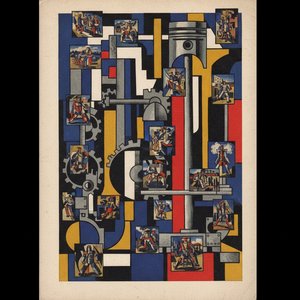
Explore 25 iconic Fernand Léger paintings that defined the Machine Age & Cubism. Discover the stories behind his bold colors, geometric forms & avant-garde style. Find museum-quality art reproductions on Most-Famous-Paintings.com.
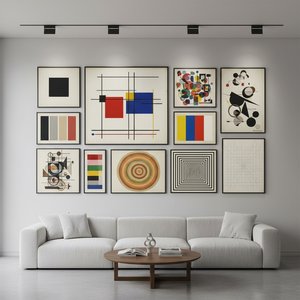
Explore 10 defining masterpieces of Geometric Abstraction! Discover Kandinsky, Mondrian & Malevich’s iconic works. Find museum-quality art reproductions and curated decor ideas to elevate your home at Most-Famous-Paintings.com.
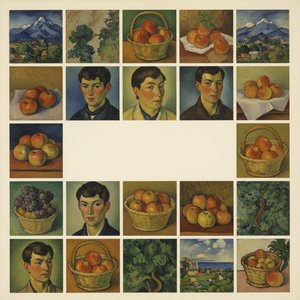
Journey through 25 iconic artworks by Paul Cézanne – a master of Impressionism and Post-Impressionism. Explore his landscapes, still lifes, and the stories behind these timeless masterpieces. Discover museum-quality reproductions & curated decor at Most-Famous-Paintings.com.


Stay updated with the latest art news, exclusive offers, and decoration ideas.
Tell us about your project and our art experts will provide you with 3 personalized art suggestions.
Let Us Curate 3 Options Just for You - Free!


 Buy print
 Send
Send Share
Share
 Details

 Download
 Similars
 X-Ray
X-Ray Diaporama
 Read More







 Glass option is only available in size under 110 CM