


x


Hand-painted oil on canvas in your size and frame, made to order by our artists.





























Pick from our preset sizes that match the artwork's original proportions.

You may enter your own dimensions to fit a specific frame or space. If your selected size does not match the original image's proportions, we will either crop the artwork or extend the painting with additional hand-painted elements. A digital mockup will be sent for your approval before production begins.
Please note that the on-screen preview does not reflect the actual cropping or extension. Only the mockup will accurately show the final composition.
While custom sizes are available, we recommend selecting a dimension from the predefined list to preserve the original proportions.
Worldwide Delivery () in 3/4 weeks instead of standard 5 weeks. (18 July). No compromise on quality.


The New Awakening_A
Reproduction Size
Behold the vibrant energy captured within this remarkable piece, "The New Awakening_A." It is not merely a painting; it is a joyous confluence of life itself, rendered in a dazzling array of color and intricate detail. The composition centers around a magnificent circular motif, an ancient and universal symbol representing cycles—the turning of seasons, the rhythm of existence, and the continuous flow of renewal. From the moment one's eye meets this canvas, they are drawn into its vibrant embrace, suggesting a world teeming with undiscovered wonder.
What truly captivates the viewer is the exquisite gathering of creatures arranged within that central circle. Over thirteen distinct animals populate this space, each rendered with meticulous care by the artist. One can discern the delicate plumage of various birds alongside the forms of other captivating beasts. The artist has achieved a remarkable feat: portraying such a diverse menagerie while ensuring every element contributes to a cohesive and harmonious whole. It speaks to an understanding that life, in all its varied manifestations, shares a common, beautiful rhythm.
The technique employed here is one of masterful color saturation and detailed execution. The palette is nothing short of exuberant; the colors are vibrant, almost singing against the background, yet they never clash. This vibrancy suggests a hand-painted quality that speaks to hours of dedicated artistry. For those considering bringing this piece into a curated space, know that its visual impact is immediate and profound. It possesses an inherent luminosity that seems to catch and reflect ambient light, making it a true focal point for any room.
The title itself, "The New Awakening," hints at the deeper symbolism woven throughout the piece. The circle, combined with the gathering of diverse life forms, evokes themes of rebirth, cyclical time, and the interconnectedness of all living things. It is a visual meditation on hope—the promise that after every apparent end, there begins a fresh, colorful start. This artwork invites contemplation, encouraging the viewer to find their own personal moment of awakening within its detailed narrative.
Whether you are an art enthusiast seeking a piece rich in symbolic depth or an interior designer aiming to infuse a space with unparalleled warmth and life, this reproduction offers immense value. It is a work that transcends fleeting trends; it speaks to enduring themes of biodiversity and renewal. Owning this painting means curating not just decoration, but a conversation starter—a vibrant testament to the persistent, beautiful pulse of nature.

Born in Germany during a tumultuous period – 1942, a year etched in history by war and displacement – Ursula von Rydingsvard’s life has been profoundly shaped by experiences that resonate deeply within her art. Her early years were spent navigating the chaotic aftermath of World War II, moving repeatedly between refugee camps following her parents' forced labor under the Nazi regime. This formative period, marked by instability and a constant awareness of displacement, instilled in her a sensitivity to fragility, memory, and the enduring impact of trauma – themes that would become central to her artistic exploration. The move to Plainville, Connecticut, in 1950 offered a semblance of stability, but the shadow of her family’s past remained, subtly informing her creative trajectory.
Von Rydingsvard's formal training began at Columbia University, where she earned a Master of Fine Arts degree in studio art. Crucially, she deliberately rejected the prevailing aesthetic trends of Minimalism, choosing instead to embrace the expressive potential of cedar wood. This decision wasn’t merely stylistic; it was a conscious act of rebellion against the perceived sterility and detachment of the movement. Cedar, with its inherent grain, texture, and capacity for both grandeur and vulnerability, provided her with a material that could embody the complex emotions she sought to convey. Her artistic journey extended beyond cedar, incorporating bronze, animal intestines (a practice she abandoned later due to ethical concerns), textiles, and delicate handmade paper – each medium chosen to contribute to the layered narratives within her sculptures.
Von Rydingsvard’s work isn't driven by direct autobiography; rather, it operates through a process of distillation and abstraction. Her sculptures are often described as “ambiguous,” inviting viewers to project their own experiences and interpretations onto the forms. The recurring motifs – fragmented figures, spiraling shapes, and monumental scale – suggest a preoccupation with memory, loss, and the passage of time. These elements aren’t presented in a literal manner but rather evoke a sense of recognition, as if glimpsing echoes of personal or collective histories.
The influence of her early life is palpable in the sculptures' inherent tension between strength and vulnerability. The massive scale of many pieces – often exceeding ten feet in height – creates an immediate impact, conveying a feeling of weight and presence. Yet, within this monumental form, there’s also a delicate quality, a sense of fragility that speaks to the precariousness of memory and the enduring scars of trauma. The use of cedar, with its natural imperfections and variations in texture, further reinforces this duality, suggesting that beauty can emerge from brokenness.
Von Rydingsvard’s artistic development reveals a fascinating dialogue between traditional sculptural techniques and modern sensibilities. Her grounding in classical principles – evident in her understanding of form, proportion, and composition – is juxtaposed with an experimental approach to materials and processes. She frequently employs spiral forms, referencing ancient symbolism and evoking notions of growth, decay, and cyclical time. This engagement with tradition isn’t about replicating the past but rather about reinterpreting it through a contemporary lens.
Furthermore, her work demonstrates a subtle yet persistent engagement with modernist ideas, particularly those explored by artists like Constantin Brâncuși, whose emphasis on simplification and essential form profoundly influenced her approach. However, unlike many minimalist sculptors who sought to strip art down to its barest essentials, Von Rydingsvard retains a rich textural complexity, layering meaning through the manipulation of materials and the creation of intricate surface patterns.
Ursula von Rydingsvard’s sculptures have been exhibited extensively throughout North America and Europe, finding homes in over 30 museum collections. Her work has garnered numerous accolades, including the International Sculpture Center Lifetime Achievement Award (2014) and the National Museum of Women in the Arts Lifetime Achievement Award for Excellence in the Arts (2019). These honors acknowledge not only her artistic skill but also the profound depth and resonance of her work.
Beyond her individual achievements, Von Rydingsvard’s art offers a powerful meditation on the human condition – on the enduring impact of history, the complexities of memory, and the capacity for beauty to emerge from adversity. Her sculptures stand as testaments to resilience, reminding us that even in the face of profound loss and displacement, the creative spirit can endure and transform.

1942 - , Mexico

Journey through 25 iconic Claude Monet masterpieces! Explore Impressionism’s beauty, from Water Lilies to Rouen Cathedral. Discover stunning art reproductions & curated decor ideas – explore the full collection online at Most-Famous-Paintings.com.

Journey through 25 iconic artworks at the Metropolitan Museum of Art! Explore Van Gogh, Monet, Rembrandt & more. Discover art history, inspiring stories, and museum-quality reproductions to elevate your home decor. Explore the full collection on Most-Famous-Paintings.com.
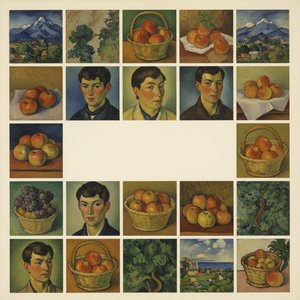
Journey through 25 iconic artworks by Paul Cézanne – a master of Impressionism and Post-Impressionism. Explore his landscapes, still lifes, and the stories behind these timeless masterpieces. Discover museum-quality reproductions & curated decor at Most-Famous-Paintings.com.
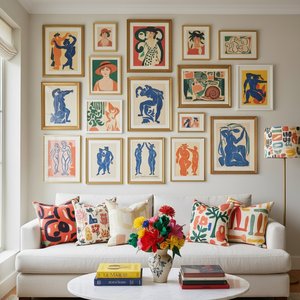
Journey through Henri Matisse's 25 most iconic paintings! Explore Fauvism, vibrant colors & the stories behind masterpieces like 'The Dance'. Find museum-quality art reproductions and curated decor ideas to elevate your space. Discover all masterpieces on Most-Famous-Paintings.com.

Explore 25 iconic Sir Alfred Munnings paintings! Discover the beauty of British Impressionism, equine art & rural England. Find museum-quality reproductions and elevate your home decor with Most-Famous-Paintings. Explore the full collection online.


Stay updated with the latest art news, exclusive offers, and decoration ideas.
Tell us about your project and our art experts will provide you with 3 personalized art suggestions.
Let Us Curate 3 Options Just for You - Free!


 Buy print
 Send
Send Share
Share
 Details

 Download
 Similars
 X-Ray
X-Ray Diaporama


 Read More







 Glass option is only available in size under 110 CM


