


x

 Acrylic On CanvasWallArtItalo-Byzantine / Mannerist
 1260
1260 103.0 x 122.0 cm
 Galleria degli Uffizi
Hand-painted oil on canvas in your size and frame, made to order by our artists. ( Buy Print Buy Image)





























Pick from our preset sizes that match the artwork's original proportions.

You may enter your own dimensions to fit a specific frame or space. If your selected size does not match the original image's proportions, we will either crop the artwork or extend the painting with additional hand-painted elements. A digital mockup will be sent for your approval before production begins.
Please note that the on-screen preview does not reflect the actual cropping or extension. Only the mockup will accurately show the final composition.
While custom sizes are available, we recommend selecting a dimension from the predefined list to preserve the original proportions.
Worldwide Delivery () in 3/4 weeks instead of standard 5 weeks. (21 August). No compromise on quality.


Madonna and Child with Saints and Crucifixion
Reproduction Size
The year is 1260. Lucca, Italy—a city steeped in Byzantine influence and burgeoning with artistic fervor—witnesses the creation of a masterpiece that would resonate through the centuries: Bonaventura Berlinghieri's "Madonna and Child with Saints and Crucifixion." This isn’t merely a depiction of the Virgin Mary cradling her infant son; it’s a profound meditation on faith, devotion, and the enduring power of Christian iconography. The painting, now housed in prestigious collections, offers a rare glimpse into the artistic sensibilities of 13th-century Italy – a period where the echoes of Byzantium mingled seamlessly with emerging Gothic styles.
Berlinghieri’s style is immediately recognizable as deeply rooted in the Byzantine tradition. The composition adheres to a classic pyramidal structure, emphasizing Mary's central role and radiating an aura of serene authority. Yet, unlike the often-impersonal depictions common in Byzantine art, Berlinghieri imbues his figures with a remarkable sense of warmth and intimacy. The Virgin’s gaze is tender, her expression conveying both maternal love and spiritual contemplation. The infant Jesus, rendered with delicate detail, appears not as a divine being but as a vulnerable child—a potent symbol of innocence and hope.
Beyond the central figures, the painting is rich in symbolic elements. Surrounding Mary and Jesus are a procession of saints, each identifiable by their distinctive halos and vestments – a testament to the burgeoning cults and veneration practices of the time. The inclusion of a crucifixion scene subtly underscores the sacrifice at the heart of Christian belief, reminding viewers of the redemptive power of Christ’s death. Notably, two birds—one perched near the upper left corner and another towards the lower right—are present within the composition. While their precise meaning remains debated by art historians, they are often interpreted as symbols of hope and resurrection, echoing the themes of salvation and eternal life.
The use of tempera on wood panel is crucial to understanding Berlinghieri’s technique. Tempera, a slow-drying paint mixed with egg yolk, allowed for meticulous detail and subtle gradations of color—essential qualities for achieving the painting's luminous quality and expressive depth. The artist skillfully employed *chiaroscuro* – the dramatic interplay of light and shadow – to sculpt the figures’ forms and create a sense of three-dimensionality, further enhancing their emotional impact.
Bonaventura Berlinghieri was part of a prominent artistic family in Lucca, known for its contributions to the city's vibrant art scene. His father, Berlinghiero Berlinghieri, and his brothers, Barone and Marco Berlinghieri, were also accomplished painters. The painting’s creation coincided with a period of significant religious and cultural change in Italy—the legacy of the Crusades had brought Byzantine influences to the peninsula, shaping artistic styles and inspiring new forms of devotion. The "Madonna and Child" exemplifies this fusion of traditions, demonstrating Berlinghieri's ability to synthesize Byzantine iconography with emerging Gothic sensibilities.
This work is considered one of the earliest depictions of Saint Francis of Assisi, a pivotal figure in Christian history. The painting’s influence extends beyond its immediate historical context, serving as an important example of early Italian Gothic art and offering valuable insights into the religious beliefs and artistic practices of 13th-century Italy. Today, reproductions of this captivating artwork continue to inspire awe and contemplation, reminding us of the enduring power of faith and beauty.
For a high-quality reproduction, consider contacting Most-Famous-Paintings.com for authentic reproductions of this iconic masterpiece.


1210 - 1287 , Italy
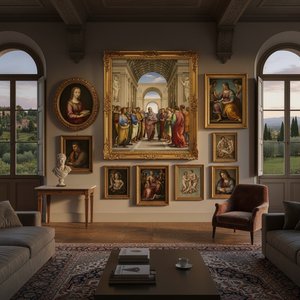
Explore 25 breathtaking Raphael paintings! Journey through the Italian Renaissance with masterpieces like 'School of Athens' & iconic Madonnas. Find museum-quality art reproductions and elevate your home decor on Most-Famous-Paintings.com.

Embark on a sophisticated journey through art history with our curated guide to the most iconic Madonna and Child masterpieces. Discover the profound beauty, theological depth, and enduring legacy of these sacred Renaissance treasures.

Explore the rich history & stunning artistry of the Byzantine Empire! Discover iconic mosaics, profound symbolism, and lasting influence on Western art. A comprehensive guide for history lovers.

Explore 25 breathtaking artworks by Giotto di Bondone, a Renaissance master. Discover the stories behind iconic frescoes & paintings like the Scrovegni Chapel cycle. Find museum-quality Giotto reproductions and elevate your home decor with Most-Famous-Paintings.com.

Journey through the Uffizi Gallery's 25 most iconic Renaissance artworks! Explore Botticelli, Leonardo da Vinci & Michelangelo’s masterpieces. Find museum-quality art reproductions and curated decor ideas to bring timeless Italian beauty into your home. Discover all masterpieces on Most-Famous-Paintings.com


Stay updated with the latest art news, exclusive offers, and decoration ideas.
Tell us about your project and our art experts will provide you with 3 personalized art suggestions.
Let Us Curate 3 Options Just for You - Free!


 Preview
 Send
Send Share
Share
 Details

 Download
 Similars
 X-Ray
X-Ray Diaporama
 Read More







 Glass option is only available in size under 110 CM


