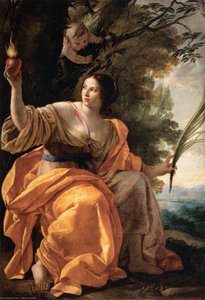
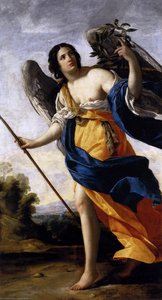
x


 Oil On CanvasWallArtBaroque
 1615Early Modern
 64.0 x 48.0 cm
 Musée Réattu
Hand-painted oil on canvas in your size and frame, made to order by our artists.





























Pick from our preset sizes that match the artwork's original proportions.

You may enter your own dimensions to fit a specific frame or space. If your selected size does not match the original image's proportions, we will either crop the artwork or extend the painting with additional hand-painted elements. A digital mockup will be sent for your approval before production begins.
Please note that the on-screen preview does not reflect the actual cropping or extension. Only the mockup will accurately show the final composition.
While custom sizes are available, we recommend selecting a dimension from the predefined list to preserve the original proportions.
Worldwide Delivery () in 3/4 weeks instead of standard 5 weeks. (18 July). No compromise on quality.


Self-Portrait
Reproduction Size
To stand before this self-portrait is to encounter not merely paint on canvas, but a direct conduit to the vibrant, ambitious spirit of early 17th-century Paris. Painted around 1615, this work captures the artist at a pivotal moment in his career—a time when he was solidifying his reputation as a master painter navigating the transition from Mannerism into the dramatic sweep of the Baroque style. The subject gazes out with an intense, knowing directness; it is the gaze of a man acutely aware of his own artistic power.
The sitter presents himself in meticulous detail, commanding attention through both his bearing and his costume. His prominent beard, featuring a carefully sculpted mustache and goatee, speaks to the fashionable masculinity of the era. He is clad in rich browns, offset by the exquisite formality of a ruffled collar—a hallmark of period portraiture that speaks volumes about social standing. The artist has paid painstaking attention to rendering these textures; one can almost feel the crisp linen of the ruff against the depth of his woolen garments. This careful presentation suggests a man of means, an intellectual, and perhaps, most importantly, a celebrated artisan.
Technically, the painting is a testament to Simon Vouet’s burgeoning skill. The handling of light against shadow—the dramatic chiaroscuro that defines so much of Baroque art—is masterful. The dark background serves not as an empty void, but rather as a velvet curtain drawn back to illuminate the subject. This technique forces the viewer's eye directly onto the face and hands, emphasizing psychological depth over mere physical likeness. Vouet’s ability to render skin tones with such luminosity, contrasted against the deep shadows, elevates this portrait beyond simple documentation into something deeply emotive.
Considering Simon Vouet's own biography—a painter whose early travels took him from England through the Ottoman Empire to Venice—this self-portrait feels imbued with the spirit of a cosmopolitan artist. He is channeling the energy of those grand European journeys, bringing back influences that fuel his unique vision. Owning a reproduction of this piece allows one to bring home not just an image, but a tangible echo of Baroque ambition: a period defined by drama, emotional intensity, and unparalleled artistic self-regard. It serves as a powerful focal point for any space seeking historical gravitas and undeniable artistic flair.

Simon Vouet was a pivotal figure in the transition of French painting from Mannerism to the Baroque style. Born into an artistic family – his father Laurent was a painter and his brother Aubin also pursued art – Vouet received early training that laid the foundation for his future success. His grandson, Ludovico Dorigny, would continue the family’s artistic legacy.
During his Italian sojourn, Vouet absorbed a diverse range of influences. He studied the dramatic lighting techniques pioneered by Caravaggio, embraced elements of Italian Mannerism, and meticulously analyzed the color palettes and di sotto in su (foreshortened perspective) employed by Paolo Veronese. He also drew inspiration from the works of Carracci, Guercino, Lanfranco, and Guido Reni, synthesizing these diverse styles into a unique artistic vision.
Simon Vouet's legacy rests on his pivotal role as a bridge between Italian and French art. He successfully imported the dynamism and grandeur of the Italian Baroque, transforming it into a style that resonated with the tastes of the French court and aristocracy. His influence is undeniable in the development of French painting during the 17th century, and his contributions continue to be recognized by art historians today.

1590 - 1649 , France
Journey through Alte Pinakothek's 25 most iconic paintings! Explore masterpieces by Dürer, Rembrandt & Rubens. Discover art history, techniques & find museum-quality reproductions for your home at Most-Famous-Paintings.com.
Journey through Botticelli's world with 25 iconic Renaissance paintings. Explore 'Birth of Venus,' 'Primavera,' and more—stories, techniques & timeless beauty. Find museum-quality art reproductions for your home at Most-Famous-Paintings.com.

Journey through 25 iconic artworks at the Metropolitan Museum of Art! Explore Van Gogh, Monet, Rembrandt & more. Discover art history, inspiring stories, and museum-quality reproductions to elevate your home decor. Explore the full collection on Most-Famous-Paintings.com.

Explore 25 iconic artworks from Washington DC's National Gallery of Art! Discover masterpieces by Cézanne, Matisse & Picasso. Find museum-quality art reproductions and elevate your home decor with timeless paintings. Explore the full collection online at Most-Famous-Paintings.com.
Journey through 25 iconic James Abbott McNeill Whistler paintings! Explore his masterpieces of Aestheticism, from 'Nocturne in Black and Gold' to captivating portraits. Find museum-quality art reproductions & elevate your home decor with Most-Famous-Paintings.com. Discover the full collection online.


Stay updated with the latest art news, exclusive offers, and decoration ideas.
Tell us about your project and our art experts will provide you with 3 personalized art suggestions.
Let Us Curate 3 Options Just for You - Free!


 Buy print
 Send
Send Share
Share
 Details

 Download
 Similars
 X-Ray
X-Ray Diaporama
 Read More







 Glass option is only available in size under 110 CM