x

 Oil On CanvasWallArtBaroque
 1614Early Modern
 63.0 x 49.0 cm
 Palazzo del Quirinale
Museum-quality giclée or canvas print with fast production and flexible finish options. ( Buy Hand Made Painting Buy Image)





























Pick from our preset sizes that match the artwork's original proportions.

You may enter your own dimensions to fit a specific frame or space. If your selected size does not match the original image's proportions, we will either crop the artwork or extend the image with a mirrored or solid-fill edge. A digital mockup will be sent for your approval before production begins.
Please note that the on-screen preview does not reflect the actual cropping or extension. Only the mockup will accurately show the final composition.
While custom sizes are available, we recommend selecting a dimension from the predefined list to preserve the original proportions.
Worldwide Delivery () in 2 weeks instead of standard 4/5 weeks. (14 August)


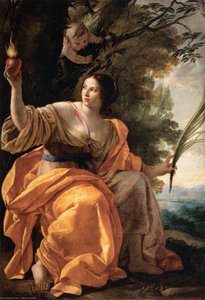
St Catherine
Reproduction Size
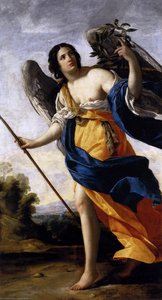
To stand before Simon Vouet's depiction of St Catherine is to step directly into the vibrant, emotionally charged atmosphere of early seventeenth-century Paris. This portrait captures more than just a likeness; it arrests a moment—a confluence of piety, earthly beauty, and the burgeoning drama characteristic of the Baroque period. The central figure, resplendent in her deep blue gown, commands attention with an almost magnetic gaze. Her long, flowing hair seems to catch the light, framing a face that possesses both serene contemplation and a subtle, knowing directness as she meets the viewer's eye. It is a study in captivating presence.
Vouet’s technical brilliance shines through every visible brushstroke. Observe how the artist has rendered the textures within this composition: the rich drape of the blue fabric contrasts beautifully with the rough, earthy texture of the brick wall that forms the backdrop. This juxtaposition—the smooth idealism of the subject against the tangible reality of the setting—is a hallmark of sophisticated Baroque painting. The handling of light is particularly masterful; it seems to emanate from an unseen source, selectively illuminating her features and lending a sculptural quality to her form while allowing the background elements to recede into atmospheric depth. This careful play between illumination and shadow gives the entire piece a profound sense of three-dimensionality.
Painted in 1614, this work places us squarely within Simon Vouet's dynamic early career. As a pivotal figure bridging Mannerism toward the full bloom of French Baroque painting, Vouet was constantly evolving his style, absorbing influences from his travels across Italy and beyond. The inclusion of other figures subtly placed in the periphery—one near the top left, another further back on the right—adds narrative complexity. These secondary characters ground the main subject within a social or devotional context, suggesting that St Catherine is not merely an individual portrait but part of a larger, unfolding human drama.
The symbolism woven into St Catherine invites deep contemplation. The blue dress itself often carries connotations of purity, heavenly grace, and fidelity in art history. Coupled with the subject's poised demeanor, it suggests an inner life rich with virtue, even amidst the casual backdrop of the brickwork. For the modern admirer or collector, this painting offers more than mere decoration; it is a conduit to historical emotion. It speaks to themes of enduring faith juxtaposed against the fleeting nature of earthly existence—a timeless dialogue that continues to resonate.
For those seeking an artwork that elevates any interior space, this reproduction offers unparalleled depth and narrative weight. The combination of vibrant color, sophisticated composition, and palpable historical artistry ensures that St Catherine will become a focal point, drawing the eye and sparking conversation. Owning a piece echoing Vouet’s genius means acquiring not just paint on canvas, but a tangible connection to the golden age of French art.

Simon Vouet was a pivotal figure in the transition of French painting from Mannerism to the Baroque style. Born into an artistic family – his father Laurent was a painter and his brother Aubin also pursued art – Vouet received early training that laid the foundation for his future success. His grandson, Ludovico Dorigny, would continue the family’s artistic legacy.
During his Italian sojourn, Vouet absorbed a diverse range of influences. He studied the dramatic lighting techniques pioneered by Caravaggio, embraced elements of Italian Mannerism, and meticulously analyzed the color palettes and di sotto in su (foreshortened perspective) employed by Paolo Veronese. He also drew inspiration from the works of Carracci, Guercino, Lanfranco, and Guido Reni, synthesizing these diverse styles into a unique artistic vision.
Simon Vouet's legacy rests on his pivotal role as a bridge between Italian and French art. He successfully imported the dynamism and grandeur of the Italian Baroque, transforming it into a style that resonated with the tastes of the French court and aristocracy. His influence is undeniable in the development of French painting during the 17th century, and his contributions continue to be recognized by art historians today.

1590 - 1649 , France

Explore the profound elegance of Baroque Classicism. Discover how 17th-century masters synthesized dramatic emotion with classical order through the lens of the Counter-Reformation and the works of legends like Carlo Maratta and Andrea Sacchi.

Explore the profound drama of 17th-century Baroque art. Discover how masters used chiaroscuro, movement, and emotional intensity to redefine history through the lens of the Counter-Reformation. An expert guide for art historians and collectors seeking deep cultural insight.

Explore the dramatic power of Baroque art through an expert guide to light, shadow, and emotion. Discover how the Counter-Reformation shaped 17th-century masterpieces and learn about the profound techniques used by the Old Masters to inspire awe.

Explore the dramatic evolution from Mannerist distortion to Baroque grandeur. Discover how light, shadow, and emotion redefined art history through a masterclass in technical mastery and religious fervor.

Explore the profound differences between Baroque drama and Rococo elegance. Our expert guide delves into art history, chiaroscuro, and the evolution of European masterpieces for collectors and enthusiasts seeking deep historical context.


Stay updated with the latest art news, exclusive offers, and decoration ideas.
Tell us about your project and our art experts will provide you with 3 personalized art suggestions.
Let Us Curate 3 Options Just for You - Free!


 Preview
 Send
Send Share
Share
 Details

 Download
 Similars
 X-Ray
X-Ray Diaporama
 Read More







 Glass option is only available in size under 110 CM