x


 Oil On CanvasWallArtBaroque
 151.0 x 149.0 cm
Hand-painted oil on canvas in your size and frame, made to order by our artists.





























Pick from our preset sizes that match the artwork's original proportions.

You may enter your own dimensions to fit a specific frame or space. If your selected size does not match the original image's proportions, we will either crop the artwork or extend the painting with additional hand-painted elements. A digital mockup will be sent for your approval before production begins.
Please note that the on-screen preview does not reflect the actual cropping or extension. Only the mockup will accurately show the final composition.
While custom sizes are available, we recommend selecting a dimension from the predefined list to preserve the original proportions.
Worldwide Delivery () in 3/4 weeks instead of standard 5 weeks. (18 July). No compromise on quality.


The Entombment
Reproduction Size
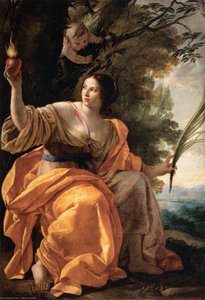
To stand before this depiction of The Entombment is to be enveloped in a palpable atmosphere of sacred grief and profound human drama. Simon Vouet, a master navigating the turbulent currents from Mannerism into the full bloom of French Baroque, captures not merely an event, but a moment suspended between life and eternity. The scene centers on the figure laid before the cross, his outstretched arms speaking volumes of sacrifice and repose. It is a composition that demands the viewer’s complete surrender to its solemn narrative weight.
Vouet's genius shines through in his masterful handling of light and shadow, techniques heavily influenced by the dramatic realism pioneered by Caravaggio. The interplay between illumination and deep shadow—the tenebrism—is not merely decorative; it is narrative. Light seems to emanate from a divine source, selectively illuminating the pallor of the fallen body and the anguished gestures of those gathered around him. Observe the surrounding figures: their varied poses—some kneeling in supplication, others standing in quiet witness—create a complex tapestry of human reaction. The depth achieved through these clustered forms gives the composition an almost three-dimensional immediacy, pulling the observer directly into the sacred circle.
The symbolism inherent in this work is rich and deeply moving. Beyond the immediate religious narrative, the scene speaks to universal themes of loss, devotion, and redemption. The outstretched arms are a powerful symbol of both surrender and eternal embrace. The presence of multiple figures allows Vouet to explore the spectrum of human emotion—from profound sorrow to quiet contemplation—all converging on this central point of repose. For the collector or designer, this piece offers more than mere decoration; it is an emotional anchor, capable of lending a sense of weighty, contemplative dignity to any space.
Simon Vouet’s career trajectory—from his early portraiture successes to his pivotal role in major decorative schemes for Parisian patrons like Louis XIII—marks him as a key architect of the French Baroque style. This work, representative of that grand period, showcases his ability to integrate high drama with sophisticated compositional structure. The di sotto perspective suggested by the overall arrangement implies an immersive experience, making the viewer feel as if they are standing within the chapel itself. Owning a reproduction of this scale (151 x 149 cm) allows one to bring the grandeur and intellectual weight of 17th-century French artistic patronage into a modern setting.

Simon Vouet was a pivotal figure in the transition of French painting from Mannerism to the Baroque style. Born into an artistic family – his father Laurent was a painter and his brother Aubin also pursued art – Vouet received early training that laid the foundation for his future success. His grandson, Ludovico Dorigny, would continue the family’s artistic legacy.
During his Italian sojourn, Vouet absorbed a diverse range of influences. He studied the dramatic lighting techniques pioneered by Caravaggio, embraced elements of Italian Mannerism, and meticulously analyzed the color palettes and di sotto in su (foreshortened perspective) employed by Paolo Veronese. He also drew inspiration from the works of Carracci, Guercino, Lanfranco, and Guido Reni, synthesizing these diverse styles into a unique artistic vision.
Simon Vouet's legacy rests on his pivotal role as a bridge between Italian and French art. He successfully imported the dynamism and grandeur of the Italian Baroque, transforming it into a style that resonated with the tastes of the French court and aristocracy. His influence is undeniable in the development of French painting during the 17th century, and his contributions continue to be recognized by art historians today.

1590 - 1649 , France

Journey through 25 iconic artworks at the Metropolitan Museum of Art! Explore Van Gogh, Monet, Rembrandt & more. Discover art history, inspiring stories, and museum-quality reproductions to elevate your home decor. Explore the full collection on Most-Famous-Paintings.com.
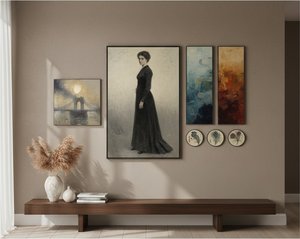
Journey through 25 iconic James Abbott McNeill Whistler paintings! Explore his masterpieces of Aestheticism, from 'Nocturne in Black and Gold' to captivating portraits. Find museum-quality art reproductions & elevate your home decor with Most-Famous-Paintings.com. Discover the full collection online.
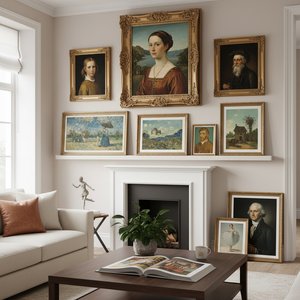
Explore 25 iconic artworks from Washington DC's National Gallery of Art! Discover masterpieces by Cézanne, Matisse & Picasso. Find museum-quality art reproductions and elevate your home decor with timeless paintings. Explore the full collection online at Most-Famous-Paintings.com.
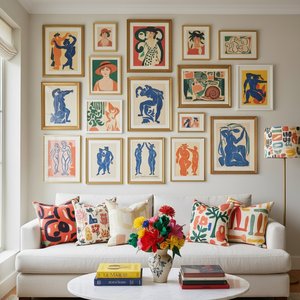
Journey through Henri Matisse's 25 most iconic paintings! Explore Fauvism, vibrant colors & the stories behind masterpieces like 'The Dance'. Find museum-quality art reproductions and curated decor ideas to elevate your space. Discover all masterpieces on Most-Famous-Paintings.com.
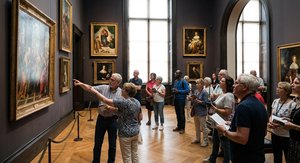
Journey through Alte Pinakothek's 25 most iconic paintings! Explore masterpieces by Dürer, Rembrandt & Rubens. Discover art history, techniques & find museum-quality reproductions for your home at Most-Famous-Paintings.com.


Stay updated with the latest art news, exclusive offers, and decoration ideas.
Tell us about your project and our art experts will provide you with 3 personalized art suggestions.
Let Us Curate 3 Options Just for You - Free!


 Buy print
 Send
Send Share
Share
 Details

 Download
 Similars
 X-Ray
X-Ray Diaporama
 Read More







 Glass option is only available in size under 110 CM