x

 Acrylic On CanvasWallArtBaroque Elegance
 1628
1628 876.0 x 1110.0 cm
 Kunsthistorisches Museum
Museum-quality giclée or canvas print with fast production and flexible finish options. ( Buy Hand Made Painting Buy Image)





























Pick from our preset sizes that match the artwork's original proportions.

You may enter your own dimensions to fit a specific frame or space. If your selected size does not match the original image's proportions, we will either crop the artwork or extend the image with a mirrored or solid-fill edge. A digital mockup will be sent for your approval before production begins.
Please note that the on-screen preview does not reflect the actual cropping or extension. Only the mockup will accurately show the final composition.
While custom sizes are available, we recommend selecting a dimension from the predefined list to preserve the original proportions.
Worldwide Delivery () in 2 weeks instead of standard 4/5 weeks. (17 August)


Nicolas Lanier
Reproduction Size
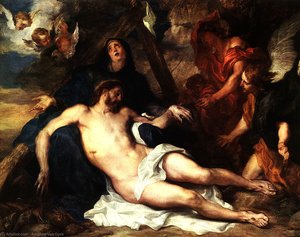
Anthony van Dyck’s depiction of Nicolas Lanier stands as a quintessential emblem of Baroque portraiture—a masterful synthesis of observation, technique, and conceptual ambition. Painted in 1628 during Lanier’s tenure as court musical director to Charles I, this artwork transcends mere likeness; it embodies the ideals of sprezzatura and reflects the burgeoning influence of Venetian artistic traditions on English aristocratic taste.
The canvas is dominated by Lanier's figure, positioned slightly off-center to draw the eye and establish a dynamic visual equilibrium. Van Dyck skillfully employs atmospheric perspective—evident in the hazy landscape backdrop—to imbue the scene with depth and realism. His compositional approach draws heavily from the pioneering work of Titian, prioritizing clarity of form and harmonious balance. The artist meticulously builds up color and texture through multiple glazes, achieving a luminous surface that captures the subtle nuances of light and shadow – a hallmark of Baroque painting.
The palette is rich and carefully considered, utilizing dark tones—primarily black fabric—to create striking contrasts against the vibrant reds and whites of Lanier’s shirt. Earthy browns and greens subtly delineate the landscape vista, grounding the portrait in its surroundings. Van Dyck’s masterful manipulation of light – a chiaroscuro technique reminiscent of Rembrandt – illuminates Lanier's face with a warm glow from the left, accentuating his features and conveying an aura of confidence.
Lanier’s posture exudes sprezzatura—the “elegant nonchalance” championed by Baldassare Castiglione—reflecting the aristocratic ethos of the Stuart court. His right arm confidently displays a kimbo, symbolizing authority and composure; his gaze meets the viewer directly, projecting an air of self-assuredness. The inclusion of Lanier’s sword hilt hints at his potential involvement in political affairs, while the landscape serves as a visual metaphor for the broader world he inhabits. Ultimately, Van Dyck's portrait captures not only Lanier’s physical appearance but also his inner character—a testament to the artist’s ability to convey emotion and intellect through visual form.
This artwork represents a pivotal moment in English art history, coinciding with Charles I's ambitious patronage of Venetian painting. Van Dyck’s success in securing commissions from the royal court solidified his reputation as one of the foremost portraitists of his time and established a new standard for noble portraiture—a style that continues to inspire admiration and influence artistic practice today.


1599 - 1641 , Belgium

Explore the profound elegance of Baroque Classicism. Discover how 17th-century masters synthesized dramatic emotion with classical order through the lens of the Counter-Reformation and the works of legends like Carlo Maratta and Andrea Sacchi.


Stay updated with the latest art news, exclusive offers, and decoration ideas.
Tell us about your project and our art experts will provide you with 3 personalized art suggestions.
Let Us Curate 3 Options Just for You - Free!


 Preview
 Send
Send Share
Share
 Details

 Download
 Similars
 X-Ray
X-Ray Diaporama
 Read More







 Glass option is only available in size under 110 CM